
Christmas tree
Decorated evergreen traditionally used at Christmas: types, decorations, history, cultural role, care, safety and disposal practices.
The Christmas tree is a decorated evergreen placed in homes and public spaces as part of the Christmas season. Typically a cut or potted tree from a coniferous species, it serves as a focal point for seasonal ornaments, lights and gatherings. While associated with a major religious festival, the decorated tree functions today as both a cultural and domestic tradition rather than a prescribed religious symbol.
Image gallery
10 Images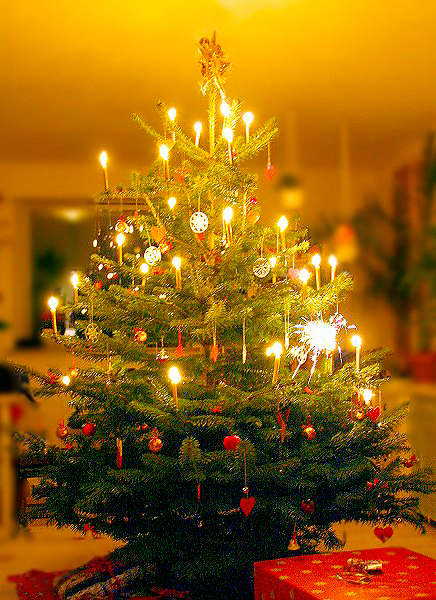


Characteristics and common types
Most traditional trees are evergreen conifers kept for their needle retention and shape. Common categories include firs, spruces and pines; these share dense foliage and conical forms that suit hanging ornaments. In parts of Europe, the Norway spruce has been especially common historically, while other regions favor Douglas fir, balsam fir or Scots pine. Synthetic trees made from PVC or other materials provide an alternative to natural options.
Decoration and symbols
Decoration ranges from simple candles or lights to elaborate themed displays. Electric lights now replace open flames for safety, and ornaments include baubles, tinsel, strings of beads, and edible items such as candy canes or popcorn garlands. A smaller symbol such as an angel or a star is frequently placed at the top to complete the composition and echo motifs associated with the season. Tree skirts, presents and tree toppers are part of the overall display.
History and development
Roots of the modern tree custom reach into Northern and Central Europe, where evergreen boughs were long used to signify life during winter. The practice of bringing a complete tree indoors and decorating it grew among Protestant communities and became widely recorded in German-speaking areas. The custom spread across Europe and to North America in the 18th and 19th centuries and was popularized in many places through domestic and public displays.
Uses, cultural role and variations
Beyond private homes, large decorated trees appear in town squares, shopping centers and civic buildings as communal symbols of the season. Variations include small tabletop trees, living potted specimens kept for replanting, and themed artificial trees. The tree often anchors seasonal rituals such as gift-giving and caroling, and has become a recognizable part of winter festivities in many cultures.
Care, safety and disposal
- Water live trees regularly to reduce dryness and fire risk; check lights and cords for damage before use.
- Position trees away from heat sources and exits to reduce hazards and allow safe egress.
- After the season, many communities offer recycling or chipping programs that convert trees into mulch; artificial trees can be reused for years but may pose long-term waste considerations.
Today the Christmas tree combines botanical, cultural and commercial elements: it is at once a horticultural product, a household tradition and a widely recognized seasonal emblem. For more on the broader festival context see Christmas, and for information on tree cultivation and species differences see resources on conifers and on the specific history of the Norway spruce. Additional cultural imagery and symbols are discussed in links about the angel and the star.
Related articles
Author
AlegsaOnline.com Christmas tree Leandro Alegsa
URL: https://en.alegsaonline.com/art/20157