
Christine Nöstlinger — Austrian children's author (1936–2018)
Austrian author of books for children and young adults, noted for frank humor, vivid child viewpoints and social awareness. Recipient of the Hans Christian Andersen Medal (1984) and Astrid Lindgren Memorial Award (2003).
Christine Nöstlinger (13 October 1936 – 28 June 2018) was a leading Austrian writer of books for children and young adults. Born and based for most of her life in Vienna, she wrote in a direct, conversational style that often adopted the point of view of children and adolescents. Her work combines humor, psychological observation and a readiness to confront difficult topics—family conflicts, poverty, social inequality and the everyday consequences of historical events—without talking down to young readers.
Image gallery
2 Images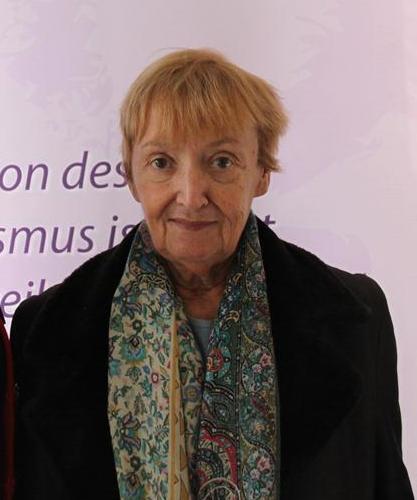

Early life and career
Nöstlinger trained as a commercial designer and worked as an illustrator and editor before publishing her first book. Her early experience with illustration and children’s publications informed the visual and narrative modesty of her stories: many of her books use uncomplicated design and dialogue-driven scenes that foreground a child’s experience. She produced fiction for a wide range of ages, including picture books, short stories and longer novels for adolescents, and she sometimes illustrated her own volumes.
Style and themes
Her narrative voice is characterised by clarity, warmth and irony. Nöstlinger wrote in a way that accepted children’s intelligence and emotions as complex; she avoided sentimentalizing their problems while offering empathy and humour. Recurring themes include family relationships, the limits of adult authority, moral choices in everyday life and the persistence of memory. Several of her works draw on the wartime and postwar environment of her own childhood, treating the past through the immediate perceptions of young protagonists.
Major works
- Die feuerrote Friederike (1970) — Nöstlinger’s first book, which she also illustrated; published in English as Fiery Frederica.
- Maikäfer flieg (1973) — often translated as Fly Away Home, a remembered-childhood narrative that mixes humour and poignancy.
Awards and recognition
Nöstlinger received major international honours for her contribution to children’s literature. She was awarded the Hans Christian Andersen Medal in 1984, a recognition for lasting contribution to the field, and she received the Astrid Lindgren Memorial Award in 2003. Her books have been translated into numerous languages and remain widely read in German-speaking countries and beyond. Educators and librarians have long praised her respect for young readers and her ability to combine entertainment with moral and social insight.
Legacy
Beyond individual titles, Nöstlinger’s significance lies in modelling an honest, child-centred approach to storytelling. Her influence is visible in later writers who favour realistic voices, psychological subtlety and humour that does not patronise. Schools and libraries continue to include her books in reading lists and collections, and her work is often discussed in contexts that examine how literature can reflect children’s real lives and help them understand social and historical realities.
Christine Nöstlinger died in Vienna on 28 June 2018 at the age of 81. Her work continues to be read, translated and debated for its humane, candid portrayal of childhood and adolescence.
Tags
Related articles
Author
AlegsaOnline.com Christine Nöstlinger — Austrian children's author (1936–2018) Leandro Alegsa
URL: https://en.alegsaonline.com/art/20137
Sources
- worldcat.org : "Nöstlinger, Christine"
- derstandard.at : "Schriftstellerin Christine Nöstlinger gestorben - derStandard.at"