
Christ myth theory (Jesus mythicism)
Overview of the Christ myth theory, the claim that Jesus of Nazareth is a mythical rather than historical figure, its arguments, variants, history, and the scholarly response to those claims.
Overview
The Christ myth theory, often called Jesus mythicism, is the position that the central figure associated with Jesus of Nazareth and the emergence of Christianity is not a historical individual in the ordinary sense but a legendary or literary construction. Proponents argue that the stories preserved in sources such as the Bible and the Gospels reflect theological development, mythic patterns, or symbolic narratives rather than eyewitness history.
Image gallery
10 Images







Common claims and variations
There is no single mythicist position; views range from the claim that Jesus never existed at all to the claim that a historical preacher inspired later mythologizing. Typical arguments offered by mythicists include:
- Alleged parallels between Jesus traditions and older mythologies or dying-and-rising god motifs.
- Claims of a lack of contemporary Roman or Jewish records directly confirming a Galilean teacher who was crucified in 1st-century Judea.
- Interpretations of early Christian writings (including the Pauline epistles) as referring primarily to a celestial or spiritual rather than an earthly figure.
History of the theory
Ideas that challenged the historicity of biblical figures have a long history, but the modern form of the Christ myth theory took shape in the 18th and 19th centuries as scholars applied historical-critical methods to ancient texts. In the 19th and 20th centuries several writers promoted mythicist arguments more systematically. The theory has remained a minority view among historians.
Scholarly response and counterarguments
The majority of professional historians and biblical scholars conclude that there was likely a historical figure at the origin of the traditions about Jesus. Scholarly rebuttals emphasize methods and evidentiary standards such as multiple independent attestation, contextual plausibility within 1st-century Judaism, and critical readings of later sources. Arguments often cite references in non-Christian writers and later Jewish and Roman accounts as part of a cumulative case, while acknowledging debates over specific passages and interpolations.
Debate and significance
The Christ myth theory is an important part of broader discussions about historical method, the interpretation of ancient texts, and the relationship between religion and history. Its advocates and critics differ over what counts as persuasive evidence and how to weigh literary, theological, and fragmentary historical data. Some disagreements turn on definitions—what scholars mean by 'myth' versus 'legend' or 'historical reconstruction'—and on the limits of surviving sources.
Further reading and distinctions
Readers exploring the topic should distinguish between scholarly hypotheses about the historical core of traditions and stronger claims that no historical person existed. For introductions and different perspectives see treatments of early Christian origins and textual criticism; for discussions of terminology and comparative mythology consult works on mythic motifs and the study of ancient religions. For related concepts, see discussions labeled mythic interpretation and comparative analyses linked to the canonical narratives.
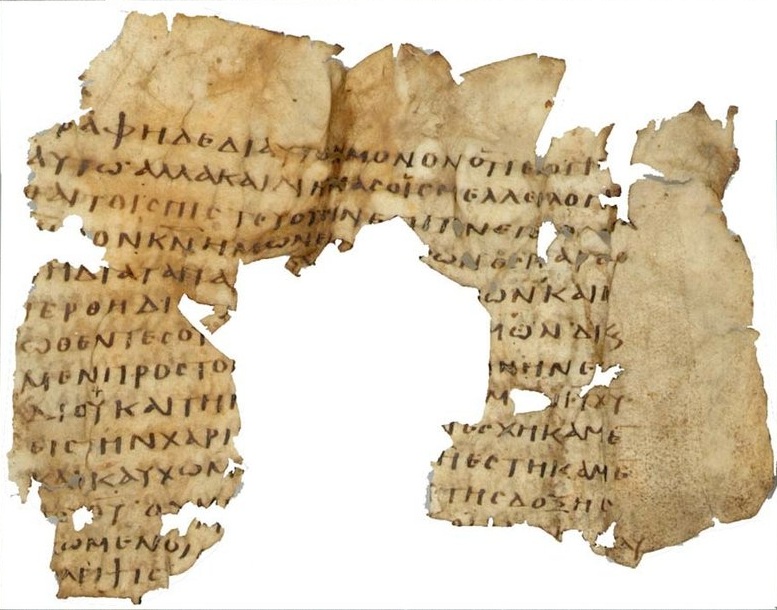
Relevant primary-source and contextual materials include the canonical Gospels, Paul's letters, and later non-Christian references; many treatments of the subject also address the reliability and dating of these texts and their relationship to the social and political setting of 1st-century Judea. For quick reference on core topics, readers may follow introductory surveys on the figure of Jesus, the development of Christianity, the composition of the Bible, and studies of the Gospels.
Because discussions are ongoing, careful attention to sources, methods, and definitions is essential when evaluating claims for or against the historicity of Jesus.
Related articles
Author
AlegsaOnline.com Christ myth theory (Jesus mythicism) Leandro Alegsa
URL: https://en.alegsaonline.com/art/20051
Sources
- positiveatheism.org : The Christ
- infidels.org : Jesus: Fact or Fiction? debate