
Choice: decision-making, types, and significance
An overview of choice as the act of selecting among alternatives, its types, historical study, everyday examples, and its role in economics, ethics, and psychology.
A choice is the act of selecting one option from two or more alternatives. In everyday language it is often equated with a decision, but choice emphasizes the presence of alternatives and the agent who selects among them. Choices range from trivial preferences, such as what to eat, to consequential decisions about health, relationships, careers, or public policy. Context, available information, and the decision-maker's goals shape which option is chosen.
Image gallery
2 Images
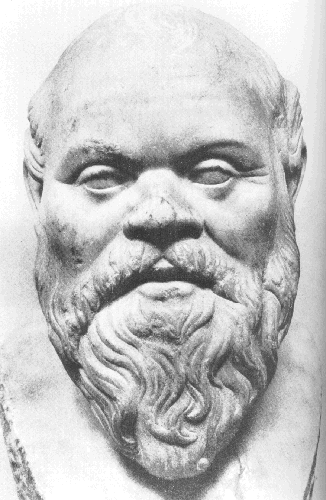
Characteristics and common types
Choices can be categorized in several ways. They may be voluntary or constrained, certain or made under uncertainty, and simple (binary) or complex (many competing factors). Common distinctions include:
- Rational vs emotional: some choices follow explicit reasoning and calculation; others arise from feelings or habits.
- Individual vs collective: solitary decisions differ from choices made by groups, committees, or markets.
- Risk vs uncertainty: where probabilities are known, decisions are about risk; when probabilities are unknown, choices involve uncertainty.
- Constrained choice: choices limited by time, information, legal rules, or scarce resources (scarcity).
Fields such as economics analyze how people allocate scarce goods and time by making choices, while psychology studies cognitive processes, biases, and satisficing behavior that affect selection.
History and intellectual background
Philosophers and social scientists have long studied choice. Ancient thinkers considered the moral dimensions of selecting right action; later traditions developed formal accounts of rational choice and utility. In the 19th and 20th centuries, economics and decision theory formalized how preferences, incentives, and constraints produce predictable choice patterns. More recent work in behavioral economics and psychology documents systematic deviations from purely rational models, such as framing effects and loss aversion.
Ethical and existential traditions emphasize choice as central to moral responsibility and personal identity. Some schools, including certain strands of existentialism, treat the freedom to choose and the consequences of those choices as foundational to human life and meaning (existentialism).
Choices matter in practical domains: policymakers design options and default rules to influence public behavior, clinicians obtain informed consent by presenting treatment choices, and technologists build algorithms to model and predict human choices. Understanding the structure of options, the trade-offs they entail, and the cognitive processes behind selection helps individuals and institutions make better decisions. For further reading on models and methods for analyzing choice, see resources on decision theory and behavioral science (ways of thinking).
While choice and preference are related, they are not identical: preferences describe rankings or dispositions toward outcomes, whereas a choice is the observed selection in a specific situation. The study of choice thus spans normative questions—how we ought to choose—and descriptive questions—how we actually do so—linking ethics, economics, and psychology into a shared inquiry about human action and consequence.
For introductory materials and summaries of key concepts about making choices, consult accessible overviews and textbooks that survey decision processes and the role of incentives in shaping behavior (decision, economics).
Related articles
Author
AlegsaOnline.com Choice: decision-making, types, and significance Leandro Alegsa
URL: https://en.alegsaonline.com/art/19939