
Zhuangzi (Chuang Tzu): life, teachings, and the classic text
An accessible account of Zhuangzi (Chuang Tzu), the Taoist thinker and the Zhuangzi text, its themes (spontaneity, wu wei, relativism), famous parables, and its influence in Chinese thought.
Zhuangzi, often spelled Chuang Tzu in older transliterations, is one of the central figures of classical Taoism. Active around the fourth century BCE, he is remembered less as a narrowly systematic philosopher and more as a literary and imaginative spirit whose sayings, parables and dialogues dramatize an alternative way of living. The body of material associated with him—the Zhuangzi—has been transmitted as a rich mixture of poetry, anecdote and philosophical reflection that rejects rigid social ambition in favor of natural spontaneity.
Image gallery
3 Images
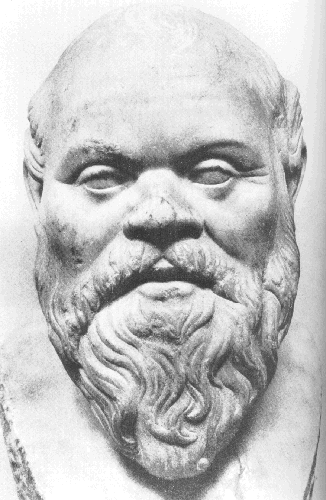

Life and the Zhuangzi text
Biographical details about Zhuangzi are sparse and often wrapped in legend. Scholars place him in the Warring States period of China, and tradition attributes to him a text that bears his name. The Zhuangzi as received today is a multi-part work composed in a range of literary forms: short parables, extended allegories, dialogues and playful thought experiments. Many passages appear intended to unsettle ordinary assumptions about value, achievement and the certainty of knowledge, and later editors and followers likely expanded and shaped the material over time.
Major themes and style
- Spontaneity and wu wei: Zhuangzi celebrates effortless action and a life in harmony with the rhythms of nature rather than forced, self-conscious striving.
- Relativity and skepticism: He often stresses the limits of fixed distinctions—life and death, right and wrong—and invites readers to consider multiple perspectives.
- Imagination and humor: The work is notable for its vivid stories and ironic tone, which expose the absurdity of pretension and narrow opinion.
- Acceptance of change: Transformation and cyclical becoming are common motifs, encouraging an attitude of ease toward loss, death and uncertainty.
Parables are central to Zhuangzi's method. In one well-known anecdote two officials visit him asking to persuade him to accept a government post; he answers with a tale that ends by contrasting a life of honored preservation with one of natural, untrammeled living. In another celebrated passage he recounts the dream of a butterfly to probe the boundary between dream and waking life. A compact story often cited involves a captured, sacred turtle whose fate—being mounted and honored in death or living on, dragging its tail in the mud—illustrates the choice between social prestige and simple life. The moment when the two ministers press him to serve highlights Zhuangzi's distrust of courtly reward and his preference for autonomy.
Zhuangzi's influence extends beyond strictly philosophical circles. His prose and images have shaped Chinese literature, religious practice, and later philosophical debates about language, knowledge and the self. Comparative thinkers often point to Zhuangzi as an important source for ideas of perspectivism and radical critique of conventional values.
Distinct from the terse aphorisms of the Tao Te Ching, Zhuangzi's writings are expansive, playful and exploratory. They invite readers to test their habits of thought through story rather than theorem, and they remain widely read for both their philosophical insight and their enduring literary charm.
Questions and answers
Q: Who was Chuang Tzu?
A: Chuang Tzu, also known as Zhuangzi, was a Taoist philosopher who lived and taught around 350 BC.
Q: What did Chang Tzu think about worldly life?
A: Chang Tzu thought that men should distance themselves from the traditional prestige and honor of worldly life, and instead just live.
Q: What story did Chang Tzu tell to two ministers who asked him to serve as a court official?
A: Chang Tzu told a story about a sacred turtle. He said that the king's men had caught it, killed it, and put its shell in a special box to use to tell the future. He then asked if the turtle would rather be honored in that box and dead or alive dragging its tail through the mud.
Q: How has his sayings been passed down over time?
A: His sayings have been passed down over centuries by word of mouth.
Q: What did Chang Tzu suggest people do instead of pursuing traditional prestige and honor?
A: Chang Tzu suggested that people should just live instead of pursuing traditional prestige and honor.
Q: Why did he tell the story about the sacred turtle?
A: He told this story to illustrate his point that people should not pursue traditional prestige and honor but just live their lives freely without worrying about such things.
Q: What happened to the sacred turtle according to Chang Tzu's story?
A: According to his story, the king's men had caught it, killed it, and put its shell in a special box to use for telling fortunes.
Related articles
Author
AlegsaOnline.com Zhuangzi (Chuang Tzu): life, teachings, and the classic text Leandro Alegsa
URL: https://en.alegsaonline.com/art/20247