
Chevron Corporation
Chevron Corporation is a major American integrated energy company based in San Ramon, California, with global operations in oil, gas, refining, chemicals and growing investments in low‑carbon energy.
Overview
Chevron Corporation is an integrated energy company headquartered in San Ramon, California. Traded on the New York Stock Exchange under the ticker CVX, the company operates across the full oil and gas value chain — from exploration and production to refining, marketing and chemicals — and employs tens of thousands of people worldwide. Chevron is regarded as one of the world’s largest publicly traded oil companies (often called a "supermajor"). Stock and investor information and corporate materials are publicly available for those who want detailed financial or governance data.
Image gallery
9 Images




Operations and business segments
Chevron organizes its activities around several core segments. These capture most of the conventional and emerging parts of the energy business and show how the company blends traditional hydrocarbon operations with newer energy efforts.
- Upstream (Exploration & Production): Finding and developing oil and natural gas resources onshore and offshore around the world.
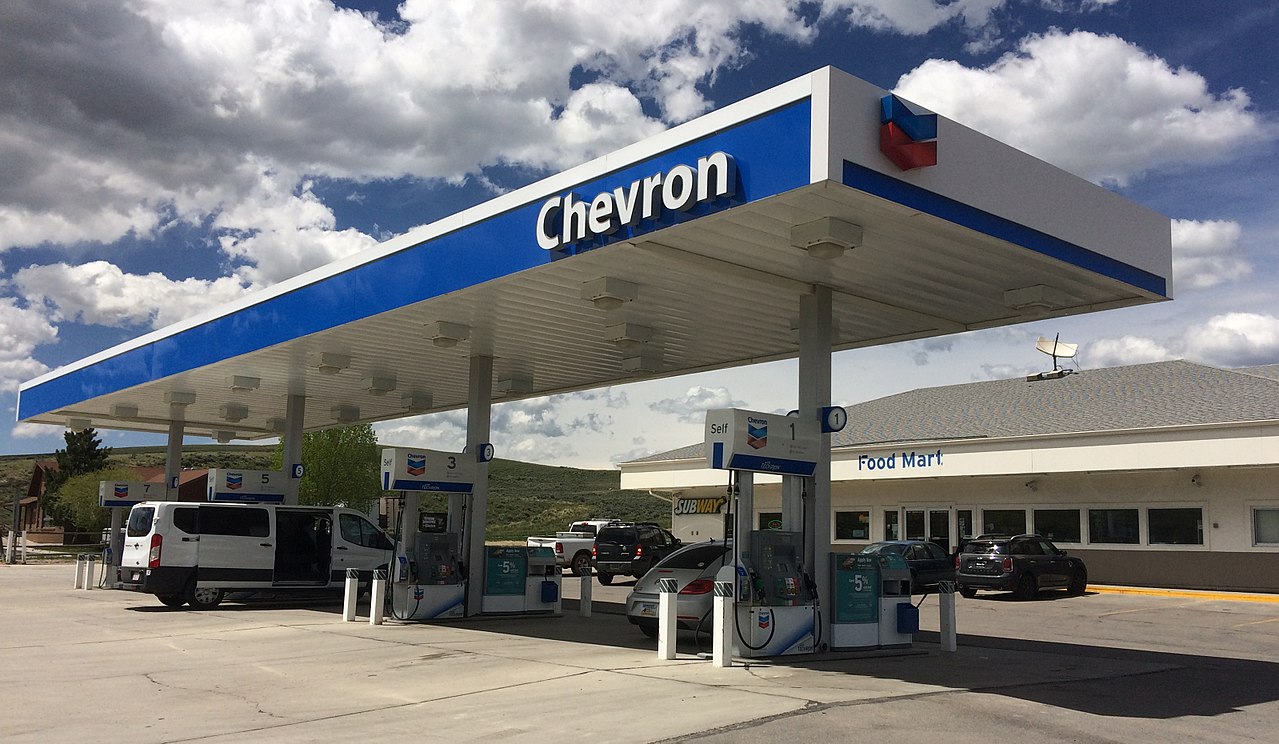
- Downstream (Refining & Marketing): Processing crude into fuels and lubricants, operating refineries, fuel distribution networks and retail stations.
- Chemicals and Petrochemicals: Manufacturing chemical feedstocks and products often in joint ventures and partnerships.
- Low‑carbon and cleaner fuels: Investments in biofuels, hydrogen, carbon capture and storage, and other technologies intended to reduce greenhouse gas emissions.
History and development
The company traces its roots to the late 19th century. It began as the Pacific Coast Oil Company in 1879 and later became Standard Oil Company (California) after early 20th‑century reorganizations and mergers with Standard Oil affiliates. In 1984, a major transaction with Gulf Oil expanded its scale and the enterprise adopted the Chevron name. Subsequent large combinations—most notably the merger with Texaco in 2001 and later acquisitions—helped shape Chevron into a global enterprise with diversified assets and long‑term contracts in many producing regions.
Global presence and notable projects
Chevron operates on multiple continents, with activity in North America, Latin America, Africa, Europe and the Asia‑Pacific region. The company is a participant or operator in long‑term projects including large liquefied natural gas (LNG) ventures, deepwater oil developments, and onshore fields in several countries. Its operations typically involve joint ventures and partnerships with national oil companies and other international firms. For further corporate publications and regional updates, Chevron provides public reports and materials online. Company overview and project information pages offer more context.
Controversies, regulation and transition efforts
Like other major oil companies, Chevron has been involved in environmental controversies and legal disputes related to spills, pollution and long‑running litigation in certain regions. At the same time, the company has announced investments in lower‑carbon technologies, research into carbon capture and storage, advanced biofuels and hydrogen, and has published sustainability and climate‑related reports describing its strategy and progress. Observers and stakeholders frequently weigh Chevron’s historic role in fossil energy against its evolving portfolio and commitments.
Importance and further resources
Chevron remains an influential player in global energy markets because of its integrated operations, technical capacity for large projects, and long‑dated contracts in producing regions. Its activities affect energy supply, industrial feedstocks and regional economies where it operates. To read annual disclosures, sustainability reporting, or investor materials, see the company’s official information channels: annual and financial reports, sustainability and climate publications and the investor relations pages linked earlier.
Related articles
Author
AlegsaOnline.com Chevron Corporation Leandro Alegsa
URL: https://en.alegsaonline.com/art/19434
Sources
- books.google.com : Historical Dictionary of the Petroleum Industry
- books.google.com : The A to Z of the Petroleum Industry
- nytimes.com : "F.T.C. Approves Chevron-Gulf Deal"