
Cheesesteak (Philadelphia sandwich)
A Philadelphia-origin sandwich of thinly sliced beef and melted cheese on a long roll, known for regional variations, famous vendors, and a distinctive ordering culture.
Overview
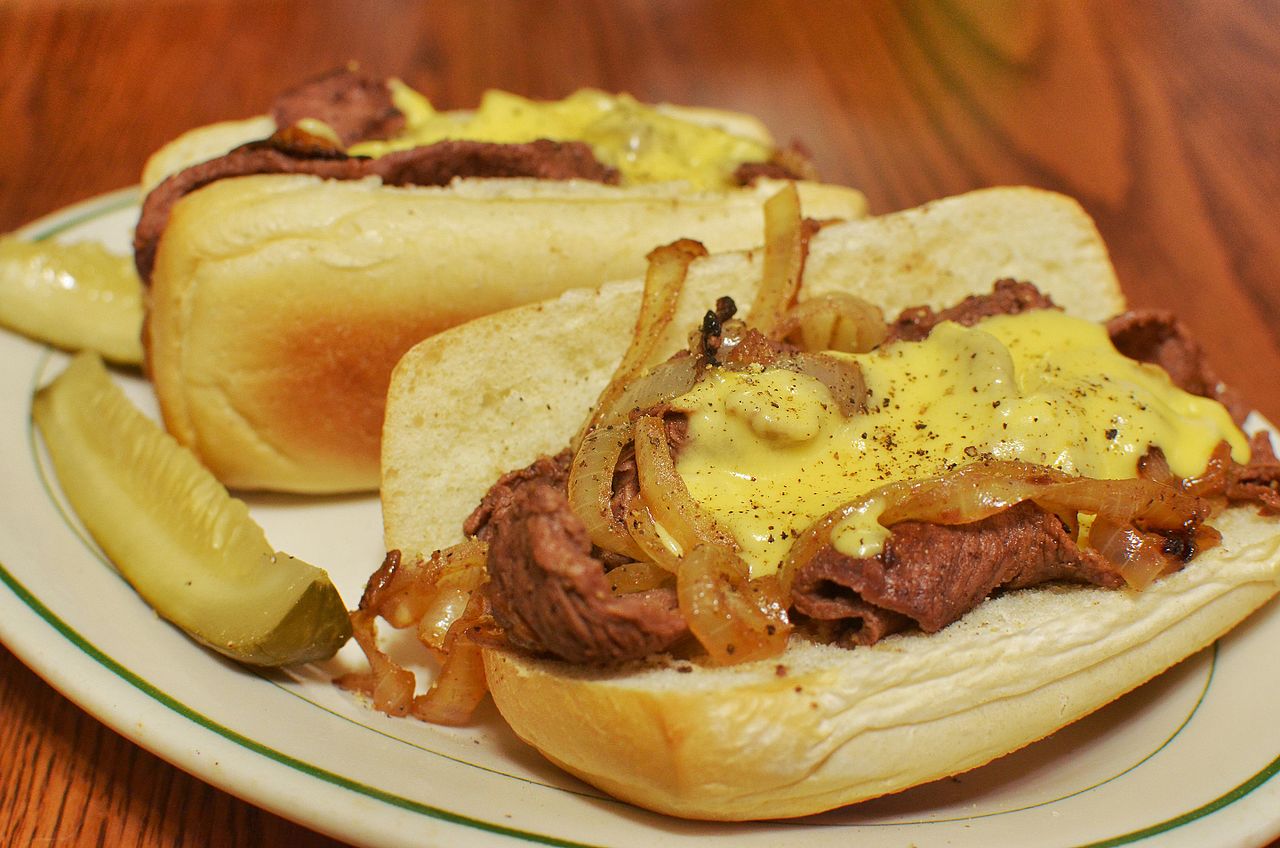
A cheesesteak is a hot sandwich that originated in the United States and is strongly associated with Philadelphia. It consists of very thinly sliced pieces of beef, melted cheese, and a soft long roll. The assembled sandwich is eaten warm and commonly sold at specialty shops, diners, and street counters where it is prepared to order.
Image gallery
3 Images

Core ingredients and preparation
The essential components are thinly sliced steak, a long split roll, and a melting cheese. Traditional rolls used in Philadelphia are soft and slightly crusty on the outside; many purveyors use regionally produced rolls for authenticity. The meat is usually cooked on a flat-top griddle and chopped or stretched as it browns, then combined with cheese until the topping is thoroughly melted.
- Common cheeses: provolone, American, or a processed cheese often ordered as Cheez Whiz (whiz).
- Typical additions: sautéed onions, and sometimes peppers or mushrooms.
- Serving: hot from the griddle, sometimes wrapped in paper for takeaway.
History and development
The cheesesteak developed as a working-class street food in the early 20th century and became closely identified with Philadelphia. Local vendors and shops refined the recipe over decades, experimenting with different cheeses, bread, and accompaniments. Several neighborhood stands and storefronts rose to prominence and helped popularize the sandwich regionally and nationally.
Variations and ordering customs
Regional and individual variations are common: some versions emphasize a particular cheese, others add grilled vegetables or serve on alternative breads. In Philadelphia, experienced customers may use brief phrases to specify additions—short-hand that varies between shops. Vegetarian and chicken substitutes have also become common in modern menus.
Cultural importance and notable shops
The cheesesteak is not just a menu item but part of Philadelphia's culinary identity. Several longstanding establishments are widely recognized for their versions of the sandwich and attract both locals and visitors. These shops and their rivalries form part of the local food culture and tourism interest, while the sandwich itself has been adapted into fast-food menus and regional variations nationwide.
Related articles
Author
AlegsaOnline.com Cheesesteak (Philadelphia sandwich) Leandro Alegsa
URL: https://en.alegsaonline.com/art/19113