
Al-Qaeda Organization in the Islamic Maghreb (AQIM)
AQIM is a Salafi‑jihadist militant group that emerged from Algeria's GSPC and expanded across the Maghreb and Sahel; known for insurgency, criminal financing, kidnappings and ties to al‑Qaeda.
The Al‑Qaeda Organization in the Islamic Maghreb (commonly abbreviated AQIM) is a militant Salafi‑jihadist group that emerged from insurgent networks in Algeria. It presents itself as an Islamic organisation opposed to secular governments in North and West Africa and has used armed violence and criminal enterprises to pursue its aims.
Image gallery
4 Images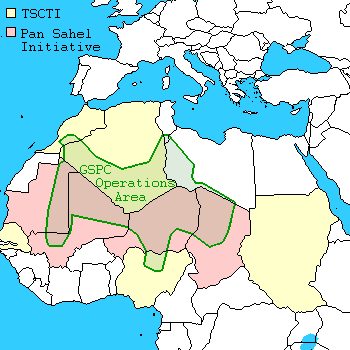


Origins and evolution
AQIM developed from the Salafist Group for Preaching and Combat, often referred to by its French acronym GSPC, which was active during and after Algeria's 1990s civil conflict. In the mid‑2000s the group announced an affiliation with the global al‑Qaeda network and adopted the AQIM name. Its early base was in Algeria, but over time its personnel and local affiliates moved into neighbouring parts of the Maghreb and the Sahel, adapting to shifting security environments.
Ideology and stated aims
AQIM adheres to a Salafi‑jihadist ideology that rejects existing state institutions and seeks to establish governance in line with its interpretation of Islamic law. It has publicly asserted ambitions to challenge secular governments and has at times declared intent to target both regional and international actors, mentioning interests and threats to countries such as Spain, France and the United States. Observers treat such statements as part of the group’s propaganda and recruitment efforts as well as a reflection of broader strategic goals.
Organization, leadership and fragmentation
Rather than a single tightly‑controlled hierarchy, AQIM has often functioned as a network of semi‑autonomous commanders and cells. Leadership has changed under pressure from national and international counter‑terrorism operations. The group has experienced internal splits and the emergence of local factions; some elements have remained loyal to the al‑Qaeda brand while others have operated with considerable local independence.
Methods and financing
AQIM combines insurgent tactics with criminal activities to sustain operations. Common methods include ambushes and bombings against security forces, kidnappings for ransom—frequently of foreigners—and involvement in smuggling, extortion and other illicit economies. These revenue streams have been essential to its survival in regions where state presence is limited and law enforcement capacity is weak.
Geographic presence and local impact
Although the group’s origins are in Algeria, AQIM and its affiliates have been active across the Maghreb and into the Sahel, including parts of Mali, Niger, Mauritania and Libya. In these areas porous borders and limited governance have created operational space. The group’s activities have caused civilian casualties, displacement, economic disruption and a deterioration of local security, and have at times enabled coercive control of territory or access to resources.
International response and legal status
States and international organizations characterise AQIM as a terrorist group and have taken legal, diplomatic and military measures against it. The group is listed by the U.S. State Department and by the European Union among entities subject to sanctions and counter‑terrorism actions. Regional governments and international partners have conducted operations to disrupt leadership, logistics and financing networks and to improve local security capacity.
Notable dynamics and issues
AQIM’s persistence reflects a combination of ideology, adaptable organization and access to criminal funding. Its relationship with local communities varies: in some places the group has been able to coerce support or exploit grievances, while in others it faces resistance. Analysts emphasise that estimates of manpower and capability have varied over time and that the organisation has repeatedly adapted to losses and shifting regional politics.
Further reading and resources
For background on the group’s formation and evolution see materials on the original GSPC, reported analyses of its alignment with global networks such as al‑Qaeda, and country‑level reporting on developments in Algeria and neighbouring states. Summaries and official designations are available from international and national authorities; see general overviews at introductory resources, notes on ideological objectives at ideological aims, and advisories concerning threats to Europe and partners (Spain, France) and transatlantic partners such as the United States. For legal and policy responses consult listings by the U.S. State Department and the European Union, and regional security assessments linked through those channels.
Related articles
Author
AlegsaOnline.com Al-Qaeda Organization in the Islamic Maghreb (AQIM) Leandro Alegsa
URL: https://en.alegsaonline.com/art/1901
Sources
- news.bbc.co.uk : Algeria blasts fuel violence fears
- english.aljazeera.net : "Osama bin Laden and the Sahel"