
Charlotte Court House, Virginia
Small town and county seat of Charlotte County, Virginia, noted for its courthouse square, rural Piedmont setting, preserved 19th–20th century buildings, and role as a local civic center.
Overview
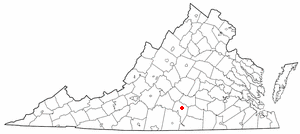
Charlotte Court House is a small incorporated town that serves as the county seat of Charlotte County in the U.S. state of Virginia. It functions as the administrative and civic hub for a largely rural area, concentrating county government offices, courts, and community services in and around a traditional courthouse square.
Image gallery
3 Images

Characteristics
The town is characteristic of many Virginia county seats: a compact center with a courthouse or courthouse building, municipal buildings, modest commercial blocks, churches and residential neighborhoods nearby. The surrounding landscape is part of Virginia's Piedmont region, composed of rolling farmland and woodlands. Local life typically revolves around county business, schools and small-scale agriculture.
History and development
Charlotte Court House developed around the county courthouse and public square, a common pattern in the state. Buildings in the town reflect 19th- and early 20th-century architectural styles and the incremental growth of a rural county center. Over time the town has retained features of its historical street pattern and several preserved buildings that convey its past role in local governance and commerce.
Economy and community life
The local economy is oriented toward county services, agriculture, forestry and small businesses that serve residents and neighboring farms. Civic institutions such as the courthouse, schools and churches host public events and provide services to a dispersed population. The town often functions as a focal point for legal, administrative and civic activities in Charlotte County.
Notable facts and distinctions
- The official name uses the two-word form "Court House," a traditional spelling retained by some Virginia county seats.
- The town center contains preserved historic buildings and a traditional courthouse square that attract local history interest.
- As a small county seat, it exemplifies the regional pattern of government-centered towns in rural Virginia.
For further information on municipal services, historic resources or visitor information, official and local resources can be consulted via county or state portals such as the town page and broader state resources at Virginia state sites.
Related articles
Author
AlegsaOnline.com Charlotte Court House, Virginia Leandro Alegsa
URL: https://en.alegsaonline.com/art/18826