
Charlottenburg-Wilmersdorf
A central-west borough of Berlin created in 2001 from Charlottenburg and Wilmersdorf, known for cultural institutions, universities, historic palace, major shopping avenues and the Olympic Stadium.
Overview
Charlottenburg-Wilmersdorf is a borough of Berlin in the city's central-western area. It was formed in 2001 by merging the former boroughs of Charlottenburg and Wilmersdorf. The administrative unit covers an area of 64.72 km2 (25.0 sq mi) and, according to early 2000s figures, had roughly 315,200 residents. The borough combines dense urban districts with parks, institutional campuses and important commercial streets.
Image gallery
4 Images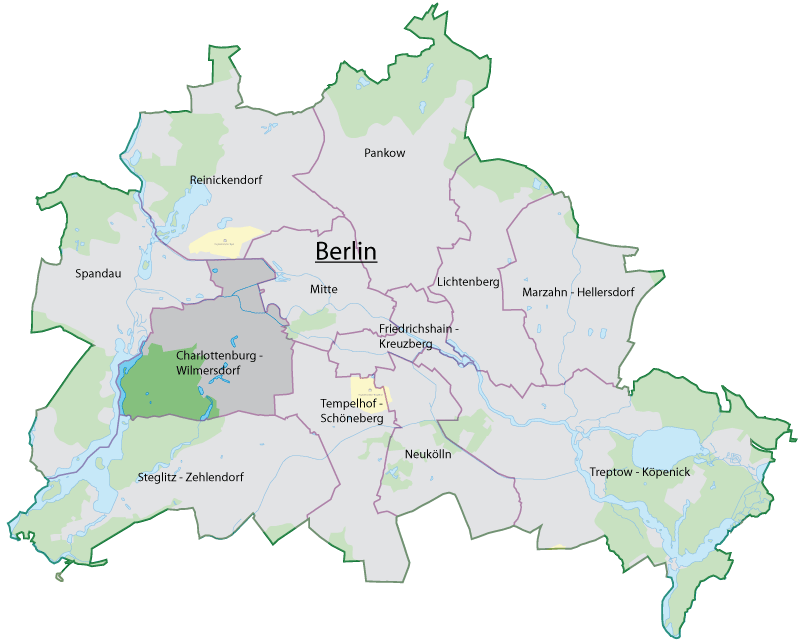


Geography and subdivisions
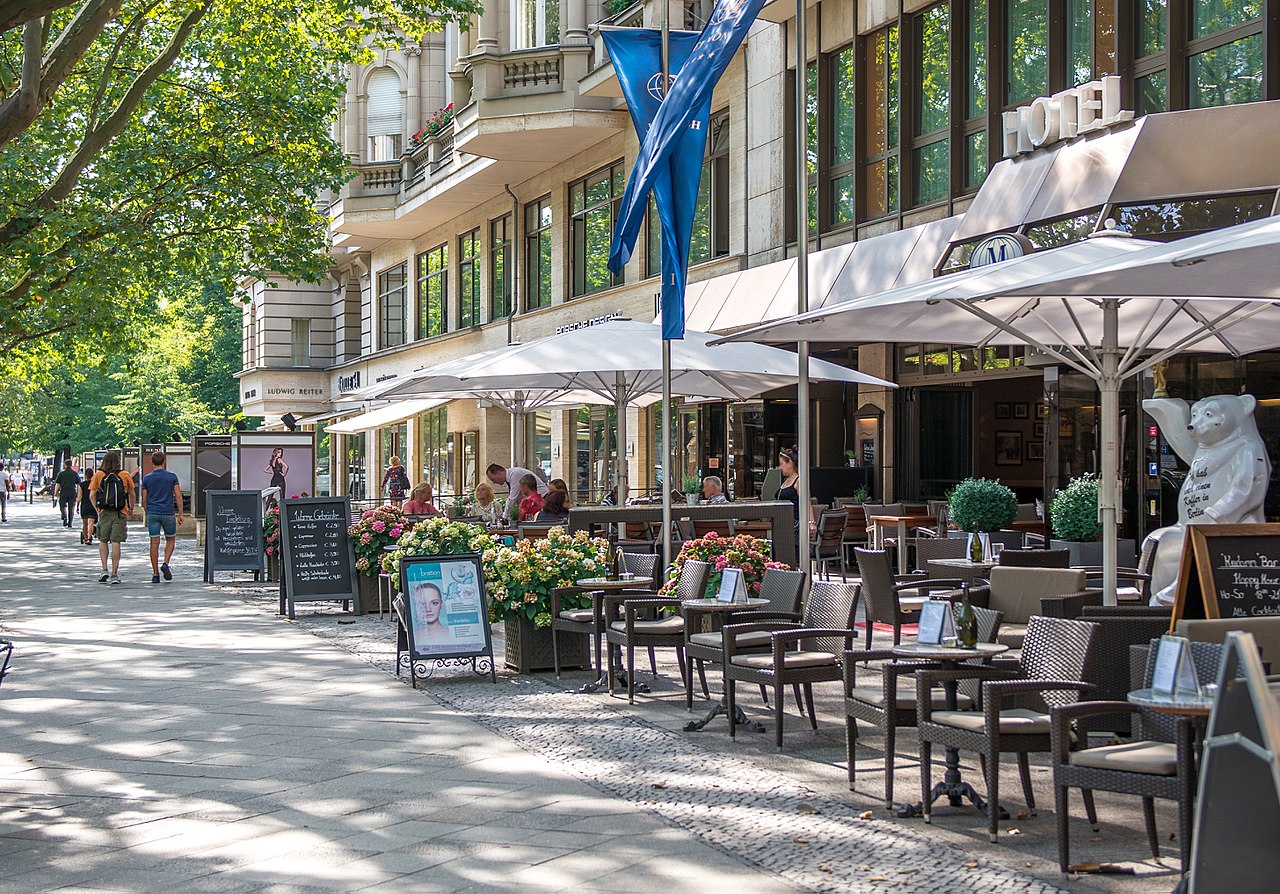
Located west of the inner city, the borough borders several other Berlin districts and contains a mix of residential neighbourhoods, business corridors and green spaces. Major localities within its boundaries include central Charlottenburg, Westend, Halensee, Schmargendorf and the Villa quarters of Wilmersdorf. The layout ranges from the broad boulevard of Kurfürstendamm to quieter side streets and pocket parks.
History and administration
The current borough organization dates to Berlin's 2001 administrative reform. The merger united two historically separate municipalities: Charlottenburg, which grew up around a royal palace and commercial avenues, and Wilmersdorf, known for suburban villas and cultural institutions. Governance is carried out by a borough council and a mayoral office; at the time of older sources the mayor was Monika Thiemen (SPD), reflecting local party politics and coalition arrangements common in Berlin boroughs. For administrative context see the borough entry linked as a unitary borough reference.
Landmarks, institutions and culture
- Higher education: The Technical University of Berlin (TU Berlin) and the Berlin University of the Arts are major academic centres with large campuses and research facilities.
- Performing arts: The Deutsche Oper Berlin and several theatres contribute a prominent cultural scene.
- Historic sites: Charlottenburg Palace anchors the borough's royal and baroque heritage, while the surrounding Schlossgarten provides public green space.
- Sport and events: The Olympic complex, including the Olympic Stadium, hosts sporting events, concerts and large gatherings.
Economy, transport and public life
Charlottenburg-Wilmersdorf is an economic mix of retail, professional services and cultural tourism. Kurfürstendamm and adjacent shopping streets support retail and hospitality businesses. The borough is well connected by S‑Bahn, U‑Bahn and major arterial roads that link it to central Berlin and regional routes. Small parks, markets and neighbourhood centres sustain diverse residential life.
Notable distinctions
The borough stands out for combining university research, classical cultural institutions and historic architecture within an urban West Berlin context. Its development reflects 19th- and 20th-century patterns of expansion, wartime damage and postwar rebuilding. Local political life has often been influenced by social-democratic and liberal groups — historically noted in references to parties such as SPD — and by civic efforts to preserve architectural heritage. For further municipal information consult regional links and sources provided by official and scholarly resources (see also borough and local entries).
Additional references and visitor information can be found through academic and tourism pages, and official borough resources often list current population, elected officials and public services; see related institutional pages and transport guides for practical details and event listings.
Questions and answers
Q: What is Charlottenburg-Wilmersdorf?
A: Charlottenburg-Wilmersdorf is a borough of Berlin that was formed in 2001 by joining together the old boroughs of Charlottenburg and Wilmersdorf.
Q: How big is Charlottenburg-Wilmersdorf?
A: Charlottenburg-Wilmersdorf has an area of 64.72 km2 (25.0 sq mi).
Q: How many people live in Charlottenburg-Wilmersdorf?
A: As of 2003, Charlottenburg-Wilmersdorf has about 315,200 inhabitants.
Q: Who is the current mayor of Charlottenburg-Wilmersdorf?
A: The current mayor of Charlottenburg-Wilmersdorf is Monika Thiemen (SPD).
Q: What universities are located in Charlottenburg-Wilmersdorf?
A: Charlottenburg-Wilmersdorf is home to the Technical University of Berlin (Technische Universität Berlin) and the Berlin University of the Arts (Universität der Künste).
Q: What cultural attractions are located in Charlottenburg-Wilmersdorf?
A: The opera (Deutsche Oper Berlin), the Charlottenburg Palace and the Olympic Stadium are located in Charlottenburg-Wilmersdorf.
Q: When were Charlottenburg and Wilmersdorf joined together to form Charlottenburg-Wilmersdorf?
A: Charlottenburg and Wilmersdorf were joined together to form Charlottenburg-Wilmersdorf in 2001.
Tags
Related articles
Author
AlegsaOnline.com Charlottenburg-Wilmersdorf Leandro Alegsa
URL: https://en.alegsaonline.com/art/18841