
Chamber of Deputies (Luxembourg)
The unicameral national legislature of Luxembourg, composed of 60 deputies elected for five-year terms by open-list proportional representation in four constituencies.
Overview
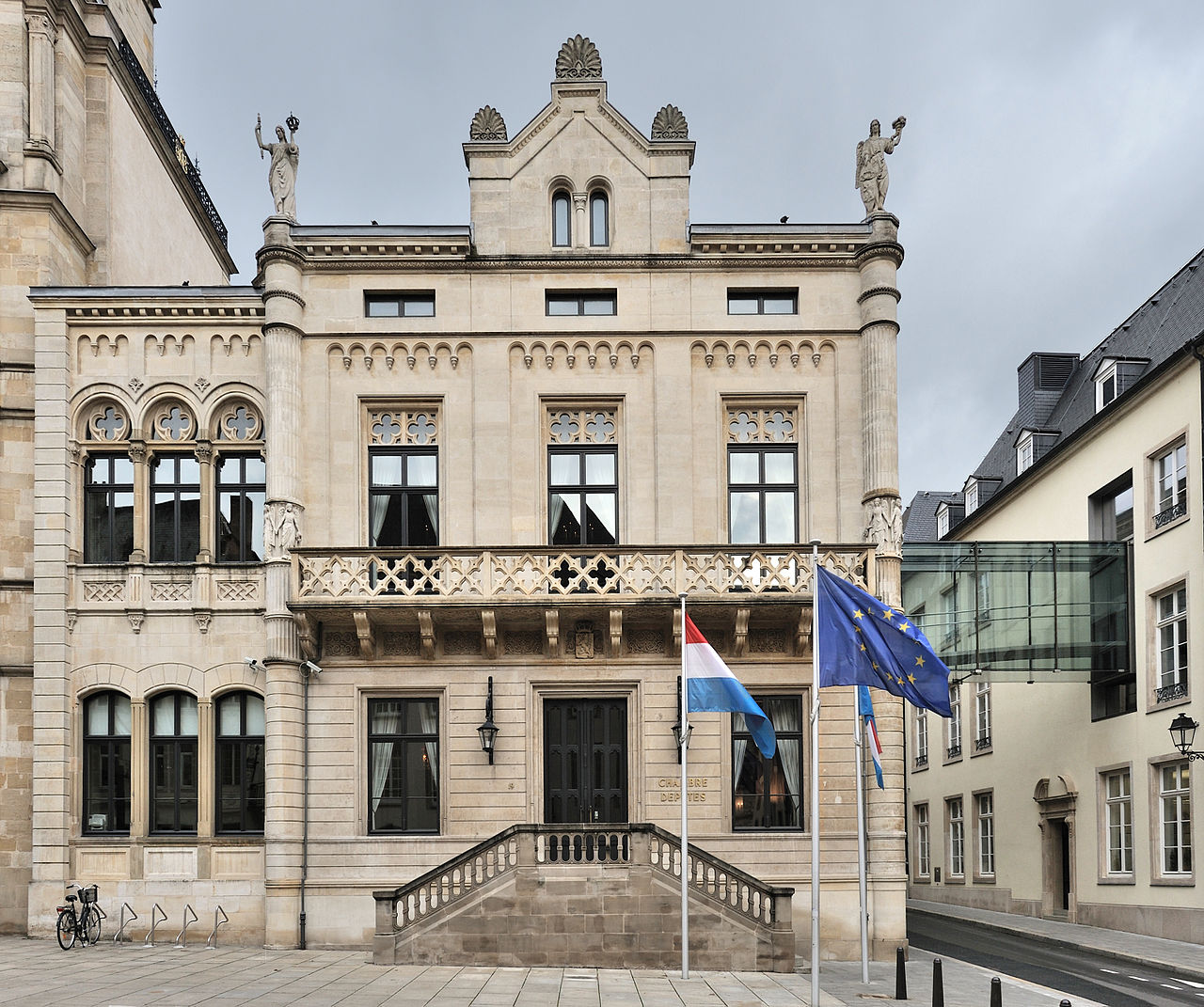
The Chamber of Deputies is the single legislative assembly of Luxembourg. Commonly called the Chamber, it appears in the nation's three official languages: Luxembourgish, French and German. As the national legislature, the body debates and adopts laws, approves the budget and exercises oversight of the government.
Image gallery
4 Images


Composition and electoral system
The Chamber comprises 60 members elected for five-year terms. Deputies are chosen from four multi-seat constituencies: South, Centre, North and East. Elections use an open-list, list-proportional method of representation commonly described as proportional representation, allowing voters to cast multiple candidate votes up to the number of seats in their constituency and to distribute votes across party lists.
Powers and proceedings
The Chamber approves primary legislation, ratifies international agreements and adopts the national budget. It holds the government to account through questions, debates and committee scrutiny. A presiding officer (often referred to as the President of the Chamber) chairs sittings and represents the assembly externally. Committees handle detailed examination of bills and sectoral oversight.
Practical characteristics
- Size: 60 deputies, reflecting Luxembourg's population and administrative divisions.
- Term length: five years between general elections.
- Language: multilingual working environment with Luxembourgish, French and German frequently used.
- Voting features: open lists, panachage and multiple votes per voter within a constituency.
History and significance
The Chamber developed from the constitutional arrangements of the 19th century and has evolved alongside Luxembourg's modern democratic institutions. Its relatively compact size and multilingual practice reflect the country's scale and cultural diversity. The Chamber's role in shaping domestic policy and supervising the executive makes it central to Luxembourgish public life.
Distinctive notes
While small compared with many national parliaments, the Chamber's procedures combine proportional representation with individualized voter choice, creating a balance between party lists and personal mandates. Its unicameral structure (unicameral) means legislative power is concentrated in a single elected assembly rather than divided between two houses, which affects how laws are proposed and enacted.
For further general information and comparative context, consult authoritative institutional sources or national summaries available through official parliamentary guides and reference collections (language page, further reading, terminology, structural notes, legislature functions, country profile, electoral systems).
Related articles
Author
AlegsaOnline.com Chamber of Deputies (Luxembourg) Leandro Alegsa
URL: https://en.alegsaonline.com/art/18413
Sources
- chd.lu : "Histoire parlementaire"