
Chancellor of Austria
The Federal Chancellor is Austria's head of government, leading the cabinet and coordinating executive policy. The chancellor is appointed by the president and depends on parliamentary support to govern.
The Federal Chancellor of Austria (Bundeskanzler) is the head of government head of government and the leading figure of the federal executive chief executive of Austria. Although the President is the formal head of state, the chancellor normally directs day‑to‑day government business and is often described as the de facto highest office in the state government de facto highest office. The office has an accompanying deputy, the Vice‑Chancellor, who acts as second‑in‑command and may serve as acting chancellor if required.
The chancellor is appointed by the President of Austria appointed by the President, normally after parliamentary elections. In practice the president selects a candidate who can command a majority or a governing coalition in the National Council (the lower house of parliament). The chancellor remains in office while they retain parliamentary confidence and the president's formal appointment; loss of support from the National Council can lead to resignation or removal through established parliamentary procedures.
Image gallery
4 Images


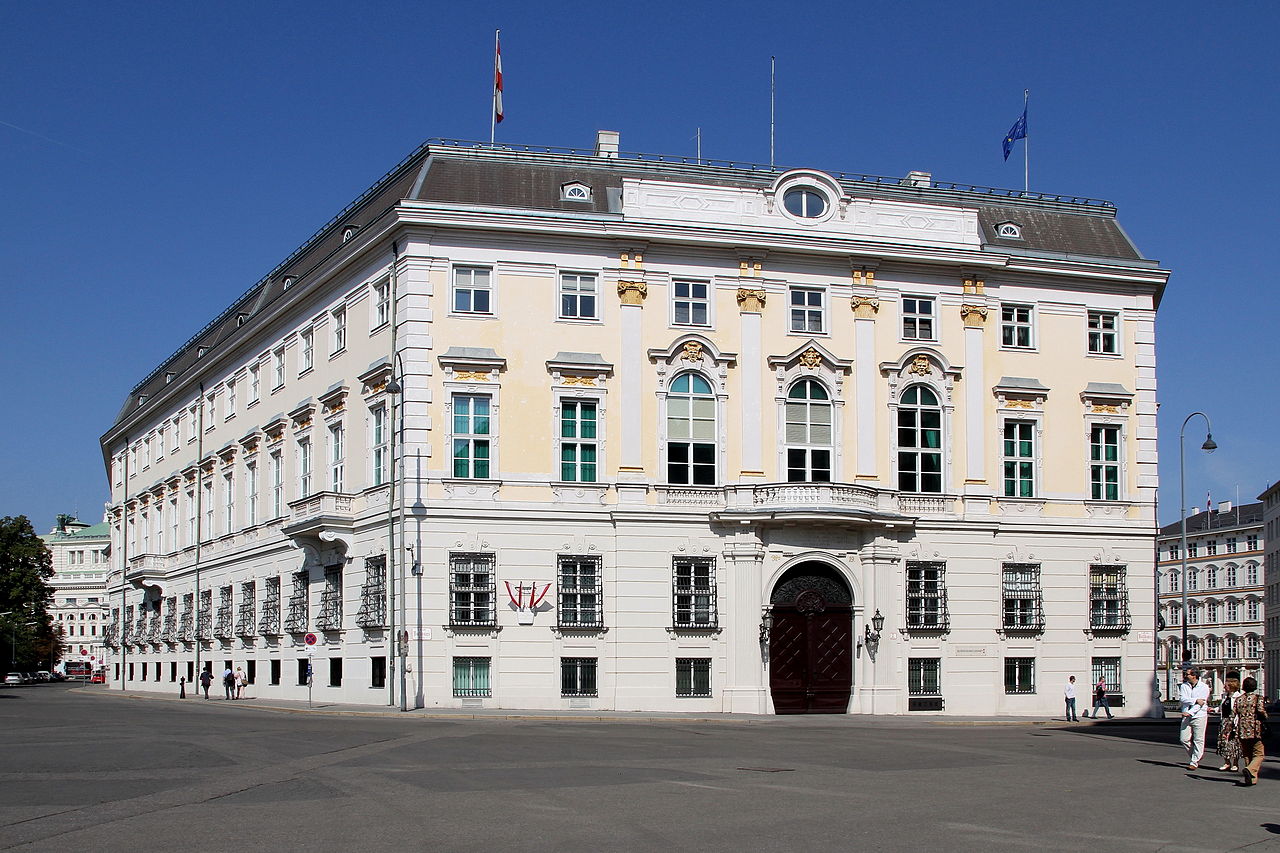
Functions and duties
- Leads the federal cabinet and chairs meetings where ministers coordinate policy and administration.
- Proposes ministerial appointments and represents the government in parliament and public affairs.
- Sets overall government priorities, mediates between coalition partners and coordinates inter‑ministerial work.
- Acts as a principal government representative domestically and internationally, although head‑of‑state duties remain with the president.
Historically, the role evolved from the imperial Minister‑President before 1918 to the republican Federal Chancellor after the collapse of the Austro‑Hungarian Empire and the establishment of the First Austrian Republic. Over the twentieth century the office adapted to changing constitutional arrangements, particularly under coalition governments when the chancellor's influence often depends on party bargaining and parliamentary arithmetic.
In Austria's parliamentary system the chancellor's authority is shaped less by unilateral powers and more by the ability to maintain coalition cohesion and parliamentary backing. Practical examples include coalition negotiations after elections, cabinet reshuffles to preserve stability, and responding to motions of no confidence. The vice‑chancellor role commonly belongs to a junior coalition partner and provides balance within the executive.
Notable distinctions: the chancellor is distinct from the head of state and from presidents in presidential systems. The office combines policy leadership with political management in a multi‑party environment, making it central to Austria's contemporary governance and public life.
Related articles
Author
AlegsaOnline.com Chancellor of Austria Leandro Alegsa
URL: https://en.alegsaonline.com/art/18502
Sources
- bruttonetto-rechner.at : bruttonetto-rechner.at/gehalt-bundeskanzler-oesterreich/