
Carom billiards: history, rules, games, and distinguishing features
Carom billiards is a family of cue sports played on pocketless tables where points are scored by caroming a cue ball off other balls. It includes straight rail, balkline, three-cushion and artistic games.
Overview
Carom billiards, sometimes called carambole, refers to several cue-sport games played on cloth-covered tables without pockets. Unlike pool or snooker, the objective in most carom games is not to pot balls but to score points by striking a cue ball so that it contacts the other object balls in prescribed ways. The equipment—heavy, solid balls and tapered cues—resembles other billiard disciplines, but the absence of pockets and the emphasis on precise angles and cushions produce a distinct style of play. For a general introduction to equipment and variations see overview resources.
Image gallery
10 Images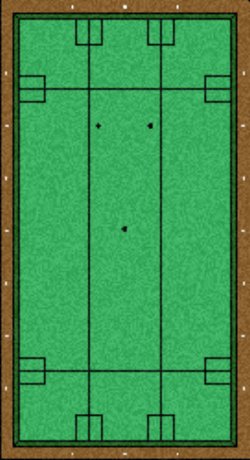




Characteristics and equipment
Carom tables are larger than many pocket billiard tables and are bounded by cushioned rails designed to produce predictable rebounds. Typical tables are covered with worsted wool cloth to allow smooth rolling and accurate rebounds. Balls are slightly larger and heavier than some pocket-billiard sets and are often distinguished by subtle markings. The cue used for carom play is usually shorter and stiffer than a pool cue to facilitate controlled, low-trajectory shots. Detailed equipment descriptions appear in specialized guides such as equipment guides and instructional material at training resources.
Historical development
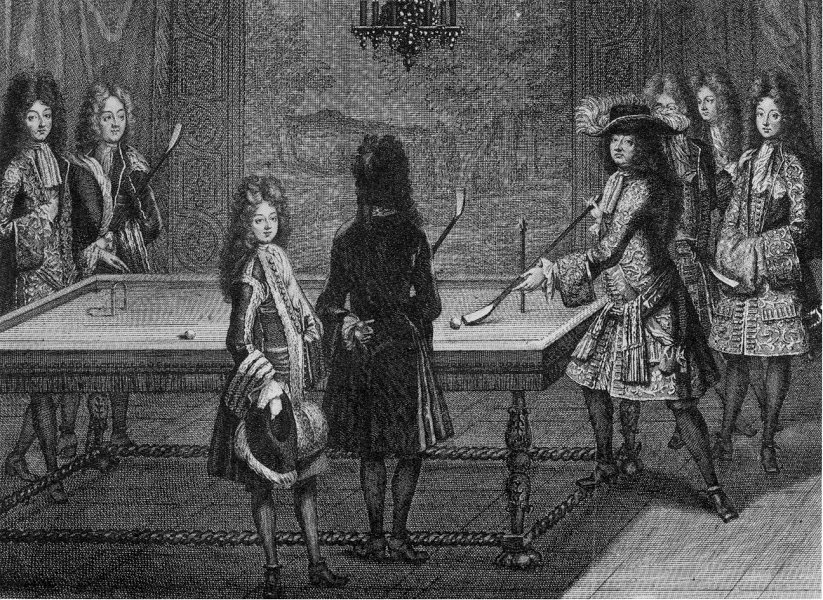
The early roots of carom games trace back to Europe in the 18th century, with France frequently cited as a formative region. Over time, players and clubmasters formalized variations that emphasized different shot-making skills: simple rail caroms; games that penalized or rewarded cushion usage; and eventual development of three-cushion and artistic forms that require complex geometry. The timeline of these changes and the transition between forms are discussed in historical treatments and rule compilations at historical summaries and rule archives.
Principal game families
- Straight rail — the simplest classical form: score by caroming your cue ball off both object balls in a single shot.
- Balkline — evolved to limit repetitive easy sequences by drawing lines on the table; balk areas restrict consecutive scoring.
- Three-cushion billiards — the most internationally prominent carom discipline today: the cue ball must contact at least three cushions before completing a carom, greatly raising difficulty.
- Artistic billiards — a judged discipline where players execute a set of prescribed trick shots with strict technical requirements.
- Other hybrid and regional games combine carom ideas with pocket-table play; see comparative notes at variant listings.
Rules and scoring vary considerably: some games reward successive counts by a single player, others limit runs by space markings or require cushion contacts. Formal governing bodies publish standardized rules for international competition; consult federations and rulebooks at governing bodies and competition rules.
Importance and contemporary practice
Carom billiards remains practiced both recreationally and competitively. Three-cushion play enjoys an international tournament circuit and world championships, while artistic billiards showcases technical virtuosity. The discipline influences cue-sports coaching because its emphasis on angles, spin, and cushion play improves shot control useful across billiards disciplines. For players transitioning from pocket games to carom, practicing cushion management and shot planning is essential.
Questions and answers
Q: What is carom billiards?
A: Carom billiards, sometimes called carambole billiards or simply carambole, is a family of billiards games played on cloth-covered tables. Players strike heavy balls with sticks called cues and the object of the game is to score points by bouncing one's own ball off of the other two balls on the table.
Q: When was carom billiards invented?
A: The exact date when carom billiards was invented is not known, but it is believed to have started sometime in the 18th century (the 1700s) in France in Europe.
Q: What are some well-known games that are part of carom billiards?
A: Some of the most well-known games that are part of carom billiards include straight rail, cushion caroms, balkline, three-cushion billiards and artistic billiards.
Q: Are there any other types of games that combine aspects from both pocketed and non-pocketed tables?
A: Yes, there are many other types of games that combine aspects from both pocketed and non-pocketed tables such as English Billiards played on a snooker table and its related games, American four-ball Billiard and Cowboy Pool which is played on a pool table.
Q: How do players score points in carom Billiard?
A: In its simplest form, players score points or "counts" by bouncing their own cue ball off of the other two balls on the table.
Q: Is there an objective for each game within Carom Billiard?
A: Yes, each game within Carom Billiard has its own distinct rules, strategies and objectives for play.
Related articles
Author
AlegsaOnline.com Carom billiards: history, rules, games, and distinguishing features Leandro Alegsa
URL: https://en.alegsaonline.com/art/17210
Sources
- etymonline.com : Carom - Online Etymology Dictionary
- dictionary.reference.com : Carom - Dictionary.com
- dspace.mit.edu : A Strategy for the Use of Light Emitting Diodes by Autonomous Underwater Vehicles (pdf)
- umb.org : World Rules of Carom Billiard
- umb.org : "Applied Regulations Affecting the Billiard Cloth and the Balls"
- select.nytimes.com : Explosive Teeth.
- select.nytimes.com : To Heat Table for First Time In World Title Billiard Match
- select.nytimes.com : Billiards Under New Rules; A Tournament in Which Rail Play Will be Restricted-the Programme.
- select.nytimes.com : Hoppe Hoppe Adds Morningstar's Scalp to His Collection Made in Billiard Title Tourney.
- select.nytimes.com : Drawbacks to Billiards; Personal Solicitude the Source of Nearly All. Lost Professional Pride and Pluck Both Evades Public Matches and Suppresses Them.
- query.nytimes.com : "Chicago Billiards Tourney"
- select.nytimes.com : Billiards Players Busy.
- books.google.com : Modern Billiards
- select.nytimes.com : Magnus Plays Poor Billiards.
- aolsvc.timeforkids.kol.aol.com : "Names make news"