
Canadian Shield (Laurentian Plateau)
Vast Precambrian region of exposed igneous and metamorphic rock forming the ancient core of North America, surrounding Hudson Bay and supplying minerals, forests, lakes and hydroelectric resources.
Overview
The Canadian Shield, also known as the Laurentian Plateau or in French as the Bouclier canadien, is a vast area of exposed ancient rock that forms the geological core of the North American continent. It consists primarily of Precambrian igneous and high‑grade metamorphic rocks and is the foundation of the continent’s stable craton, often called the North American Craton or Laurentia.
Image gallery
7 Images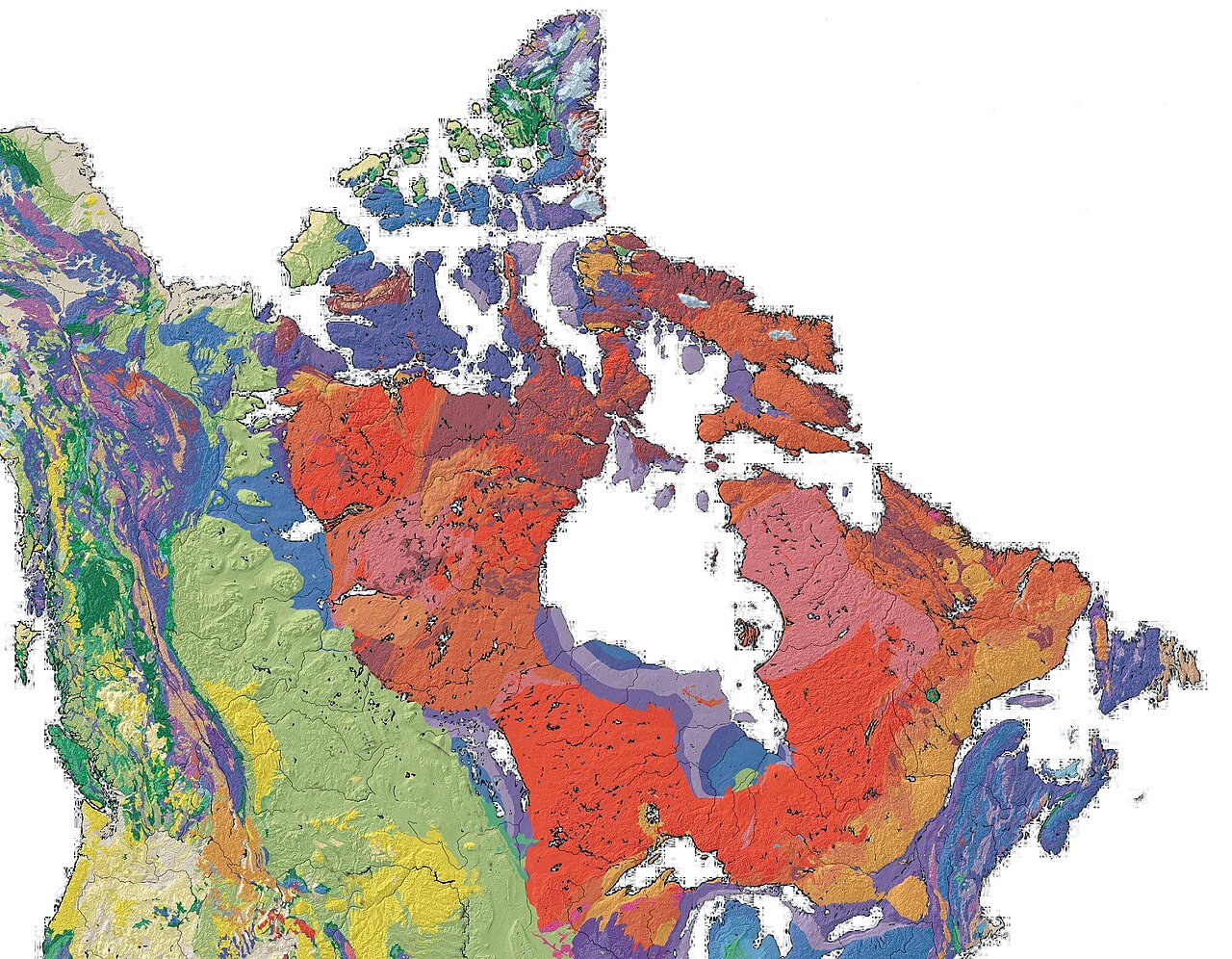


Geology and age
The Shield is composed of Archean and Proterozoic terranes created during early continental growth. Its bedrock is dominated by granites, gneisses and other high‑grade metamorphic lithologies produced by ancient tectonic and magmatic processes. Some portions contain some of the oldest known continental rocks, formed billions of years ago, and they record a long history of mountain‑building, metamorphism and erosion.
Extent and landscape
Geographically the Shield wraps around Hudson Bay and stretches across much of eastern and central Canada. A geological continuation reaches into west Greenland, from which it was once connected. In the United States many parts of the ancient shield are now overlain by younger rocks and sediment, so the bedrock is less often exposed.
Characteristics
- Thin, often acidic soils and extensive bedrock exposure caused by repeated glaciation and slow soil development; many areas have shallow soil.
- Countless lakes, rivers and wetlands carved by ice and retained by irregular bedrock basins.
- Large tracts of boreal forest and tundra interspersed with sparsely populated regions.
Uses, resources and human impact
The Shield has long been an important source of mineral resources and industrial activity. Its hard rock hosts deposits of nickel, copper, gold, iron and other metals that have supported extensive mining operations. Forestry, hydroelectric development on its rivers, and limited agriculture near its southern margins are other economic uses. Communities, including many Indigenous nations, live throughout the region and depend on its resources and waterways.
Notable facts and conservation
As one of the world’s largest expanses of exposed Precambrian rock, the Canadian Shield is a key subject for studies of Earth’s early crustal development. Its landscapes—rocky outcrops, dark lakes and boreal forests—are iconic in Canadian geography and pose special challenges for conservation, resource management and the reconciliation of development with Indigenous rights.
Tags
Related articles
Author
AlegsaOnline.com Canadian Shield (Laurentian Plateau) Leandro Alegsa
URL: https://en.alegsaonline.com/art/16479
Sources
- ftp.geogratis.gc.ca : "Physiographic Regions Map"