
Hudson Bay
Large inland sea in east-central Canada connecting to the Atlantic and Arctic; important for ecology, history, and northern communities.
Overview
Hudson Bay is a vast inland sea occupying much of east-central Canada. It covers roughly 316,000 square miles (about 819,000 square kilometres) and is often cited as one of the world’s largest bays or inland seas. The basin drains a large portion of the Canadian Shield and receives freshwater from numerous rivers before connecting to the North Atlantic and Arctic oceans through narrow passages.
Its location in east-central Canada gives the bay a decisive role in regional climate and marine circulation. It is described by some sources as the fourth-largest sea in the world by area and is commonly reported as roughly 316,000 square miles (819,000 km²).
Image gallery
10 Images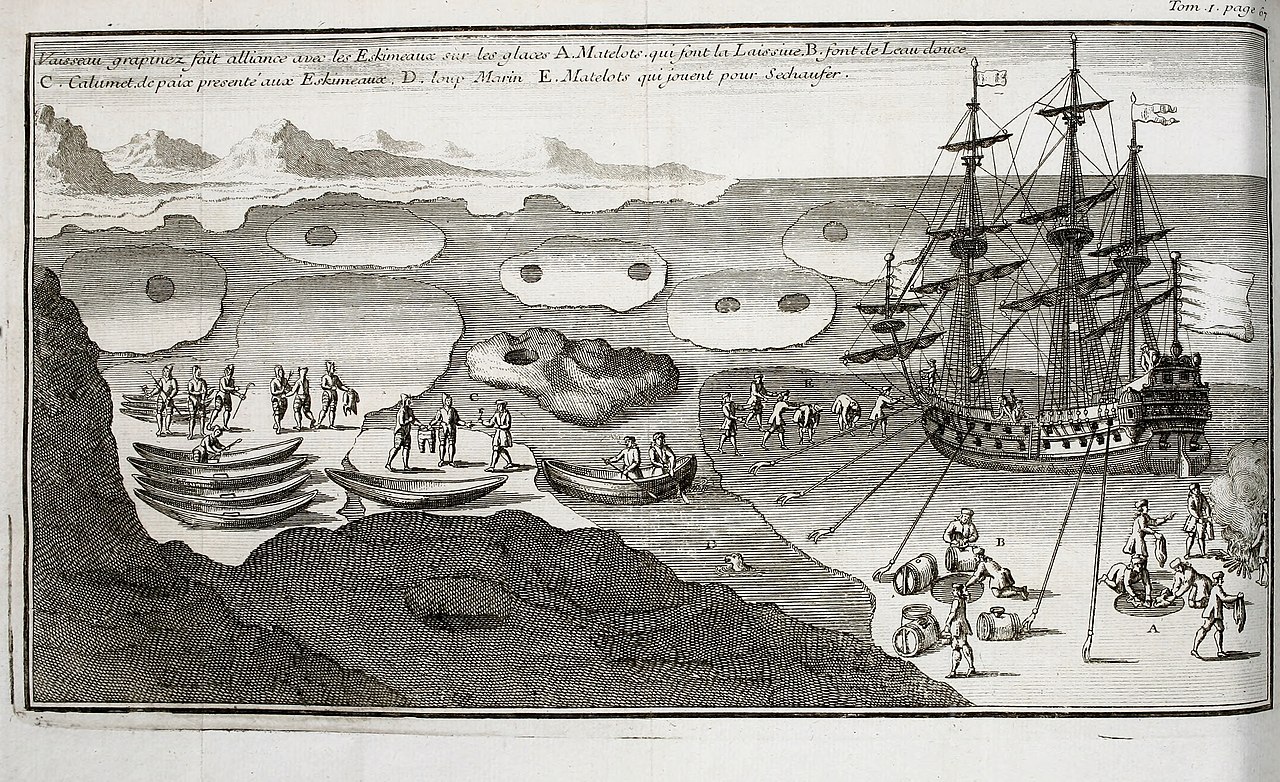



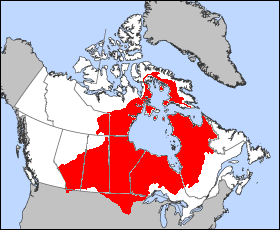
Geography and administrative boundaries
The shoreline of Hudson Bay touches several Canadian provinces and territories. The northern and western coasts are within Nunavut, the southern shore is divided between Manitoba and Ontario, and the eastern shore fronts Quebec. Major physical connections include the Hudson Strait, which links the bay to the Atlantic Ocean to the northeast, and channels toward the Arctic to the north.
Climate, ice, and ecology
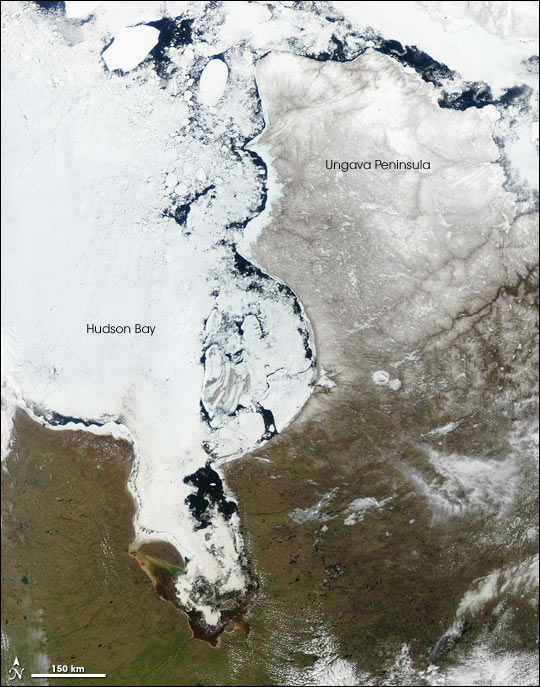
Hudson Bay has a subarctic to polar climate. Much of the surface freezes seasonally: coastal ice forms in fall and typically melts in summer, with variations across the basin. The combination of cold waters, seasonal ice cover, and large freshwater inflow supports distinctive ecosystems. Tundra and boreal habitats surround the bay, and its waters host marine mammals (including seals and polar bears), migratory birds, and fish species adapted to cold, both salt- and brackish-water environments.
History and human presence
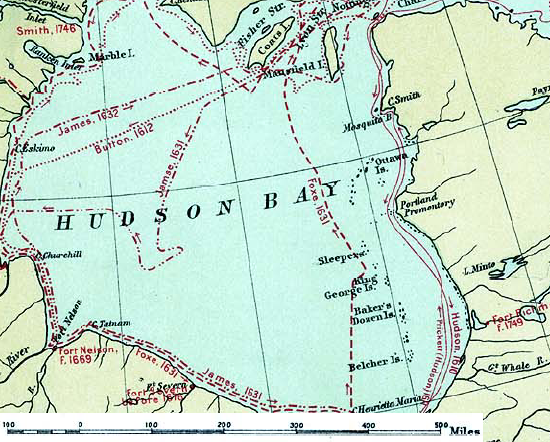
European exploration of the bay began in the early 17th century. It takes its English name from the navigator Henry Hudson, who sailed into the region in 1610 aboard the vessel Discovery and claimed the area for England; many sources note the role of that expedition and the subsequent fur trade in shaping colonial-era activity. The bay became central in North American trade routes and in the operations of companies such as the Hudson’s Bay Company.
Uses, communities, and modern significance
Hudson Bay remains important for fisheries, local transportation, and the livelihoods of Indigenous and northern communities. Ports and settlements on its shores serve as regional hubs for commerce, resource development, and cultural life. Environmental monitoring and research in the bay focus on sea-ice change, wildlife conservation, and the effects of warming in Arctic and subarctic systems.
Notable facts and further reading
- Size: commonly quoted figures include 316,000 square miles or 819,000 km².
- Hydrological links: connected to the Atlantic via Hudson Strait and to Arctic channels toward Lancaster Sound and Foxe Basin.
- Jurisdiction: shores lie in Nunavut, Manitoba, Ontario, and Quebec.
- Historical figure: named for the English explorer Henry Hudson (see his voyage of 1610).
For maps, historical accounts, and scientific summaries consult regional atlases and records from national agencies and northern organizations that document the bay’s geography, climate, and communities. Additional resources and official reports are available through governmental and academic portals. Regional overview and institutional compilations provide accessible entry points for further reading.
Questions and answers
Q: What is the Hudson Bay?
A: The Hudson Bay is a bay located in East-central Canada.
Q: What is the area of the Hudson Bay?
A: The area of the Hudson Bay is 316,000 square miles (819,000 square kilometres).
Q: What are the shores that belong to Nunavut, Manitoba, Ontario and Quebec?
A: The northern and western shores belong to Nunavut, the southern shore is split between Manitoba and Ontario, and the eastern shore belongs to Quebec.
Q: How is the Hudson Bay connected with the Atlantic Ocean?
A: The Hudson Bay is connected with the Atlantic Ocean through the Hudson Strait, located in the northeast of the bay.
Q: How is the Hudson Bay connected with the Arctic Ocean?
A: The Hudson Bay is connected with the Arctic Ocean through the Foxe Channel, located in the north part of the bay.
Q: Who discovered the Hudson Bay and when?
A: The Hudson Bay was discovered by the English explorer Henry Hudson in 1610.
Q: Who claimed the Hudson Bay and for which country?
A: Henry Hudson claimed the Hudson Bay for England.
Related articles
Author
AlegsaOnline.com Hudson Bay Leandro Alegsa
URL: https://en.alegsaonline.com/art/45538