
Air New Zealand Flight 901 — Mount Erebus disaster (1979)
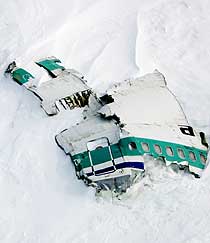
Flight 901 was an Air New Zealand sightseeing flight to Antarctica that crashed into Mount Erebus on 28 November 1979, killing all 257 aboard. The accident prompted a major public inquiry and changes in flight safety practice.
Overview
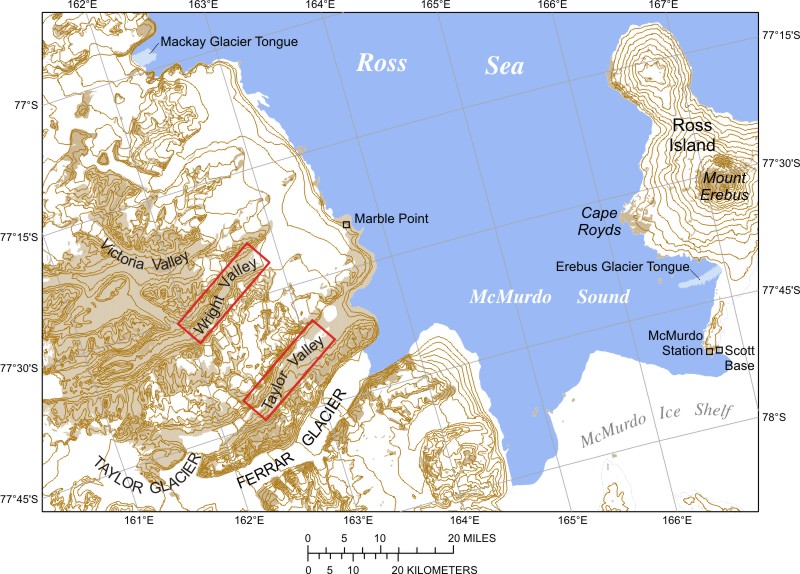
Air New Zealand Flight 901 was a regular Antarctic sightseeing service operated by a McDonnell Douglas DC-10-30 that departed Auckland, New Zealand, on 28 November 1979. Rather than landing in Antarctica, the flight was a round-trip scenic tour intended to give passengers aerial views of the continent before returning to Auckland. During the return leg the aircraft collided with Mount Erebus on Ross Island in Antarctica, killing all 257 people aboard. The disaster remains one of New Zealand's deadliest peacetime accidents and a defining event in the nation's aviation history. For background on Antarctic tourism and flights, see Antarctic sightseeing.
Image gallery
8 Images


Flight profile and aircraft
The service operated as a non-stop sightseeing circuit from Auckland: the aircraft would fly south to the Antarctic region, conduct a low-level scenic pass over selected landmarks, and then climb to transit altitude for the return. The aircraft type used for these flights was a long-range wide-body jet suitable for extended over-water and remote-area operations. Crew planning relied on navigational coordinates and radio aids to establish position during the low-level scenic segments. Operational procedures for Antarctic visual approaches require accurate route information and careful assessment of meteorological conditions, especially given the risk of visual illusions over ice fields.
Sequence of the accident
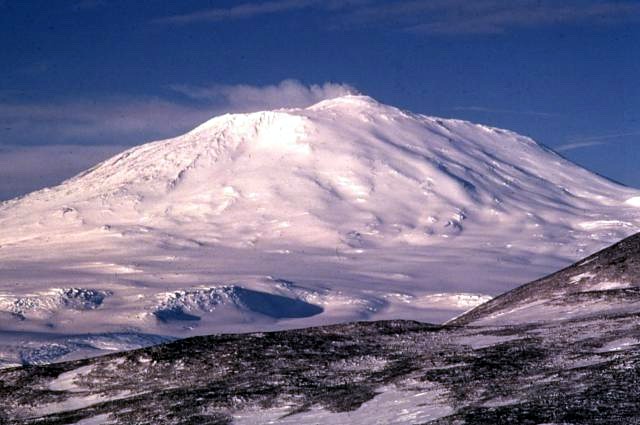
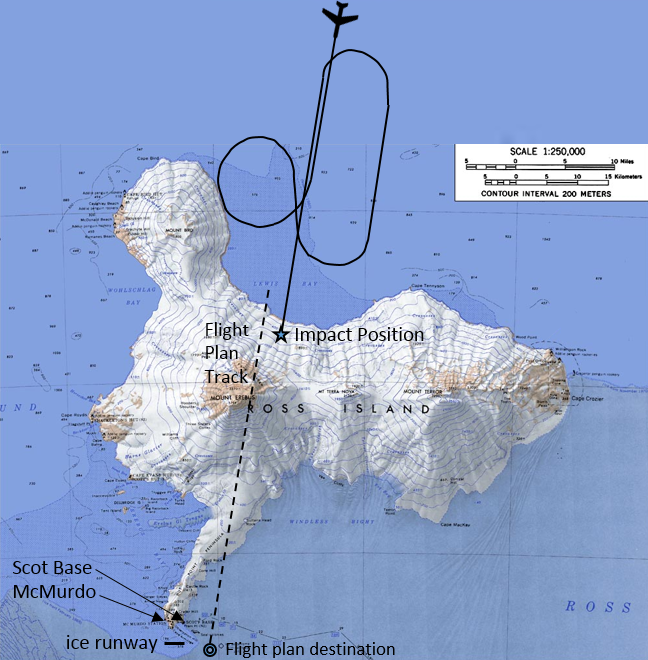
On the day of the flight, the aircraft descended toward what the crew believed was an approach corridor over water. Unusual weather conditions in the Antarctic—chiefly a phenomenon often called a whiteout or sector whiteout—reduced visible contrast between sky and snow, making terrain difficult to detect. The aircraft flew into rising terrain and impacted the slopes of Mount Erebus. All passengers and crew were killed. The tragedy shocked the public and prompted immediate questions about how a modern airliner could strike a known mountain in clear proximity to the planned route. For a concise account of the route and crash site, consult Auckland departure and planned route.
Investigation and inquiries
Early official reports initially suggested pilot error as a factor, but the circumstances led to public concern and a formal inquiry. A Royal Commission of Inquiry examined flight planning, navigation data, operational changes, weather reports, and communications. The inquiry found that a change had been made to the flight route coordinates shortly before departure without effectively informing the flight crew. That alteration placed the track toward Mount Erebus, and combined with reduced visibility the crew were not able to visually identify the mountain before impact. The commission's findings criticized the airline's practices and communications. Further discussion of procedural and regulatory aspects can be found at investigative findings and aviation safety reforms.
Consequences and legacy
The disaster had a lasting influence on civil aviation in New Zealand and internationally. It prompted changes in how scenic flights are planned and briefed, reinforced the need for rigorous route verification and crew notification of any changes, and accelerated improvements in navigation and approach procedures for operations near polar and remote areas. The accident also spurred debate about corporate responsibility and safety culture within airlines. Memorials and commemorations mark the lives lost, and the event remains a subject of study in aviation safety and human factors training. For further context, see historical commentary and memorials.
Notable points and distinctions
- The flight was a sightseeing round trip, not a transport service to Antarctica.
- Whiteout and reduced visual cues in polar regions can create conditions in which terrain is effectively invisible until impact risk is imminent.
- The case is frequently cited in discussions of controlled flight into terrain (CFIT) and the importance of accurate navigation data and clear communication between airline operations and flight crews.
Tags
Related articles
Author
AlegsaOnline.com Air New Zealand Flight 901 — Mount Erebus disaster (1979) Leandro Alegsa
URL: https://en.alegsaonline.com/art/1640