
American Airlines Flight 587 (November 12, 2001 crash)
Summary of the November 12, 2001 crash of American Airlines Flight 587, its sequence, investigation findings, causes, aftermath and its significance for aviation safety.
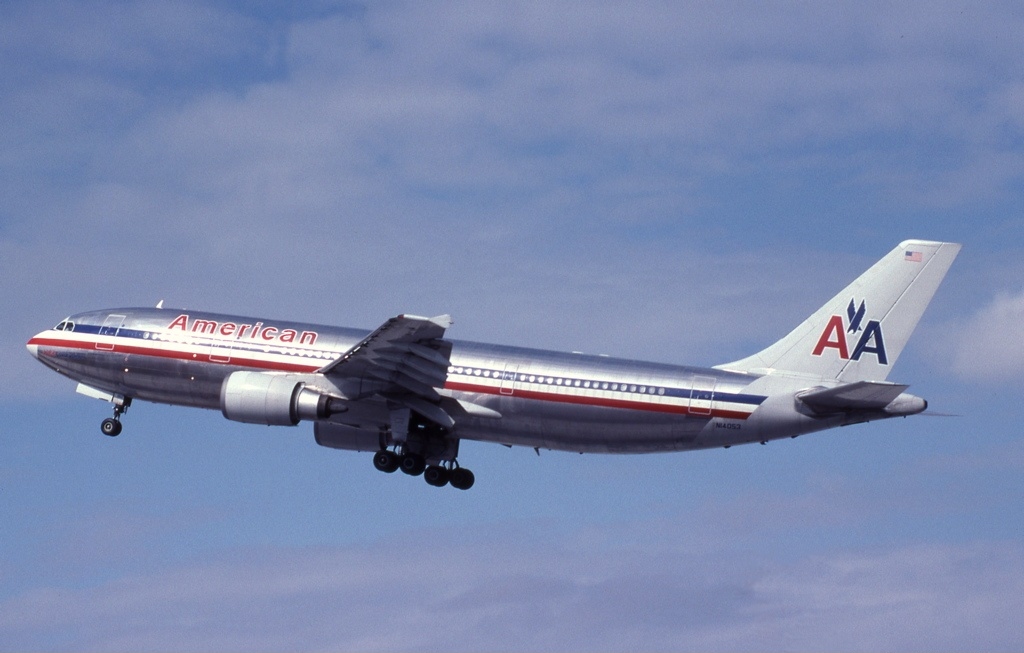
American Airlines Flight 587 was a regularly scheduled passenger flight operated by American Airlines from John F. Kennedy International Airport in New York City to Las Américas International Airport in the Dominican Republic. On November 12, 2001, the Airbus A300-600 aircraft involved in the flight, an A300-600, crashed into the Belle Harbor neighborhood of Queens shortly after takeoff. All 260 people aboard were killed along with five residents on the ground. The accident ranks among the deadliest civil aviation disasters in the United States.
Image gallery
10 Images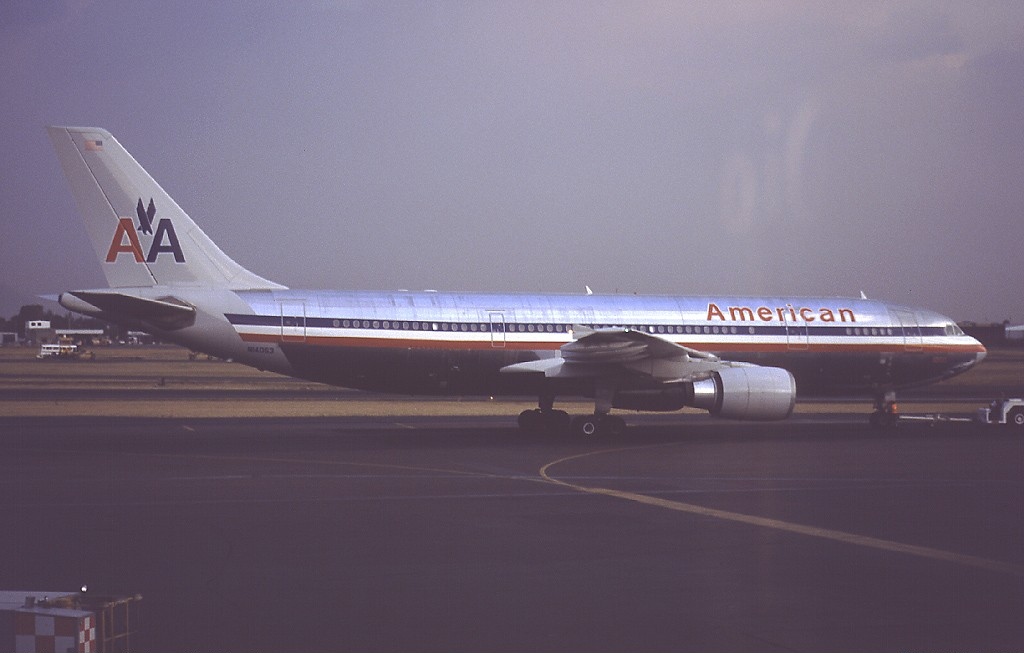





Sequence of events
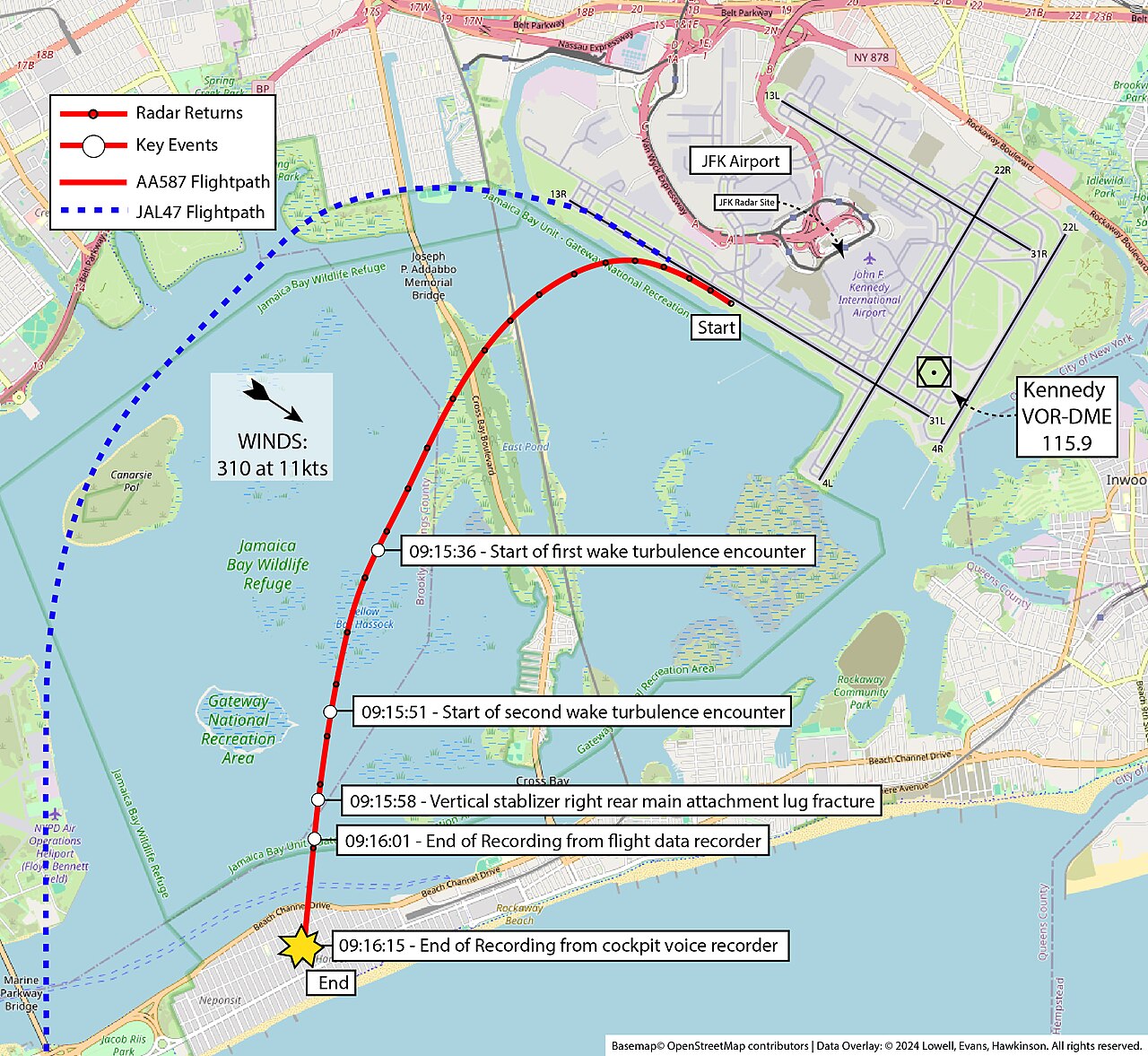
Shortly after departing JFK, the airliner encountered wake turbulence generated by a preceding heavy jet. In response to the disturbance, the crew made large, alternating rudder inputs that subjected the vertical stabilizer and rudder to repeated and increasing aerodynamic loads. These loads exceeded structural limits, resulting in separation of the vertical tail and subsequent loss of control. The aircraft descended into a residential area and was destroyed on impact.
Investigation and findings
Investigators examined flight data, cockpit voice recordings, wreckage, and radar tracks to determine the probable cause. The U.S. National Transportation Safety Board found that wake turbulence from a preceding Boeing 747 initiated the upset and that the primary cause of the structural failure was the flight crew's abrupt and alternating use of the rudder pedals. The report emphasized human factors and training, noting that the way the rudder was used produced forces beyond the design limits of the tail. The investigation concluded there was no evidence of hostile action or explosive device, a conclusion that helped address early speculation that the crash might have been linked to terrorism.
Technical context and contributing elements
- The A300's rudder system and the aerodynamic behavior of large transport airplanes mean that heavy wake vortices can produce significant roll and yaw disturbances; see general discussions of wake turbulence.
- Shortly after the September 11 attacks, the public and media were especially sensitive to any aviation disaster; the accident occurred about two months after the September 11 attacks on the World Trade Center in Manhattan, which shaped early reactions and inquiries.
- The accident highlighted differences in how rudder inputs affect different airframe designs and clarified limits for aggressive pedal inputs at high airspeeds.
Aftermath, safety changes and legacy
The crash prompted a range of responses intended to reduce the chance of a similar event. Regulatory and industry actions included revisions to pilot training regarding use of rudder and recovery from wake turbulence encounters, reviews of separation standards for heavy aircraft, and targeted safety recommendations from investigators. The accident also had a long-lasting impact on the affected communities in Queens and on families of the victims; memorials and remembrance events have been held to honor those lost.
Key facts
- Date: November 12, 2001.
- Aircraft: Airbus A300-600.
- Route: JFK to Las Américas.
- Fatalities: 260 on board and five on the ground.
- Investigation: concluded improper rudder use in response to wake turbulence was the primary cause; the crash was not an act of terrorism.
- Ranking: among the deadliest aviation accidents in U.S. history, after American Airlines Flight 191.
This accident remains a reference case in aviation safety literature, used to teach about the interactions of wake turbulence, pilot control inputs, human factors and structural limits. For contemporary reporting and primary sources related to the flight, see materials from the operator and official investigation records linked through airline and aviation authority pages such as American Airlines and airport information at JFK.
Questions and answers
Q: What was the flight number of the plane that crashed?
A: The flight number of the plane that crashed was American Airlines Flight 587.
Q: Where did the crash take place?
A: The crash took place in Belle Harbor neighborhood of Queens, New York.
Q: How many people were on board the aircraft?
A: There were 260 people on board the aircraft.
Q: What type of aircraft was used for this flight?
A: The aircraft used for this flight was an Airbus A300-600.
Q: What caused the crash?
A: The crash was caused by pilot error in wake turbulence (turbulence that forms behind an airplane as it flies through the air).
Q: How many people died as a result of this accident?
A: All 260 people on board and five people on the ground were killed as a result of this accident.
Q: When did this accident occur?
A: This accident occurred on November 12, 2001.
Q: Is American Airlines Flight 587 considered to be one of deadliest plane crashes in US history ?
A: Yes, American Airlines Flight 587 is considered to be second-deadliest plane crash in United States after American Airlines Flight 191 which happened on May 25, 1979.
Tags
Related articles
Author
AlegsaOnline.com American Airlines Flight 587 (November 12, 2001 crash) Leandro Alegsa
URL: https://en.alegsaonline.com/art/3357
Sources
- aviation-safety.net : ASN Aircraft accident Airbus A300B4-605R N14053 Belle Harbor, NY
- iasa.com.au : "Pilot error blamed for Flight 587 crash"
- aim.org : Rumors about Flight 587