
Cable knitting
Cable knitting is a textured technique that produces twisted, braid-like motifs in knitted fabric. Common on sweaters such as Aran garments, it uses crossed stitches and special needles for decorative and structural effects.
Overview
Cable knitting is a method of creating raised, twisted columns in knitted fabric by temporarily rearranging the order of stitches. The resulting motifs often resemble braids, ropes, ladders, or woven panels and add visual depth and warmth to garments and accessories. Cables are widely used in garments such as sweaters and have a strong association with traditional Aran sweaters.
Image gallery
4 Images


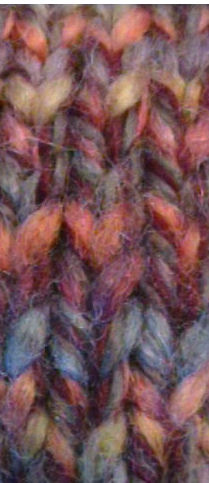
Characteristics and common motifs
Cables vary in width and complexity. A simple cable might cross two or three stitches to form a subtle twist, while complex patterns combine multiple cable types into panels. Common motifs include braided cables, rope cables, honeycomb textures, and ladder-style crossings. Cables can be worked in stockinette, reverse stockinette, or set against purl backgrounds to enhance contrast.
Tools and basic technique
The basic technique involves crossing groups of stitches: some are held aside on a cable needle or stitch holder, then other stitches are worked before returning the held stitches. Holding the stitches to the front produces a left-leaning cable; holding them to the back creates a right-leaning cable. Many knitters also use no cable needle techniques, slipping stitches onto the working needle and reordering them directly.
How patterns are written and read
Cable patterns are described in written instructions or charted symbols. A written instruction might read "C4F" or "C4B" in many patterns, indicating a four-stitch cable with the appropriate lean; charts use diagonal strokes or other marks to show the direction of crosses. Gauge, needle size, and yarn choice influence how crisp or relaxed the cable appears.
History and cultural notes
Cables are strongly associated with the Aran tradition from the west of Ireland, where textured panels carried symbolic meanings in family or regional knitting. More generally, cable work has been popular wherever knitters sought sculptural, insulating textures—on sweaters, hats, scarves, and blankets—and it has been adapted to both hand and machine knitting.
Practical considerations and variations
- Blocking and tension: cables can appear tighter than surrounding fabric; blocking often evens the texture.
- Placement and shaping: cables can form central panels, run down sleeves, or be combined with lace or colorwork.
- Machine vs hand knitting: machines can replicate many cable patterns but complex crossings are easiest by hand.
Cable knitting remains a versatile decorative technique that balances visual complexity with functional warmth, and it continues to inspire modern designers and hobby knitters alike.
Related articles
Author
AlegsaOnline.com Cable knitting Leandro Alegsa
URL: https://en.alegsaonline.com/art/15856