
Roger Y. Tsien — Biochemist and pioneer of fluorescent probes
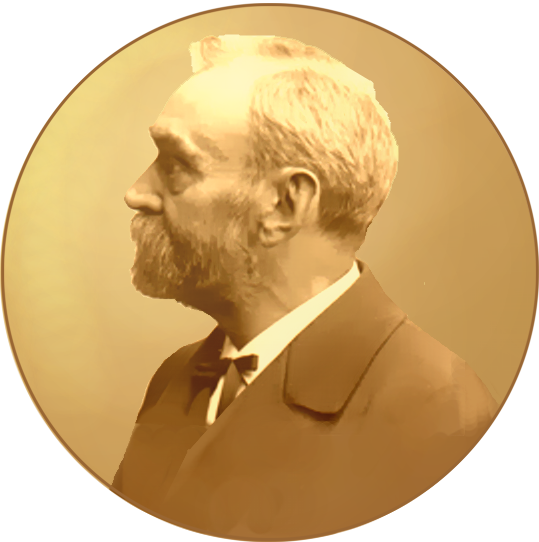
Roger Y. Tsien (1952–2016) was a Chinese‑American biochemist who developed fluorescent probes and advanced green fluorescent protein technology, enabling modern live‑cell imaging and biosensor design.
Overview
Roger Yonchien Tsien (February 1, 1952 – August 24, 2016) was a Chinese‑American biochemist best known for his work on fluorescent molecules and molecular imaging. He was a professor of chemistry and biochemistry at the University of California, San Diego. In 2008 he shared the Nobel Prize in Chemistry with Osamu Shimomura and Martin Chalfie for the discovery and development of the green fluorescent protein (GFP) as a tool for observing biological processes.
Image gallery
6 Images


Major scientific contributions
Tsien's research combined organic chemistry, biochemistry and cell biology to create fluorescent dyes and genetically encoded indicators that report on cellular events. He developed synthetic calcium indicators and other small‑molecule fluorophores that allowed researchers to measure ion concentrations and signaling in living cells. He also engineered variants and derivatives of GFP to expand the range of colors and properties available to microscopists, improving brightness, photostability and spectral diversity.
Methods, tools and applications
The probes and proteins associated with Tsien's work transformed how biological processes are visualized. Fluorescent proteins and dyes are now standard tools for tracking gene expression, monitoring protein localization, following intracellular calcium and pH changes, and building ratiometric and FRET‑based biosensors. These methods are widely used in cell biology, neuroscience, developmental biology and medical research to observe living systems in real time without destroying samples.
Career, recognition and influence
Tsien trained and published across chemistry and biology, bringing synthetic chemistry into the service of live‑cell imaging. His Nobel Prize recognized not only the discovery of GFP but its development into a versatile toolkit for biology. Beyond the prize, his work influenced microscopy techniques, fluorescent probe design, and the creation of genetically encoded sensors that continue to evolve in modern laboratories.
Legacy and notable facts
Tsien's legacy is visible in the routine use of multicolor fluorescent labels and sensors in research and in numerous practical applications, from basic studies of cell signaling to translational research in disease. His interdisciplinary approach exemplified how new chemical tools can open fresh biological questions. He is remembered for both technical ingenuity and for training scientists who extended fluorescent probe technology.
Further reading and resources
- Profile or obituary resource 1
- Profile or obituary resource 2
- Biographical overview 3
- Selected publications list 4
- Research group or laboratory page 5
- Nobel Prize citation and summary 6
- Technical review on fluorescent probes 7
- History of GFP and fluorescent proteins 8
- Resources on calcium indicators and biosensors 9
- University or departmental biography 10
- Archived lectures or interviews 11
- Methods and protocols using GFP 12
- Contemporary reviews of fluorescent protein engineering 13
- Further historical context and collections 14
Author
AlegsaOnline.com Roger Y. Tsien — Biochemist and pioneer of fluorescent probes Leandro Alegsa
URL: https://en.alegsaonline.com/art/145042