
British Rail Class 44 (Sulzer Type 4) diesel-electric locomotives
Early British Rail Type 4 diesel-electric locomotives built at Derby Works (1959–60), nicknamed 'Peaks' and named after mountains. Small batch that informed later Class 45/46 designs.
The British Rail Class 44 were a small group of diesel-electric locomotives constructed at Derby Works between 1959 and 1960. Fitted with Sulzer diesel engines and classed as Type 4 for their power and duties, they were among the first mainline diesels introduced during British Railways' post‑war modernisation. Because each locomotive carried the name of a British mountain they quickly acquired the informal nickname "Peaks".
Image gallery
10 Images


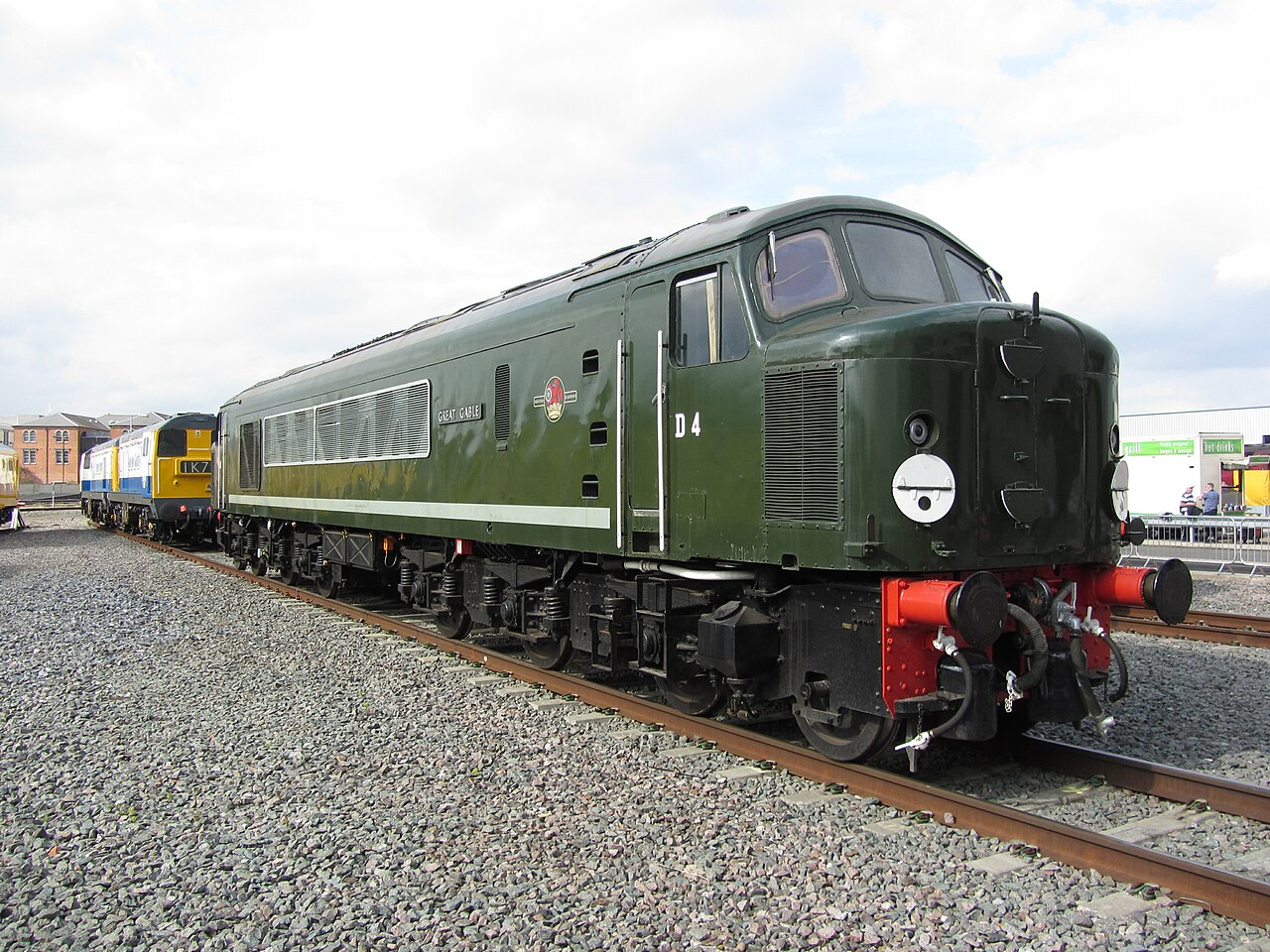
Design and characteristics
Class 44s used diesel engines driving electrical generators to power traction motors, a standard arrangement for mainline diesels of the era. Their construction emphasised robustness for both passenger and freight work rather than experimental features; they established a mechanical and electrical template that was developed further in later, larger classes. Early liveries followed British Railways' transitional styling and were later repainted into standard corporate schemes.
Service history
Introduced to replace steam on key trunk and cross‑country workings, the Class 44s operated on main routes where higher sustained power was needed. As a small production run they were often used in multiple with other locomotives and handled express passenger trains as well as heavy freight. Operational experience with the type informed design changes that appeared on its successors, the Class 45 and Class 46.
Uses, legacy and withdrawal
These locomotives served through the 1960s and into later decades, gradually displaced by newer, more powerful or more numerous types as British Rail modernised its fleet. Although none of the class became as numerous as later designs, their role in proving Sulzer‑engined Type 4s and in shaping subsequent classes is a notable part of mid‑20th century British diesel traction development.
Notable facts and references
- Built at Derby Works in 1959–60 and equipped with Sulzer engines — see Sulzer Type 4 for context on the engine family.
- Named after British mountains, which led to the class nickname "Peaks"; associated company material is catalogued under British Rail.
- Served as a technical predecessor to the later and more numerous Class 45/46 designs.
Related articles
Author
AlegsaOnline.com British Rail Class 44 (Sulzer Type 4) diesel-electric locomotives Leandro Alegsa
URL: https://en.alegsaonline.com/art/14455