
British Rail Class 35 (Hymek) diesel‑hydraulic locomotive
Medium‑power B‑B diesel‑hydraulic mixed‑traffic locomotives built 1961–64 for BR Western Region. 101 built; withdrawn 1971–75 after standardisation decisions; four preserved and active on heritage lines.
Overview
The British Rail Class 35, widely known by the informal name "Hymek", is a class of medium‑power mixed‑traffic diesel locomotive introduced in the early 1960s. The design used a B‑B wheel arrangement and a hydraulic transmission derived from the Mekydro concept, which is the origin of the popular nickname. A total of 101 examples were built between 1961 and 1964 for use principally on the Western Region of British Rail.
Image gallery
10 Images


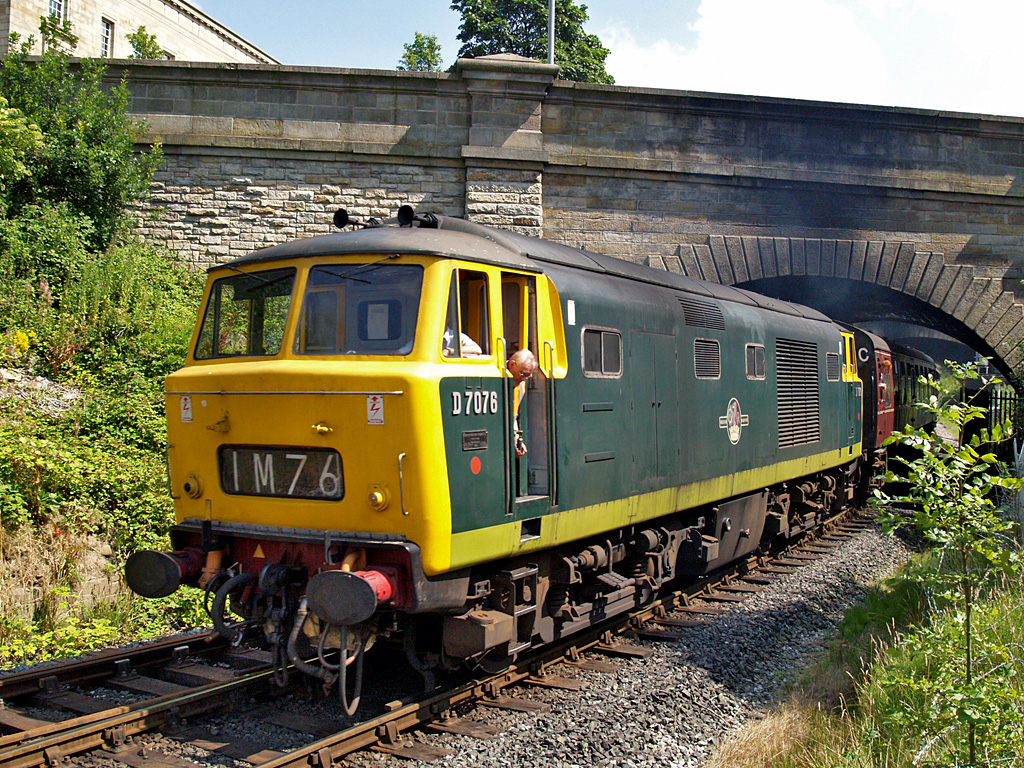

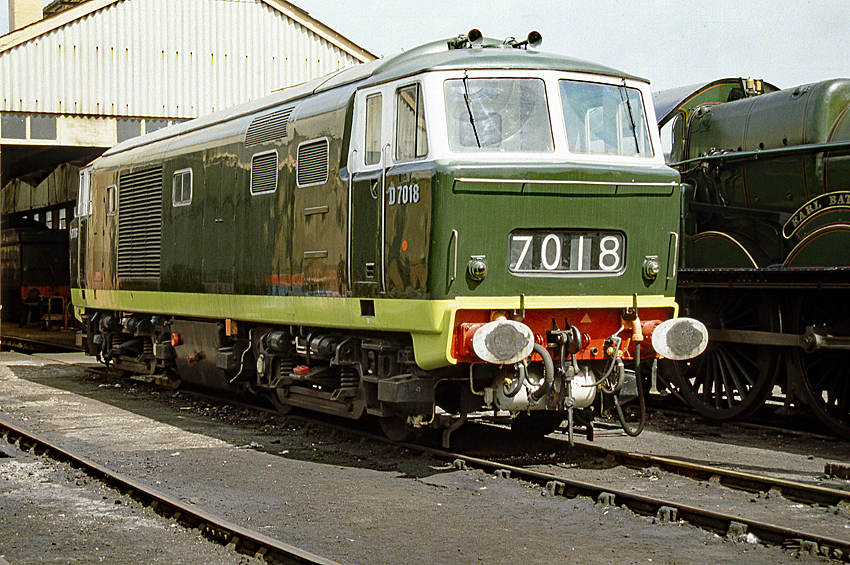

Design and mechanical features
The Class 35 was developed as a relatively light, compact locomotive intended for secondary passenger trains and freight workings on routes where heavier locomotives were restricted. Hydraulic transmission uses torque converters and fluid couplings rather than electrical traction motors; this favoured a compact driveline and permitted a favourable power‑to‑weight ratio for the era. The Mekydro‑type transmission employed on these locomotives was one of several hydraulic systems used experimentally on the Western Region alongside other designs.
Operational use
During their service career the Hymeks were allocated to depots including Bristol Bath Road, Cardiff Canton and Old Oak Common and were employed on a variety of duties across the Western Region network. Their mixed‑traffic capability meant they handled local and secondary passenger services, parcels and general freight. The locomotives were identified by number and depot allocation rather than by individual names.
Withdrawal and reasons
Withdrawal began in the early 1970s and the entire fleet had been retired by 1975. The principal reason for their relatively early removal from service was not simply technical failure but a strategic decision by British Rail to standardise on diesel‑electric traction. Hydraulic transmissions were judged non‑standard in the context of a national maintenance, spares and training policy, making long‑term support less practical and more costly than for the chosen diesel‑electric types.
Legacy and preservation
Although the Class 35 had a relatively short mainline life, it left a lasting impression among railway staff and enthusiasts. Four locomotives were rescued for preservation and have been maintained by heritage groups. Preserved Hymeks have appeared at heritage railway events and on special workings where they demonstrate the distinctive operating characteristics of diesel‑hydraulic transmission to new audiences.
Context and significance
The Hymek story illustrates wider themes in British railway history of the 1950s and 1960s: experimentation with multiple traction technologies under the Modernisation Plan, regional preferences influencing procurement, and the later centralising effect of standardisation policies. The Western Region in particular pursued hydraulic solutions to advantage on certain routes, and the Class 35 forms part of that regional technical tradition alongside other contemporary hydraulic classes.
Further reading
- For historical context on British traction policy and the Modernisation Plan see general histories of British Rail and post‑war railway modernisation.
- For an introduction to the principles and operation of fluid‑based drivetrains see general material on hydraulic transmission and torque converter systems.
Notes
This article summarises broadly known facts about the Class 35. Where specific technical or operational details are required, specialist publications and records from preservation groups provide deeper coverage of individual locomotives, depot allocations and restoration histories.
Related articles
Author
AlegsaOnline.com British Rail Class 35 (Hymek) diesel‑hydraulic locomotive Leandro Alegsa
URL: https://en.alegsaonline.com/art/14416