
British Rail Class 304 (AM4) electric multiple unit
Overview of the British Rail Class 304 suburban electric multiple unit (originally AM4), its design, service on the West Coast Main Line, technical characteristics, and disposal.
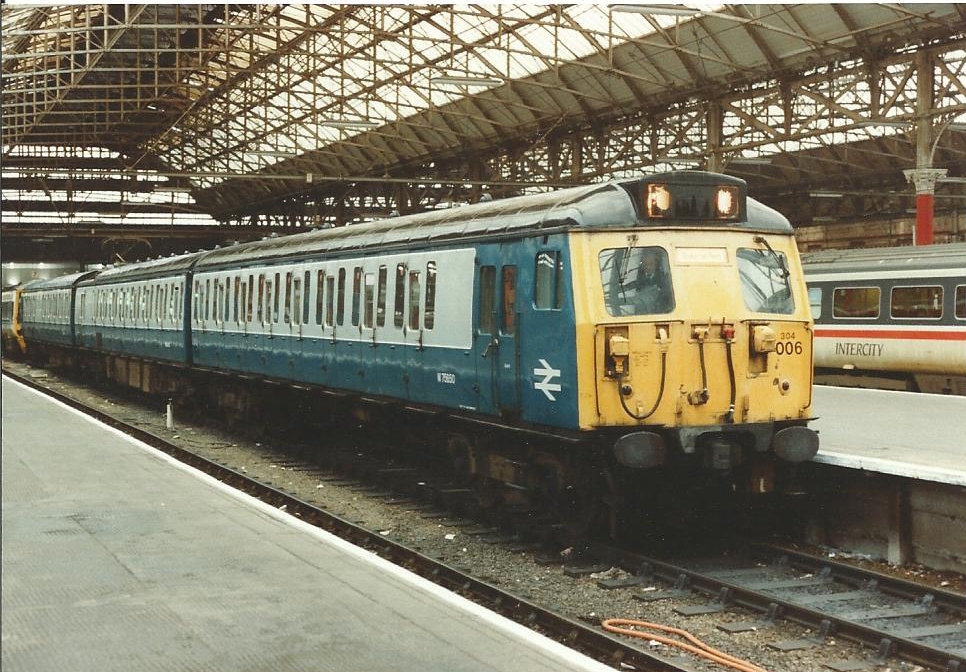
The British Rail Class 304 was a family of suburban electric multiple units built for the early electrification of the southern section of the West Coast Main Line. Introduced as part of the 1959‑design series of alternating‑current rolling stock, these trains were originally classified as AM4 before the introduction of the TOPS computerised numbering system. The Class 304s were intended for intensive local and commuter services radiating from Crewe and serving cities such as Manchester, Liverpool and Rugby. They were conventional suburban electric multiple units of their era, designed to provide frequent stopping services on newly electrified overhead lines.
Image gallery
2 Images
Design and technical characteristics
Class 304 units conformed to the 1959‑design standard for alternating current (AC) electric multiple units used on overhead‑electrified lines. Externally and mechanically they resembled other members of the family, notably the Class 305 and Class 308, sharing similar body profiles, window arrangement and underframe equipment layouts. Internally the arrangement balanced high‑capacity suburban operation with a mixture of seating types and multiple wide doors for rapid boarding and alighting. The electrical equipment was intended for the 25 kV AC overhead supply used on the West Coast Main Line, while design features had family resemblances with earlier 1,200 V direct current units such as the Class 504, which operated on different electrical systems but shared layout and operational concepts.
Formation, interiors and performance
Typical formations were three‑car sets designed for suburban density, with driving motor and trailer vehicles arranged to allow multiple‑unit working and simple coupling changes. Interiors were pragmatic: durable seating, grab handles, and interior lighting appropriate to mid‑20th century commuter practice. The traction and braking arrangements were selected to give relatively brisk acceleration suitable for stop‑start suburban schedules while remaining maintainable in depot conditions of the period. Units were maintained at regional depots serving the southern West Coast routes and were subject to periodic overhauls and modest mid‑life refurbishments to refresh seating and fittings.
Operations and service history
Deployed primarily on suburban and commuter workings, Class 304 sets worked frequent stopping services on the newly electrified sections of the southern West Coast Main Line. Their role was to replace steam and early diesel suburban trains by offering faster acceleration, quieter operation and lower maintenance on electrified lines. Over time service patterns changed as additional electrification, timetable alterations and newer multiple units entered service; the 304s were reassigned, cascaded or concentrated where their characteristics best matched demand.
Refurbishments, incidents and modifications
During their operational life, individual vehicles and sets underwent periodic maintenance and some refits to seating, lighting and minor systems. As with many classes of their generation, some sets received corrosion repairs, replacement upholstery and updates to cab fitments to improve reliability and driver ergonomics. There were isolated incidents in service typical of a long‑lived suburban fleet, but the class did not become notable for systemic safety faults; individual accident investigations led to local repairs and occasional design adjustments across the fleet.
Withdrawal, disposal and legacy
By the late 20th century the Class 304 units were progressively withdrawn as newer designs with improved accessibility, performance and safety entered service. Following withdrawal most vehicles were dismantled and scrapped; there are no widely recorded examples of a complete Class 304 set surviving in preservation. Their principal legacy is as a representative of the early modern AC suburban fleet that supported the expansion of electric commuter services on one of Britain’s principal main lines. Heritage interest in standardised post‑war EMUs recognises the role classes like the 304 played in normalising overhead electrification and suburban electric operation.
Notable features and distinctions
- Originally designated AM4 under British Railways' pre‑TOPS classification, later renumbered as Class 304 under TOPS.
- Part of the 1959‑design AC EMU family, visually and mechanically related to Class 305 and Class 308.
- Designed for suburban operation out of Crewe to Manchester, Liverpool and Rugby on the West Coast Main Line.
- Adhered to AC overhead electrification standards of its era and displayed family resemblances to earlier DC suburban stock such as the Class 504.
For researchers and enthusiasts seeking detailed diagrams, vehicle lists or photographic records, specialist publications and regional archives hold the most comprehensive material. The Class 304 remains an illustrative example of the transitional generation that established modern electric commuter services on Britain’s principal inter‑city corridors and suburban networks.
Related articles
Author
AlegsaOnline.com British Rail Class 304 (AM4) electric multiple unit Leandro Alegsa
URL: https://en.alegsaonline.com/art/14390