
British Rail Class 306 electric multiple unit
British Rail Class 306 was a post‑war suburban electric multiple unit introduced in 1949 for the newly electrified Shenfield–Liverpool Street services; it became a mainstay of commuter operations and later modifications.
Overview
The British Rail Class 306 was a type of suburban electric multiple unit introduced in 1949. A fleet of 92 three‑car sets was built to operate on the newly electrified services between Shenfield and London Liverpool Street. These trains formed part of the early post‑war electrification of commuter routes and were designed for frequent stop‑start operation.
Image gallery
4 Images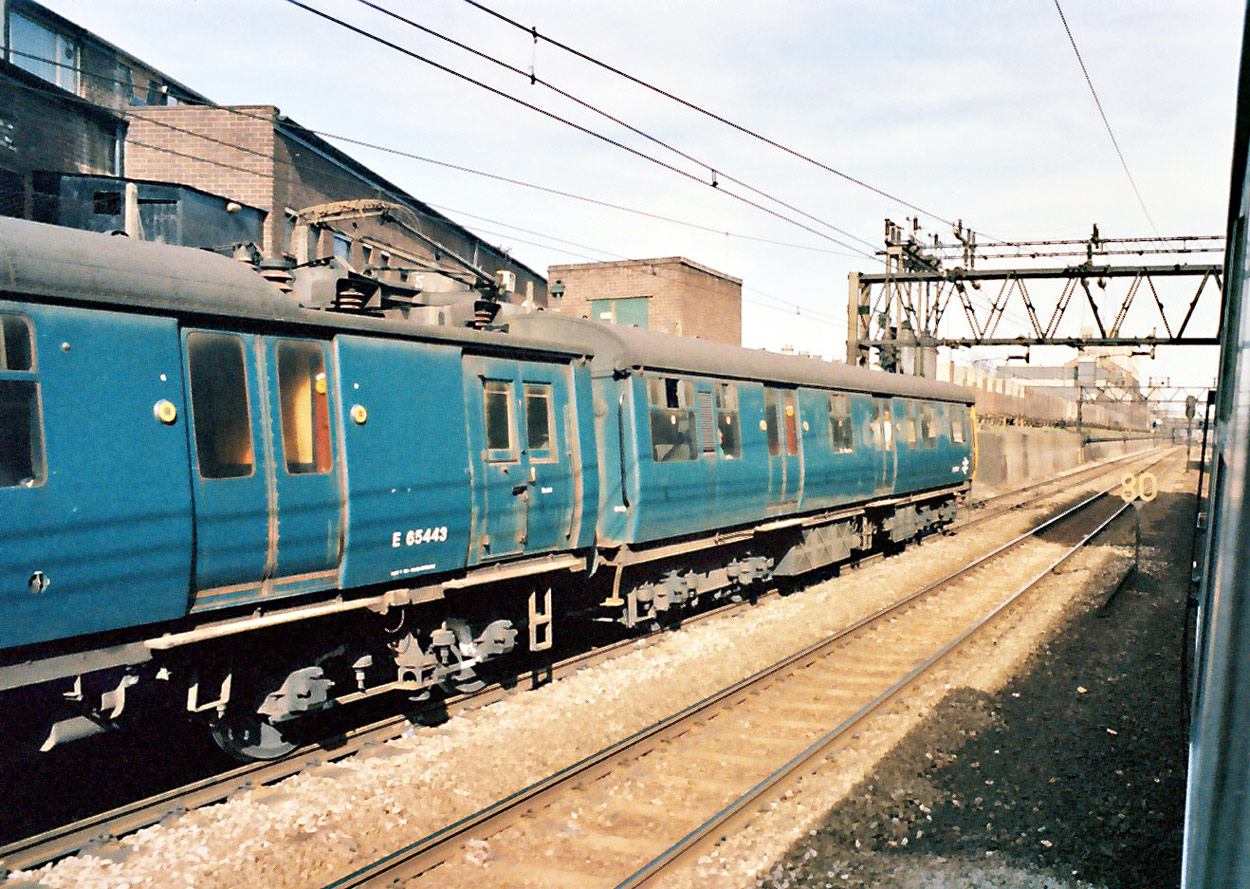


Design and characteristics
The Class 306 was a conventional three‑car EMU intended for dense suburban traffic. As an electric multiple unit, traction motors were carried on one or more vehicles within the set rather than on a separate locomotive. That arrangement produced brisk acceleration and simplified reversing at terminal stations. Interiors prioritized seating and standing space for short journeys, and exterior features reflected mid‑20th century railway styling.
Service history
Deployed to replace steam‑hauled suburban trains, the Class 306 spent its working life on commuter services into Liverpool Street, carrying daily passengers to and from outer London suburbs. Over the decades, the units received routine overhauls and adaptations to meet changing operating practices and signalling, and they were gradually displaced by newer multiple‑unit designs as rolling stock technology advanced.
Uses, strengths and technical notes
The Class 306 was optimized for short runs with frequent stops: its multiple‑unit layout provided good acceleration, redundancy through distributed power, and efficient crew operation. Typical advantages included simplified coupling between sets, suitability for intensive timetables, and relatively low maintenance compared with steam traction. Key characteristics included:
- Three‑car fixed formation for suburban capacity.
- Overhead electrification compatibility for the routes served.
- Interior arrangements tuned for commuter flows and quick boarding.
Legacy and distinctions
Class 306 units are notable as part of the initial wave of post‑war electrification that reshaped London suburban services. They helped demonstrate the operational benefits of EMUs on crowded commuter corridors and influenced later multiple‑unit designs. In later years, as newer stock arrived and network electrification standards evolved, the Class 306s were withdrawn and replaced; some vehicles and components were recorded in historical accounts and preservation circles, preserving their role in mid‑20th‑century British rail history.
For further technical detail and illustrations, consult specialist railway histories and fleet rosters that document early British electric multiple units and the Eastern Region electrification programme. See also contemporary accounts of suburban service development around Liverpool Street for operational context.
Related articles
Author
AlegsaOnline.com British Rail Class 306 electric multiple unit Leandro Alegsa
URL: https://en.alegsaonline.com/art/14392