
British Rail Class 158 Express Sprinter
A diesel multiple unit introduced 1989–1992 for regional express services on non-electrified lines, notable for improved passenger comfort and widespread refurbishment and use across UK rail franchises.
Overview
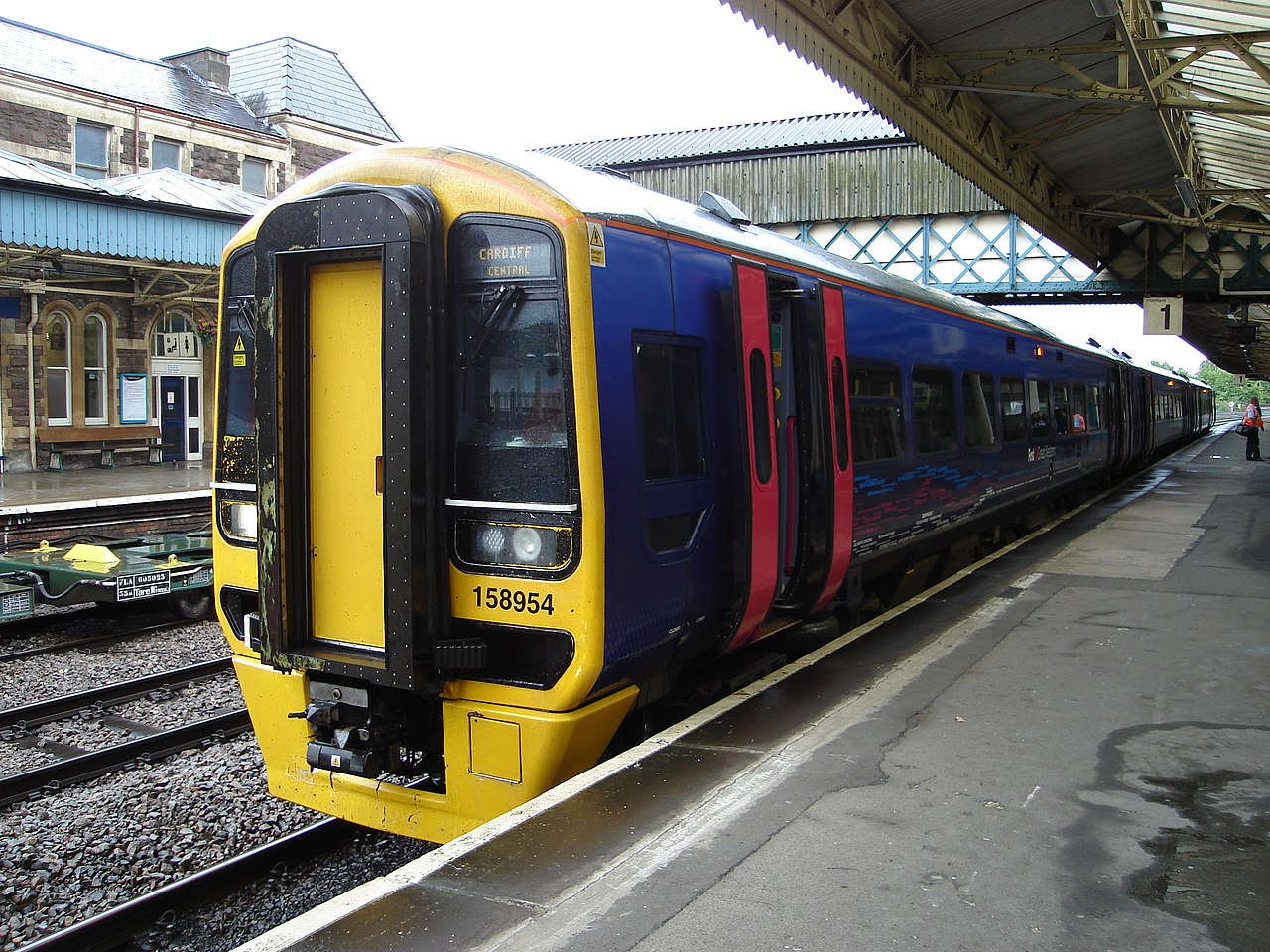
The British Rail Class 158, marketed as the Express Sprinter, is a diesel multiple unit (DMU) introduced to the UK rail network to provide faster, more comfortable regional services on routes without electrification. Built between 1989 and 1992 by BREL at Derby Works, the Class 158 replaced older first-generation DMUs and many locomotive-hauled regional trains, bringing features designed for medium-distance journeys.
Image gallery
10 Images


Design and characteristics
Class 158 sets are typically formed of two or three cars and were designed for a maximum service speed of around 90 mph (about 145 km/h). Key features at introduction included improved suspension and sound insulation, inter-vehicle gangways, central corridors and passenger comforts such as better seating and on-board toilets. Early examples were delivered with direct-discharge toilets; many units were later modified with retention tanks or other fittings to meet changing environmental and operational standards.
History and development
Developed during the late 1980s, the Class 158 was part of a family of 'Sprinter' units intended to modernise regional services. Production at Derby Works continued until 1992. The class shares much in common with closely related types; for example, the Class 159 units are closely associated with the 158s, being of very similar design and used for comparable duties. BREL also produced modified vehicles for export: compact metre-gauge carriages were supplied for overseas use in the early 1990s.
Operation, refurbishments and roles
Class 158s have been operated by several regional and inter-regional franchises over the decades, providing links on routes where electrification is absent or partial. They have seen multiple refurbishment programmes that upgraded interiors, installed electronic passenger information systems and improved accessibility. Typical deployments include longer-distance regional runs where a balance of speed, comfort and operational flexibility is required; a well-known example is use on services such as Exeter St Davids to London Waterloo.
Notable facts and variants
- Manufacturing and origin: built by BREL at Derby Works (Derby Works).
- Organisational context: procured for and introduced under British Rail to modernise regional fleets.
- Related types: units closely related to the Class 158 include the Class 159; some units were converted or modified for specific operator needs (Class 159 relation).
- Technical category: diesel multiple unit (DMU), intended for non-electrified routes and measured against other Sprinter-era equipment (locomotive-hauled replacements).
Over thirty years after their introduction, many Class 158s remain in service following refurbishment and upgrades. Their combination of regional express performance, adaptability and relative reliability has kept them a mainstay on many UK inter-urban and rural routes, while regulatory and environmental changes have driven retrofits such as toilet retention and accessibility improvements. For further technical or operational details consult specialised rolling stock references or operator fleet pages referenced above.
Related articles
Author
AlegsaOnline.com British Rail Class 158 Express Sprinter Leandro Alegsa
URL: https://en.alegsaonline.com/art/14352