
British Rail Class 16 — North British Type 1 diesel locomotive
A concise overview of the British Rail Class 16 (North British Type 1): its design purpose under BR's 1955 Modernisation Plan, technical character, service history, operational use and legacy.
Overview
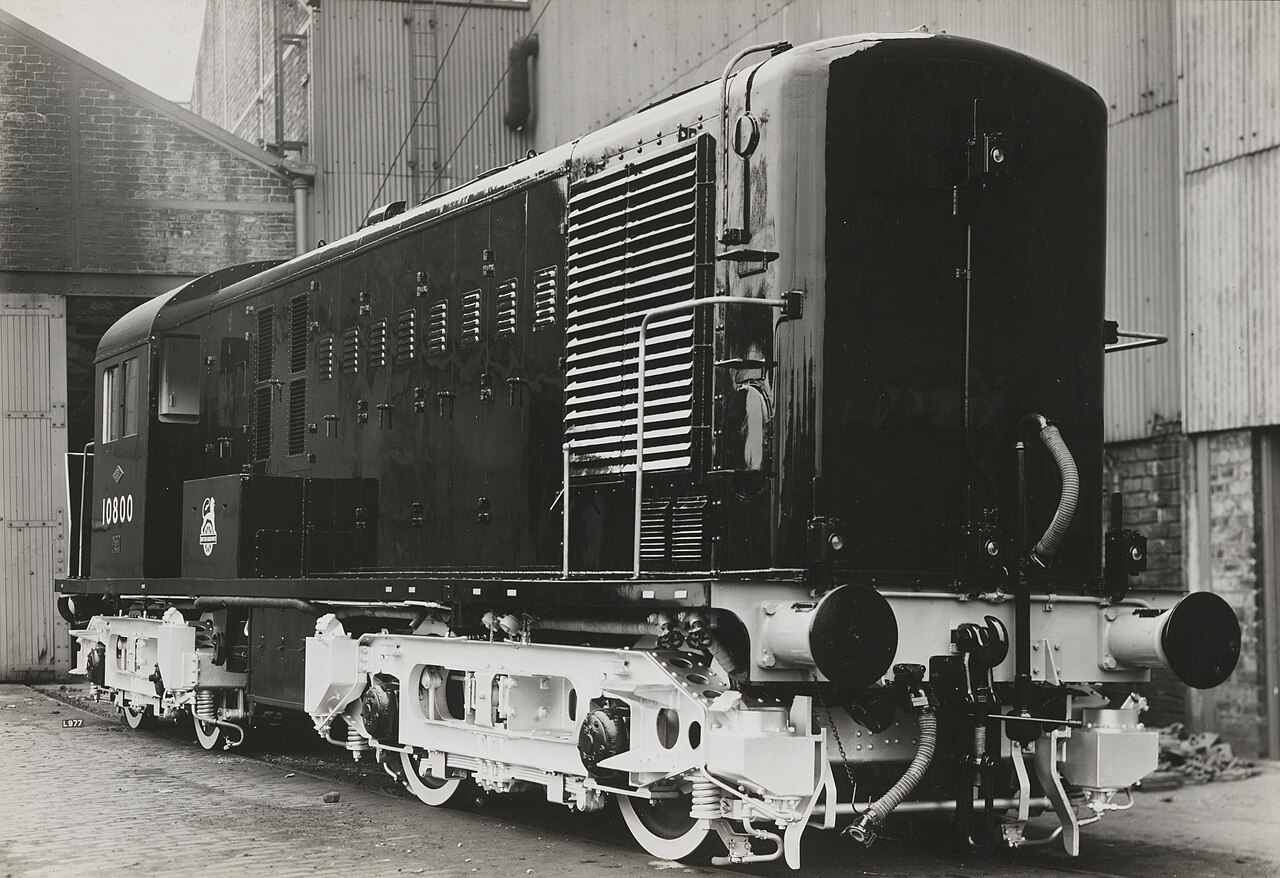
The British Rail Class 16, commonly referred to by its builder designation as the North British Type 1, was a small diesel locomotive introduced during British Railways' mid-20th century transition from steam to diesel power. Ordered as part of the postwar 1955 Modernisation Plan, these locomotives were intended to provide economical traction for local freight and shunting duties that did not require the higher power of mainline types.
Image gallery
2 Images
Design and characteristics
Class 16 machines emphasised compactness and simplicity. Their design philosophy followed the Type 1 concept — modest installed power, straightforward controls and an arrangement suitable for short-run freight turns and depot work. Key characteristics included:
- Small to medium axle loading suitable for secondary routes and goods yards.
- Simple crew accommodation and visibility optimized for yard and local freight operations.
- Mechanical and electrical subsystems chosen for economy rather than high performance.
The Class 16 is an example of a specialist early diesel design where the trade-offs between cost, reliability and operational flexibility were still being explored during the rapid dieselisation era.
Service history and development
Introduced in the years following the 1955 Modernisation Plan, the Class 16 entered service on a variety of secondary freight duties. As with many early diesel designs, experience in everyday operation quickly highlighted strengths and weaknesses. Some examples proved useful in yard and local duties, but a number of shortcomings — notably in reliability and maintainability compared with later standardised designs — limited their longevity in BR service. Over time they were displaced by more successful Type 2 and Type 3 designs as British Rail sought to reduce the diversity of classes and spare-parts inventories.
Uses, importance and legacy
While never as numerous or long-lived as other classes, the Class 16 played a transitional role. It helped demonstrate the operational possibilities of diesel traction on minor freight workings and contributed to the learning curve that informed later, more standardised locomotive families. Its principal roles included short freight turns, wagon collection, and depot shunting.
- Operational lessons: early diesel types like the Class 16 revealed the need for commonality and improved reliability.
- Heritage note: examples and records of the class are of interest to historians tracing the rapid changes of the 1950s and 1960s.
Distinguishing facts
Class 16 is often mentioned in the context of other small Type 1 locomotives and the broader dieselisation programme. For introductory background on the Type 1 grouping see Type 1, for general context about diesel traction see diesel locomotive, and for the policy origins see the 1955 Modernisation Plan. Together these sources place the Class 16 within the wider story of British Rail's transition from steam to diesel power.
Related articles
Author
AlegsaOnline.com British Rail Class 16 — North British Type 1 diesel locomotive Leandro Alegsa
URL: https://en.alegsaonline.com/art/14354