
British Rail Class 13 — master-and-slave shunter conversions
A purpose-built shunting arrangement created in 1965 by permanently pairing two Class 08 locomotives to provide greater tractive effort for hump yard work at Tinsley Marshalling Yard.
The British Rail Class 13 was not a single new locomotive type but a conversion concept introduced in 1965 to meet a specific yard operating need. Operators needed greater adhesive weight and tractive effort to move long cuts of wagons over the hump at Tinsley Marshalling Yard. Instead of building a large rigid shunter, engineers permanently coupled two smaller shunters together in a master-and-slave formation to achieve the required power while avoiding grounding on the hump.
Image gallery
3 Images

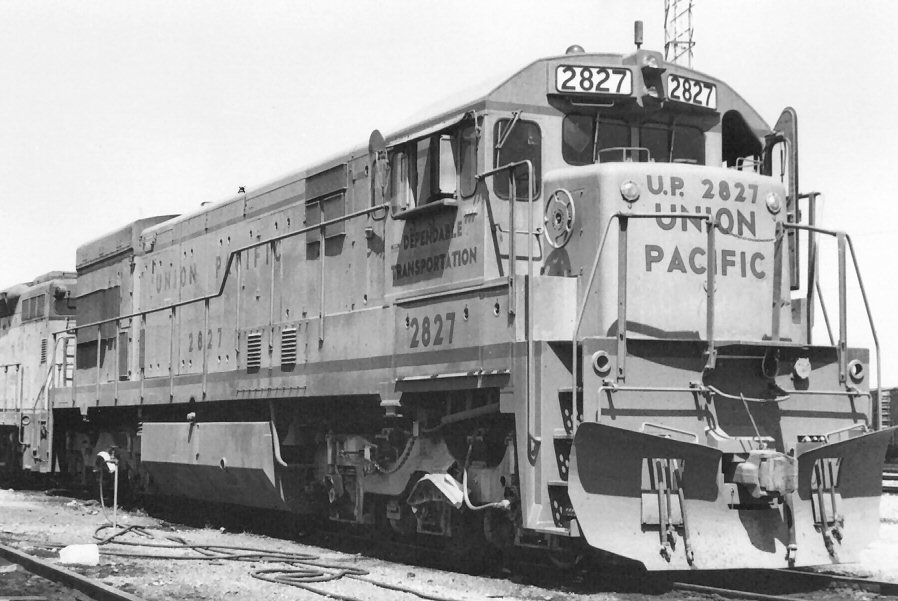
Design and main characteristics
Each Class 13 unit was formed from a pair of standard yard shunters. The donor locomotives were members of the well-known Class 08 family. One vehicle acted as the "master" with full control equipment; the other acted as the "slave" and had its cab removed. Both frames received extra ballast to increase wheel-rail adhesion. The pair operated as a permanently coupled set with control arranged so the master could command both power units. Early formations were coupled cab-to-cab but operators later preferred master-nose to slave-cab alignment for visibility and working convenience.
Operation and purpose
The conversions were explicitly tailored to hump shunting at Tinsley. The yard's profile and the need to sort long rakes of wagons meant that a single long rigid locomotive risked grounding over the hump, so the twin-shunter approach provided higher tractive effort while retaining short individual wheelbases. The arrangement was sometimes described informally as "cow and calf" or "master and slave" in railway parlance.
History, use and later fate
Introduced in the mid-1960s, the paired units solved a narrow operational problem and were not adopted widely elsewhere. They were recorded in British Rail's fleet listings under the Class 13 designation. As yard practices changed and rail freight patterns evolved, the advantages of the conversion diminished and the sets were gradually withdrawn from regular service.
Notable points and legacy
- Class 13 represents a pragmatic engineering response: reusing existing locomotives rather than designing a new one.
- The conversion illustrates how operational constraints such as hump gradients influence motive power choices.
- These units remain of interest to railway historians and modelers as an unusual adaptation of the Class 13 concept.
Although created for a local requirement, the Class 13 story highlights wider themes in railway practice: adaptation, cost-effectiveness and the interplay between infrastructure and motive power design.
Related articles
Author
AlegsaOnline.com British Rail Class 13 — master-and-slave shunter conversions Leandro Alegsa
URL: https://en.alegsaonline.com/art/14337