
British Rail Class 02 (0-4-0 diesel-hydraulic shunters)
A concise account of the British Rail Class 02, a small 0-4-0 diesel-hydraulic shunting locomotive built 1960–61 for tight curves and restricted clearances, noting design, use and preservation.
Overview
The British Rail Class 02 is a group of twenty small 0-4-0 diesel-hydraulic shunting locomotives ordered for duties in locations with restricted loading gauge and very tight trackwork. Built by the Yorkshire Engine Company in two batches, the first ten entered service in 1960 (numbered D2850–D2859) and the second ten in 1961 (D2860–D2869). They were intended specifically for dockyards, industrial sidings and other sites where a conventional shunter could not work because of low clearances or sharp curves.
Image gallery
4 Images


Design and characteristics
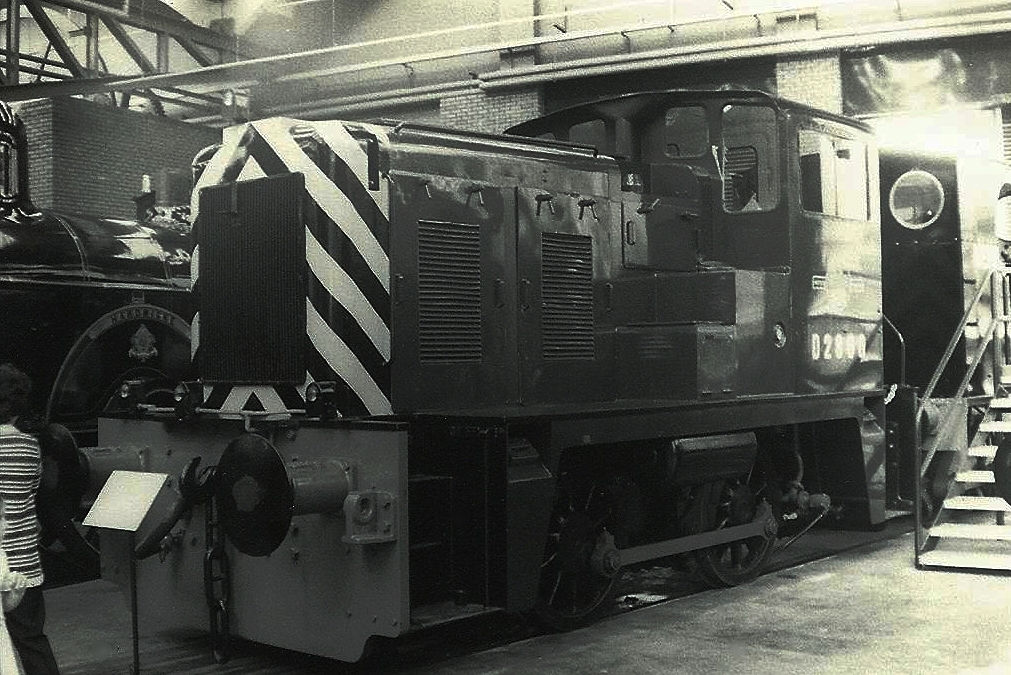
Class 02 locomotives are distinguished by their compact 0-4-0 wheel arrangement and relatively low overall height. Their short wheelbase and frame allowed them to negotiate tight-radius curves commonly found in docks and quayside trackage. The transmission was hydraulic, a common choice for small shunters of the era, giving smooth low-speed control suited to shunting tasks.
- Wheel arrangement: 0-4-0 (small, short wheelbase)
- Power type: diesel-hydraulic
- Volume and role: twenty locomotives built 1960–61
- Notable feature: rear cab door with a railed veranda
Cab layout and unusual features
One distinctive aspect of the Class 02 is the cab arrangement: the cab door is at the rear and opens onto a railed veranda. This configuration—common on several Yorkshire Engine Company products but unusual for British Rail—provided easy access for crews working in confined quay environments. The veranda layout resembles designs more frequently seen in North American practice, where similar rear platforms are not uncommon (North American practice).
Operational use and role
The Class 02 was specifically used where loading gauge limits or severe curvature prevented larger shunters from operating. Typical duties included moving wagons within docks, industrial estates and short-distance yarding. Their small size made them well suited to such tasks and to locations where bridge or tunnel clearances were tight (restricted loading gauge).
History and later life
Ordered and built during the early years of British Rail's modernization era, the Class 02 reflected a pragmatic approach to niche operational problems. The order and delivery are often cited in contemporary records and fleet lists (1960 delivery, 1961 delivery). They form part of the small-shunter family that addressed a variety of light-duty needs alongside other classes of shunting locomotives (British Rail shunter types and allocations).
Preservation and significance
Although their numbers were never large, several Class 02 examples have survived into preservation and can be seen on heritage railways and at industrial museums. Their preservation underlines the historical importance of purpose-built industrial shunters and of solutions developed for restricted clearances. For further reading on small shunters and specific Class 02 histories consult specialised sources and enthusiast records (shunting locomotive references).
As a compact, practical design, the Class 02 remains an instructive example of tailoring motive power to site-specific constraints rather than to mainline performance.
Related articles
Author
AlegsaOnline.com British Rail Class 02 (0-4-0 diesel-hydraulic shunters) Leandro Alegsa
URL: https://en.alegsaonline.com/art/14299