
British Rail Class 07
A small class of 0-6-0 diesel-electric off-centre cab dock shunters built by Ruston & Hornsby in 1962 for use in Southampton docks, later renumbered under the TOPS system.
Overview
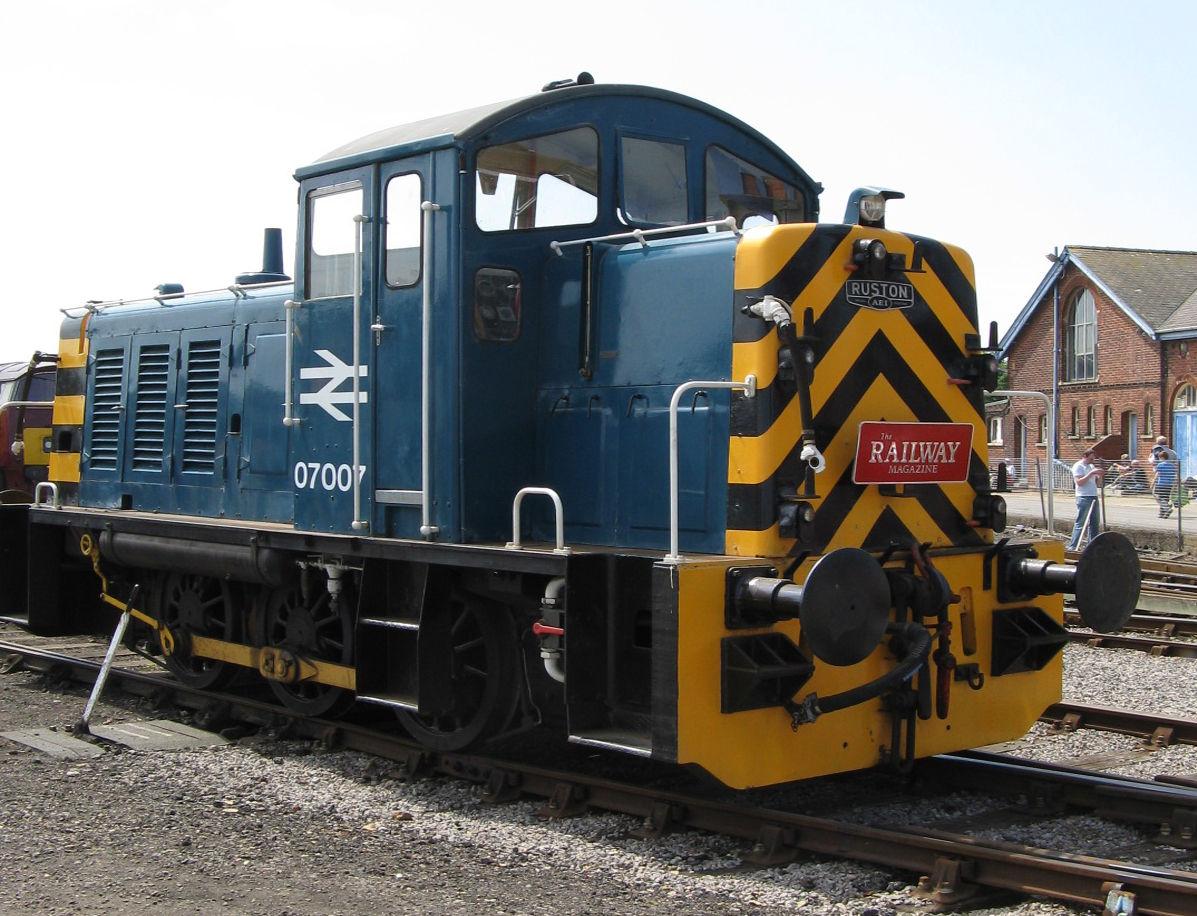
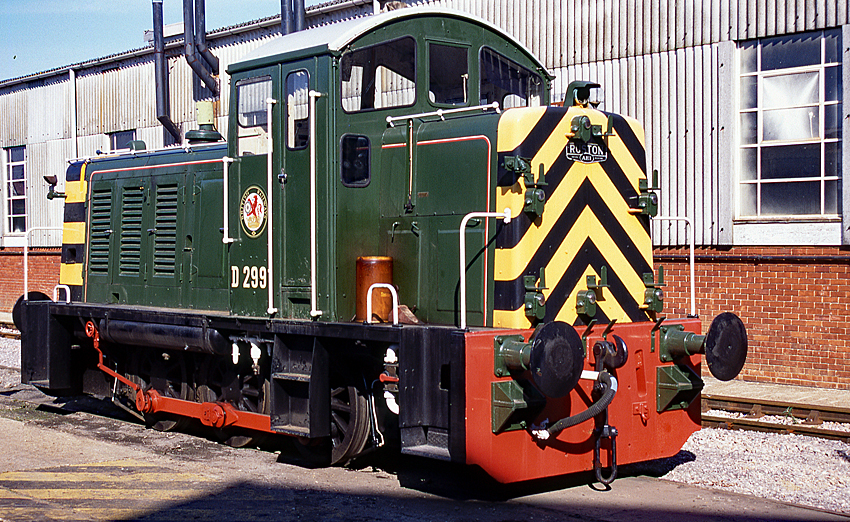
The British Rail Class 07 refers to a small group of 0-6-0 diesel-electric shunting locomotives built in 1962 by Ruston & Hornsby for work in dockside yards. Designed as compact, powerful machines with an off-centre cab, they were intended to replace older steam shunters, particularly the SR USA Class, in confined harbour areas where low height and a short wheelbase were advantages.
Image gallery
7 Images


Design and characteristics
Class 07 locomotives featured a short wheelbase and an asymmetric cab set towards one end of the body, giving the driver better visibility in the tight, reversing movements common in dock work. The 0-6-0 wheel arrangement gave good traction for short, heavy moves. Their construction emphasized ruggedness and simplicity rather than long-distance performance, with equipment selected to suit frequent stop-start duties and coupling operations.
History and operations
Introduced into service in the early 1960s, these shunters were concentrated on Southampton Docks and nearby yards where the steam-era SR USA Class had previously been employed. Their role included shunting wagons, assembling trains, and moving stock between quays and sidings. During their working lives they remained localised, operating mainly on tight track layouts and short-distance transfers rather than mainline freight duties.
Numbering and classification
The locomotives were originally numbered in the D29xx series and later received TOPS-style classifications. Documentation and records from their era show numbering changes as British Rail moved to the standardized TOPS system; the class name "07" reflects that reclassification. For contemporary research or modelling information, see specialised rosters and fleet lists (fleet details).
Uses, importance and legacy
As purpose-built dock shunters, Class 07 machines illustrate the transition from steam to diesel motive power for small, specialist tasks in the 20th century. They represent a pragmatic design approach: compact, robust locomotives tailored to a specific environment rather than general freight or passenger use. Their concentrated deployment made them familiar sights in the ports they served, and they are of interest to historians and heritage groups studying industrial and maritime rail operations (steam replacement context).
Notable facts and distinctions
- Off-centre cab design provided operational visibility advantages in shunting work.
- 0-6-0 wheel arrangement prioritised adhesion over speed.
- Built by Ruston & Hornsby in a focused production run to meet dock requirements.
- Later renumbering under the TOPS system grouped them within the 07 classification; for an introduction to TOPS see TOPS overview.
For further technical specifications, operative histories and preservation status, consult detailed locomotive registers and enthusiast publications (further reading), which provide photographic records and movement logs for those interested in this specialised class of British shunter.
Related articles
Author
AlegsaOnline.com British Rail Class 07 Leandro Alegsa
URL: https://en.alegsaonline.com/art/14304