
British Rail Class 06 (0-4-0 diesel-mechanical shunter)
A small class of 0-4-0 diesel-mechanical shunters built by Andrew Barclay for British Railways' Scottish Region from 1958–1960; originally numbered D2410–D2444, later partly renumbered under TOPS.
Overview
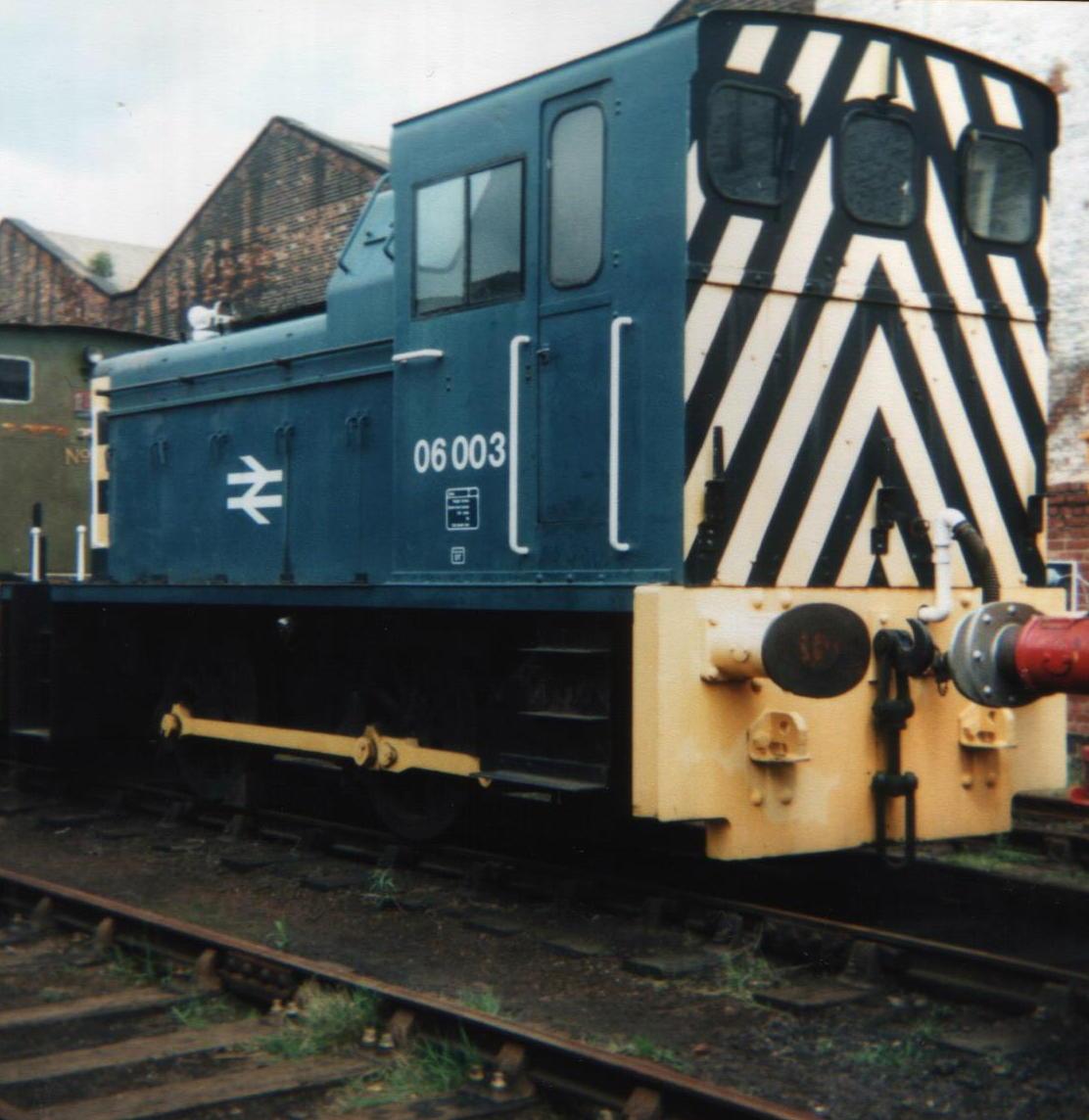
The British Rail Class 06 is a group of compact 0-4-0 diesel-mechanical shunters delivered to the Scottish Region of British Railways between 1958 and 1960. Built by Andrew Barclay, these locomotives were intended for light shunting tasks where a short wheelbase and simple mechanical drive were advantageous. They were delivered with departmental numbers in the D24xx series and, for the survivors that entered the TOPS era, were given numbers beginning 06001 under the TOPS renumbering system.
Image gallery
5 Images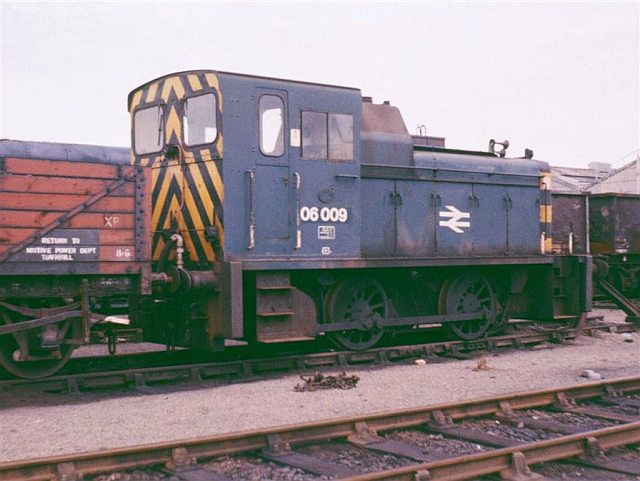



Design and characteristics
Class 06 locomotives follow the 0-4-0 wheel arrangement: two axles, both driven, with no leading or trailing axles. This layout gives a short wheelbase and good ability to negotiate tight curves and confined track layouts common in docks, industrial sidings and small yards. As diesel-mechanical machines they used a mechanical transmission rather than electric or hydraulic drive, making them mechanically straightforward and easy to maintain for the duties they performed.
- Wheel arrangement: 0-4-0 (short wheelbase)
- Transmission type: diesel-mechanical
- Primary role: light shunting and yard work
- Region: built for the Scottish Region of British Railways
Service history
The Class 06 were produced during the post-war modernization era when British Rail sought compact diesel shunters to replace small steam engines in tight industrial locations. They entered traffic in the late 1950s with consecutive departmental numbers in the D2410–D2444 range. When the national TOPS classification and numbering scheme was applied, a subset of the class received the 06xxx series numbers. Over time many were withdrawn as operational needs changed and larger, more versatile shunters handled a broader range of duties.
Uses and comparison with other shunters
These locos were typically assigned to short-distance movements: assembling and breaking down freight consists, moving wagons in goods yards, and working quays or industrial sidings where track geometry precluded longer-wheelbase units. Compared with larger, heavier shunters they were lighter, simpler and better suited to confined environments; compared with very small industrial battery or petrol shunters they offered greater reliability and range.
Legacy and identification
Class 06 examples are recognized by their compact profile, short wheelbase and functional cab layout. A number of machines were withdrawn as freight patterns and yard practices changed in the latter half of the 20th century. Some members of the class went to industrial users or entered heritage collections, where they illustrate a particular solution to mid‑20th century shunting needs. For general context on small shunting locomotives see resources about shunters.
Notable points:
- Built by a Scottish locomotive firm and tailored for regional requirements.
- Short wheelbase and diesel-mechanical transmission made them ideal for tight-track work.
- Originally numbered in the D24xx series and partly renumbered under TOPS.
Related articles
Author
AlegsaOnline.com British Rail Class 06 (0-4-0 diesel-mechanical shunter) Leandro Alegsa
URL: https://en.alegsaonline.com/art/14303