
Agostino Carracci (1557–1602)
Italian painter and printmaker, co‑founder of the Accademia degli Incamminati; key figure in the Bolognese reform of painting and an influential teacher and engraver of the late 16th century.
Agostino Carracci was an Italian artist active in the late 16th century who combined painting, drawing and printmaking in a career that helped shape the Bolognese response to Mannerism and the emergence of the Baroque. He was born on August 16 1557 and died on March 22 1602. Though often mentioned alongside his younger brother Annibale and their cousin Lodovico, Agostino played a distinctive role as an engraver, teacher and theory-minded draftsman. He is remembered not only for easel and fresco painting but for a large body of reproductive prints that circulated his group's ideas.
Image gallery
5 Images
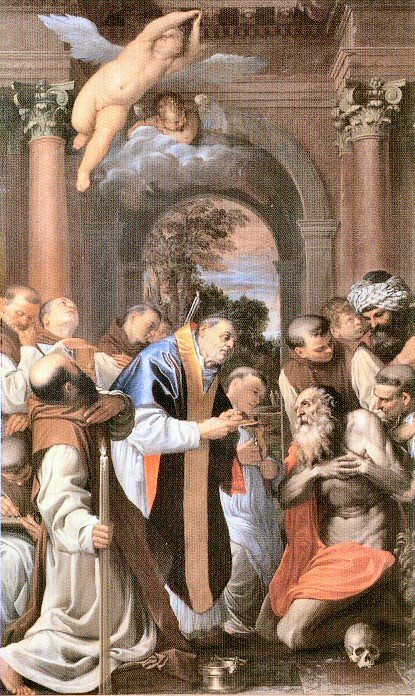


Life and training
Born into a family of artists in Bologna, Agostino trained locally and worked closely with his relatives. The Carracci workshop emphasized close study of nature and of classical models, seeking to correct what they saw as the excesses of late-Mannerist art. As an Italian painter and accomplished printmaker, Agostino moved between commissions for churches, private patrons and projects that required detailed preparatory drawings and engraved plates.
Artistic approach and works
Agostino advocated balanced composition, careful draughtsmanship and a measured use of color. He believed in learning from direct observation of the world—an approach often summarized as an idealized study of nature. His prints helped spread the Carracci aesthetic beyond Bologna by reproducing paintings and designs for a wider audience. In painting, he executed altarpieces and decorative schemes that emphasize clear narratives and disciplined figure groups.
The Accademia degli Incamminati and influence
With Annibale and Lodovico Carracci he helped found the Accademia degli Incamminati, an informal academy that combined life drawing, copying of classical sculpture and collaborative study. The academy trained a generation of artists associated with the School of Bologna and shaped early Baroque practice; contemporaries and later observers sometimes presented the academy as an institutional rival to the naturalism associated with Caravaggio.
Legacy and notable facts
- Agostino is frequently remembered for his engravings and his role as a teacher rather than as the most celebrated Carracci painter.
- The academy he co‑founded nurtured artists such as Guido Reni, Domenichino and Francesco Albani, who carried forward its principles.
- His combination of drawing skill and print production made the group's ideals portable and influential across Italy.
Although overshadowed in fame by Annibale's grand fresco cycles, Agostino Carracci remains an important figure for understanding the transition from late Renaissance mannerisms to a more naturalistic, compositionally disciplined Baroque idiom in northern Italy.
More on his birth • year of birth • date of death • year of death • Italian context • printmaking work • nature as model • relation to Caravaggio
Tags
Related articles
Author
AlegsaOnline.com Agostino Carracci (1557–1602) Leandro Alegsa
URL: https://en.alegsaonline.com/art/1425