
Andrea del Verrocchio: Florentine sculptor, goldsmith, painter and teacher
Andrea del Verrocchio (c.1435–1488) was a Florentine goldsmith, sculptor and painter whose influential workshop trained Leonardo da Vinci and other leading Renaissance artists.
Overview
Andrea del Verrocchio (born Andrea di Michele di Francesco de' Cioni, c. 1435–1488) was a versatile Florentine artist whose career spanned goldsmithing, sculpture and painting. He ran one of the most important workshops in 15th‑century Florence and played a pivotal role in the training of the next generation of Renaissance masters. While he produced paintings and smaller works of decorative art, his reputation rests chiefly on bronze sculpture and on the workshop that produced significant public and private commissions.
Image gallery
10 Images


Training, workshop and methods
Verrocchio began his career as a goldsmith, a technical training that informed his sensitivity to surface, metalworking and fine detail. Goldsmiths of his era were skilled in techniques such as gilding and repoussé and often worked on liturgical objects, reliquaries and luxury tableware. He learned to model in clay and wax and to oversee bronze casting, skills required for large sculptures and equestrian monuments. His workshop combined multiple crafts under one roof: apprentices learned painting, carving, casting and ornamentation, and collaborative production was common.
Style and notable works
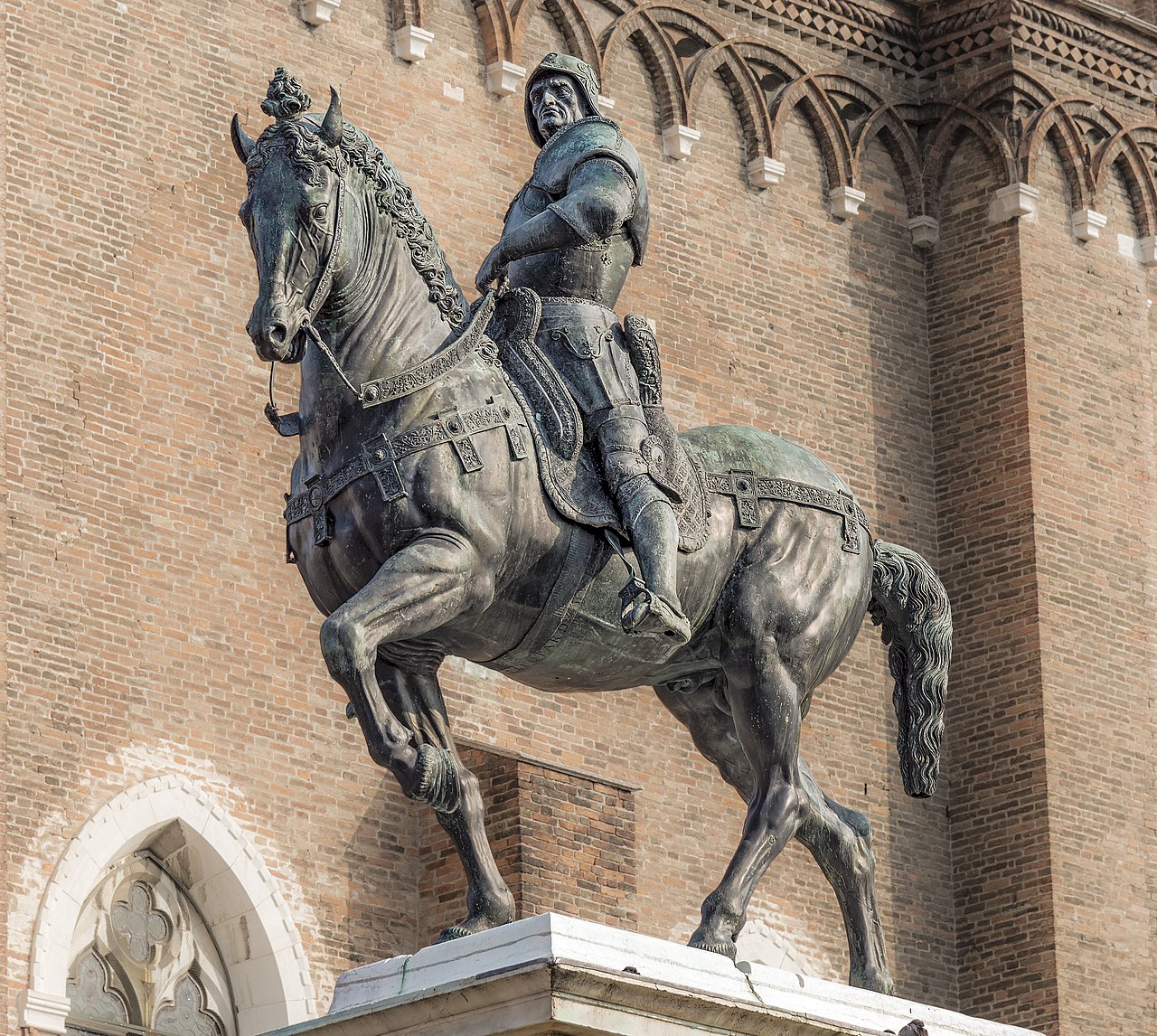
Verrocchio's work demonstrates early Renaissance interests in naturalism, careful observation of anatomy and dynamic, lifelike poses. His surviving bronzes show a command of volume and surface finish; his figurative work often balances energetic movement with finely observed detail. Among pieces traditionally associated with him are a bronze youthful David and preparatory models or designs for a major equestrian monument. His painted output is smaller and often collaborative; one celebrated example is the workshop altarpiece in which a young Leonardo da Vinci is believed to have contributed a figure.
Teacher and influence
Verrocchio's workshop was a major training ground. Artists who apprenticed to or worked with him include Sandro Botticelli, Domenico Ghirlandaio and Pietro Perugino. The most famous of his pupils was Leonardo da Vinci, who reportedly painted an especially striking angel in a Baptism scene while working in Verrocchio's studio. These artists carried technical practices and aesthetic ideas from Verrocchio's environment into their own mature work, spreading his influence across Italy.
Historical context and distinctions
Active during Florence's artistic flowering, Verrocchio worked in the same milieu as Donatello and other leading sculptors. Art historians compare his approach to public monuments and figurative portraiture with contemporaries to show differences in scale, surface treatment and the interplay between antiquity and innovation. Unlike some peers who concentrated on a single medium, Verrocchio maintained a cross-disciplinary practice that linked decorative metalwork, painting and monumental sculpture.
Legacy and where to see his work
Verrocchio's legacy rests less on a large catalogue of signed paintings than on his role as a workshop master and his surviving bronzes and models that influenced later public sculpture. Important museums and churches in Florence and Venice and several national collections preserve works attributed to him or his workshop. His workshop model—integrating crafts, apprenticeship and collaborative commissions—helped shape the professional structure of Renaissance art.
Further reading and resources
- Andrea del Verrocchio — biographical overview
- Catalogue of sculptures and bronzes
- Goldsmith techniques and Renaissance workshops
- Paintings attributed to Verrocchio and studio works
- Florence in the 15th century: public commissions
- List of artists trained in Verrocchio's workshop
- Ghirlandaio and his connection to Verrocchio
- Leonardo da Vinci and his apprenticeship
- Records of Verrocchio's patrons and civic roles
- The Medici and artistic patronage
- Venice and the late 15th‑century bronze tradition
- Illuminated manuscripts and gold leaf in Renaissance art
- Bronze casting: from model to finished work
- Donatello — comparison of approaches
- David and equestrian statues in Renaissance sculpture
Questions and answers
Q: Who was Andrea del Verrocchio?
A: Andrea del Verrocchio (c. 1435 – 1488) was an Italian sculptor, goldsmith and painter who had an important workshop in Florence.
Q: Where was Verrocchio born?
A: Verrocchio was born in Florence in 1435.
Q: What did his father do for a living?
A: His father, Michele di Francesco Cioni, made tiles and bricks and later worked as a tax collector for the Medici family of bankers before moving to Venice.
Q: How did he get his name?
A: He was originally named Andrea di Francesco di Cioni but changed it to Andrea del Verrocchio when he apprenticed to a goldsmith called Verrocchio (who was likely Francesco di Luca Verrocchio).
Q: What did he learn during his apprenticeship?
A: During his apprenticeship, he learnt how to make jewellery and golden tableware such as plates, dishes, jugs and salt containers. He also learnt how to hammer gold into thin sheets called "gold leaf" which could be used to decorate picture frames, statues and illuminated manuscripts. Additionally, he learnt how to make bronze statues.
Q: Who else worked with him at this time?
A: At this time he met Donatello who became one of the most famous sculptors ever; other Renaissance painters such as Botticelli, Ghirlandaio and Perugino were also associated with or worked in his workshop; Leonardo da Vinci is perhaps the most famous apprentice of all who worked under him.
Q: What are some of the most famous works by Verrocchio?
A:Verrocchios's bronze statues are some of his most famous works; both he and Donatello made a statue of David with the head of Goliath; both also made a huge statue of a famous soldier on horseback (equestrian statue).
Tags
Related articles
Author
AlegsaOnline.com Andrea del Verrocchio: Florentine sculptor, goldsmith, painter and teacher Leandro Alegsa
URL: https://en.alegsaonline.com/art/3966