
Joan Feynman: American Astrophysicist and Solar–Terrestrial Researcher
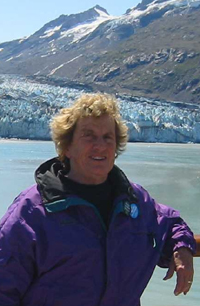
Joan Feynman (1927–2020) was an American astrophysicist who advanced understanding of the solar wind, sun–Earth connections and magnetospheric physics and inspired women in space science.
Overview
Joan Feynman (March 31, 1927 – July 22, 2020) was an American astrophysicist noted for studies of how the Sun interacts with Earth. Over a long career she examined particles and magnetic fields from the solar wind and how they affect the near‑Earth environment. Her work helped shape modern study of space weather and the dynamics of the upper atmosphere.
Image gallery
3 Images

Research and contributions
Feynman specialized in the physics of the solar wind, the continuous stream of charged particles emitted by the Sun, and its role in driving geomagnetic activity. She investigated how variations in solar output translate into disturbances in the magnetosphere, producing auroras, geomagnetic storms and changes in particle populations around Earth. Her analyses clarified links between solar phenomena and measurable effects on satellites, radio propagation and ground‑level magnetic records.
Career and background
Encouraged in childhood by her older brother, physicist Richard Feynman, she pursued scientific training and a research career at institutions and government laboratories involved in space science. Working over decades when the discipline matured rapidly, she combined observational data with theoretical interpretation to reveal recurring patterns in solar activity and its terrestrial consequences.
Context, significance and applications
Joan Feynman’s findings contributed to the foundations of space weather science, a field that is important for protecting technological infrastructure such as satellites, power grids and communication systems. Her work also informed interdisciplinary studies that explore how long‑term variations in solar activity may correlate with aspects of Earth’s climate, approached cautiously and in the context of many contributing factors.
Legacy and later life
Feynman served as a mentor and role model for women in a historically male‑dominated field, and her research papers remain part of the literature on solar‑terrestrial physics. She died on July 22, 2020 in Oxnard, California, with contemporary notices recording her passing that day and citing heart failure as the cause of death. Her career is often cited when tracing the development of modern heliophysics.
Notable facts
- Worked on practical and theoretical aspects of how solar emissions influence Earth.
- Made contributions during the era when satellite measurements expanded understanding of space plasma.
- Remembered both for scientific contributions and for encouraging greater participation of women in physical sciences.
- Further information and selected writings can be found via institutional and biographical links such as biographies and archives of her publications on solar wind topics.
Author
AlegsaOnline.com Joan Feynman: American Astrophysicist and Solar–Terrestrial Researcher Leandro Alegsa
URL: https://en.alegsaonline.com/art/140436