
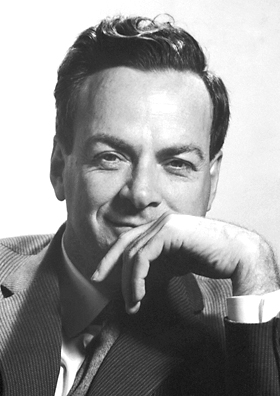
Richard Feynman
American theoretical physicist (1918–1988) celebrated for work on quantum electrodynamics, Feynman diagrams, Manhattan Project involvement, accessible teaching, the Nobel Prize (1965), and science popularization.
Overview
Richard Feynman was an American physicist born in Far Rockaway, New York City in 1918 and died in 1988 in Los Angeles, California. He became widely known for advancing modern physics, for his skill as an educator, and for bringing complex ideas to non‑specialist audiences. He shared the Nobel Prize in Physics in 1965 for fundamental work in quantum electrodynamics.
Image gallery
10 Images



Scientific contributions
Feynman introduced intuitive calculational tools and novel viewpoints that reshaped theoretical practice. His pictorial method, the Feynman diagram, simplified particle interactions. He helped develop a consistent formulation of quantum electrodynamics and popularized the path‑integral approach to quantum mechanics. Later in life he explored ideas that presaged quantum computation and inspired nanotechnology discussions.
Career and historical context
During World War II Feynman worked at Los Alamos as part of the Manhattan Project, contributing to the theoretical effort. After the war he held positions in academic research and teaching, most notably at the California Institute of Technology. His pragmatic, hands‑on style led to many anecdotes — from cryptographic puzzles at Los Alamos to unusual classroom demonstrations.
Teaching, writing, and public impact
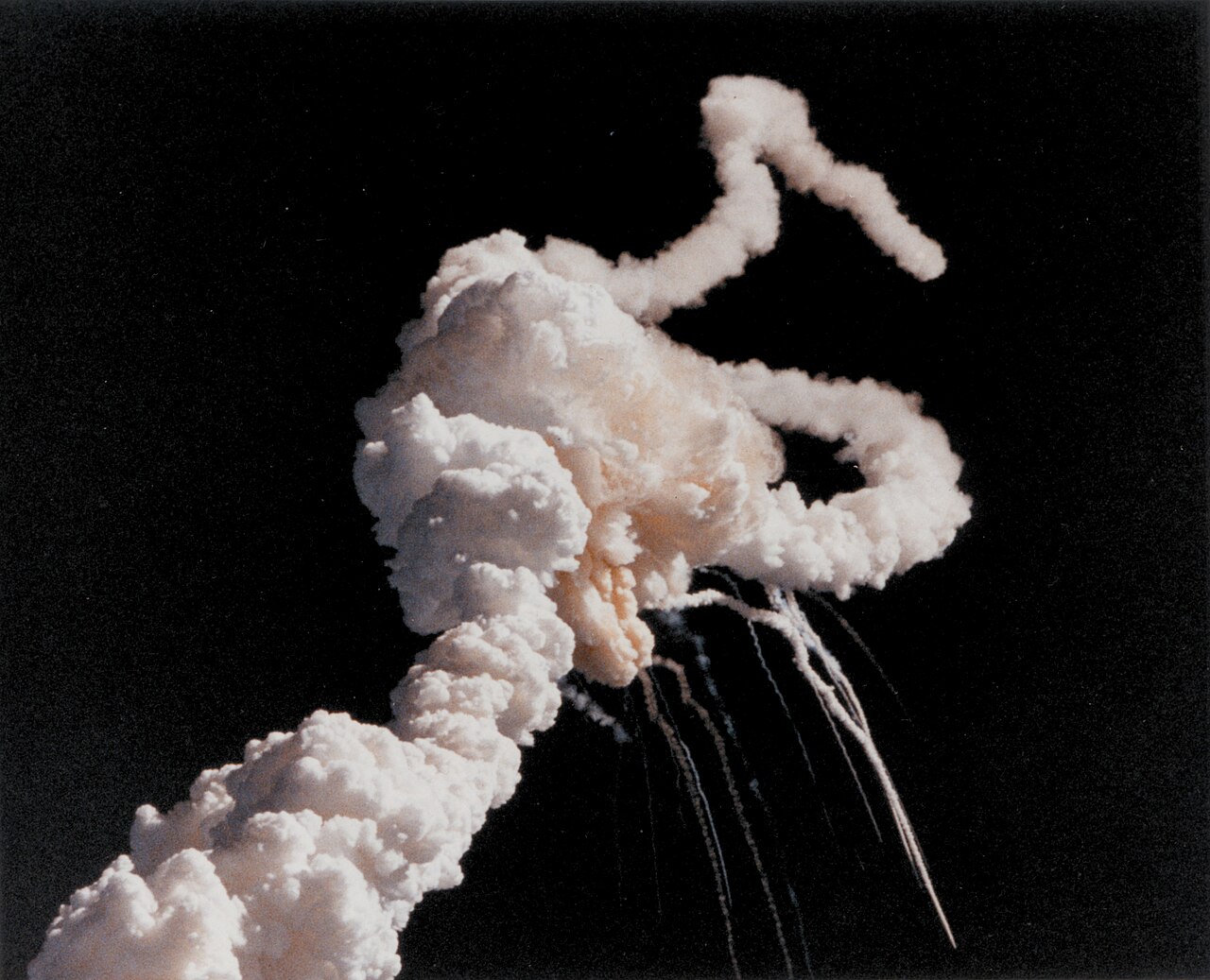
Feynman was celebrated as a teacher: his lecture series were later published and remain influential. He wrote accessible memoirs and essays that brought scientific thinking to broader audiences. He also took public roles on technical investigations, applying clear, empirical reasoning to complex engineering problems.
Legacy and notable facts
- Principal honors include the Nobel Prize for work on quantum electrodynamics.
- His development of the Feynman diagram remains a standard tool in particle physics calculations.
- He proposed visionary ideas about computation and nanoscale manipulation later taken up by other researchers.
- Feynman died of liposarcoma in 1988, an event that marked the loss of a prominent public scientist.
Personal connections include family members who pursued science: his sister Joan Feynman became a noted astrophysicist. Readers interested in Feynman's life and methods can follow introductory resources and collected lectures to see how his approaches connect formal theory, experiment, and clear explanation. For further reading and archival material consult academic collections and authorized biographies that document his scientific and cultural influence.
Questions and answers
Q: When was Richard Feynman born?
A: Richard Feynman was born on 11 May 1918 in Far Rockaway, Queens, New York City.
Q: What is Richard Feynman's sister's name?
A: Richard Feynman's sister is named Joan Feynman and she was born in 1927.
Q: What did Richard Feynman contribute to science?
A: Richard Feynman contributed significantly to a branch of science called quantum electrodynamics and invented the Feynman diagram. He was also one of the first people to study quantum physics.
Q: What project did he work on during World War II?
A: During World War II, Richard Feynman worked on the Manhattan Project team that made the atomic bomb.
Q: What award did he win for his contributions to physics?
A: In 1965, Richard Feymnan won the Nobel Prize in Physics for his contributions to science.
Author
AlegsaOnline.com Richard Feynman Leandro Alegsa
URL: https://en.alegsaonline.com/art/129496