
Historic Monuments of Ancient Kyoto (Kyoto, Uji and Ōtsu Cities)
A UNESCO World Heritage ensemble of 17 temples, shrines and a castle in Kyoto, Uji and Ōtsu, illustrating Japan’s religious architecture, garden design and urban culture from the Heian era onward.
Overview
The Historic Monuments of Ancient Kyoto comprise a group of culturally and architecturally significant sites clustered in and around the ancient capital of Kyoto. Designated as a UNESCO World Heritage property, the ensemble spans 17 locations in three cities: Kyoto, Uji (in Kyoto Prefecture) and Ōtsu (in Shiga Prefecture). The collection brings together major examples of Japanese religious architecture, landscape design and feudal urban fabric.
Image gallery
10 Images




Composition and characteristics
The 17 component sites include Shinto shrines, Buddhist temples and a castle, each retaining elements of original plan, buildings and gardens. Several sites are active places of worship while others function primarily as historic monuments. The group contains three major Shinto shrines and thirteen Buddhist temples, plus a fortified residence representing political authority.
- Kiyomizu-dera — a hilltop temple known for its wooden stage and panoramic views.
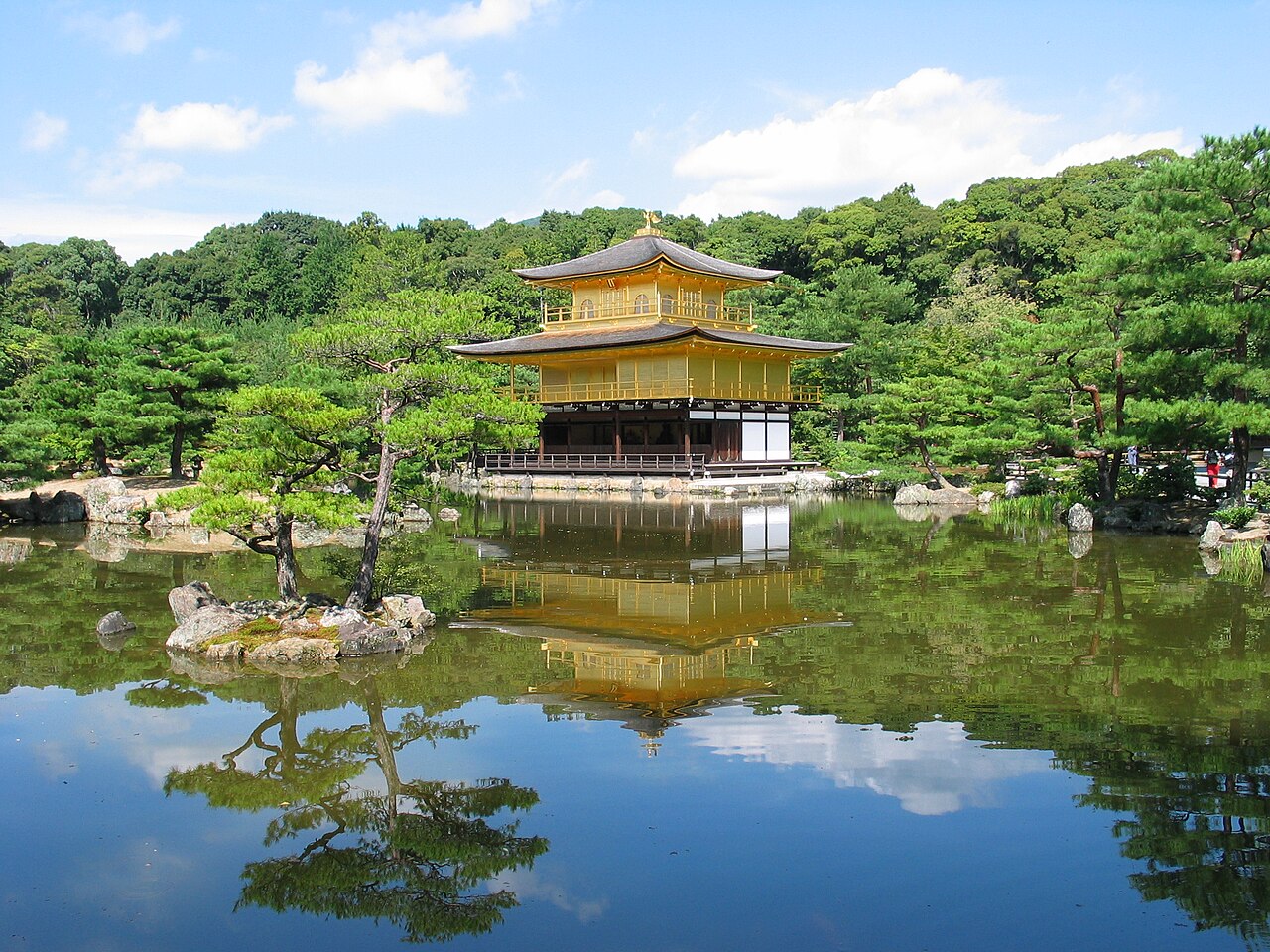
- Kinkaku-ji (Golden Pavilion) and Ginkaku-ji (Silver Pavilion) — iconic examples of temple architecture and garden composition.
- Ryoan-ji — famous for its zen rock garden and minimalist landscape.
- Byodoin in Uji — a celebrated Buddhist temple with a phoenix hall.
- Enryaku-ji on Mount Hiei near Ōtsu — an influential monastic complex.
- Nijō Castle — the feudal castle included as the representative fortified site.
History and development
Many monuments date from periods when Kyoto was Japan’s political and cultural center, beginning with the Heian capital founded in the late 8th century. Over successive eras—Heian, Kamakura, Muromachi and Edo—religious institutions, aristocratic patronage and warrior clans shaped temple architecture, garden aesthetics and ritual practice. The sites illustrate the evolution of construction techniques, decorative arts and landscape planning over more than a millennium.
Significance and conservation
As a group, these monuments provide an integrated view of Japanese spiritual life, aesthetics and urban history. They continue to attract scholars, pilgrims and millions of visitors annually, contributing to education and local economies. Conservation efforts balance everyday religious use with preservation: restoration, seismic reinforcement, traditional carpentry and careful management of surrounding landscapes are central to keeping these places both living and authentic.
Visiting and distinguishing features
Visitors encounter a mix of architectural forms, from multi-storied halls and gates to tea houses and strolling gardens, and seasonal spectacles such as cherry blossoms and autumn foliage. The sites are noteworthy for their variety: sacred Shinto precincts, meditative Zen gardens, Pure Land halls and fortified palaces each express different cultural values. For official information and guidance on visiting, interpretation and ongoing protection, consult resources linked by cultural authorities and heritage bodies: Buddhist institutions and shrine administrators provide context and programs for many locations.
Author
AlegsaOnline.com Historic Monuments of Ancient Kyoto (Kyoto, Uji and Ōtsu Cities) Leandro Alegsa
URL: https://en.alegsaonline.com/art/139765