
Fidel V. Ramos (1928–2022) — Philippine president and military leader
Filipino soldier and statesman who served as the 12th president (1992–1998); former AFP chief and defense secretary, key figure in the 1986 People Power movement and in 1990s economic and peace reforms.
Fidel "Eddie" V. Ramos (March 18, 1928 – July 31, 2022) was a Filipino military officer and politician who served as the 12th President of the Philippines from 1992 to 1998. Widely known by his initials FVR, he had a long career in the armed forces and civilian government. Ramos is remembered for his part in the 1986 events that helped end the rule of Ferdinand Marcos, for his later role as Secretary of National Defense, and for leading a six-year program of economic liberalization and infrastructure investment during his presidency.
Image gallery
10 Images


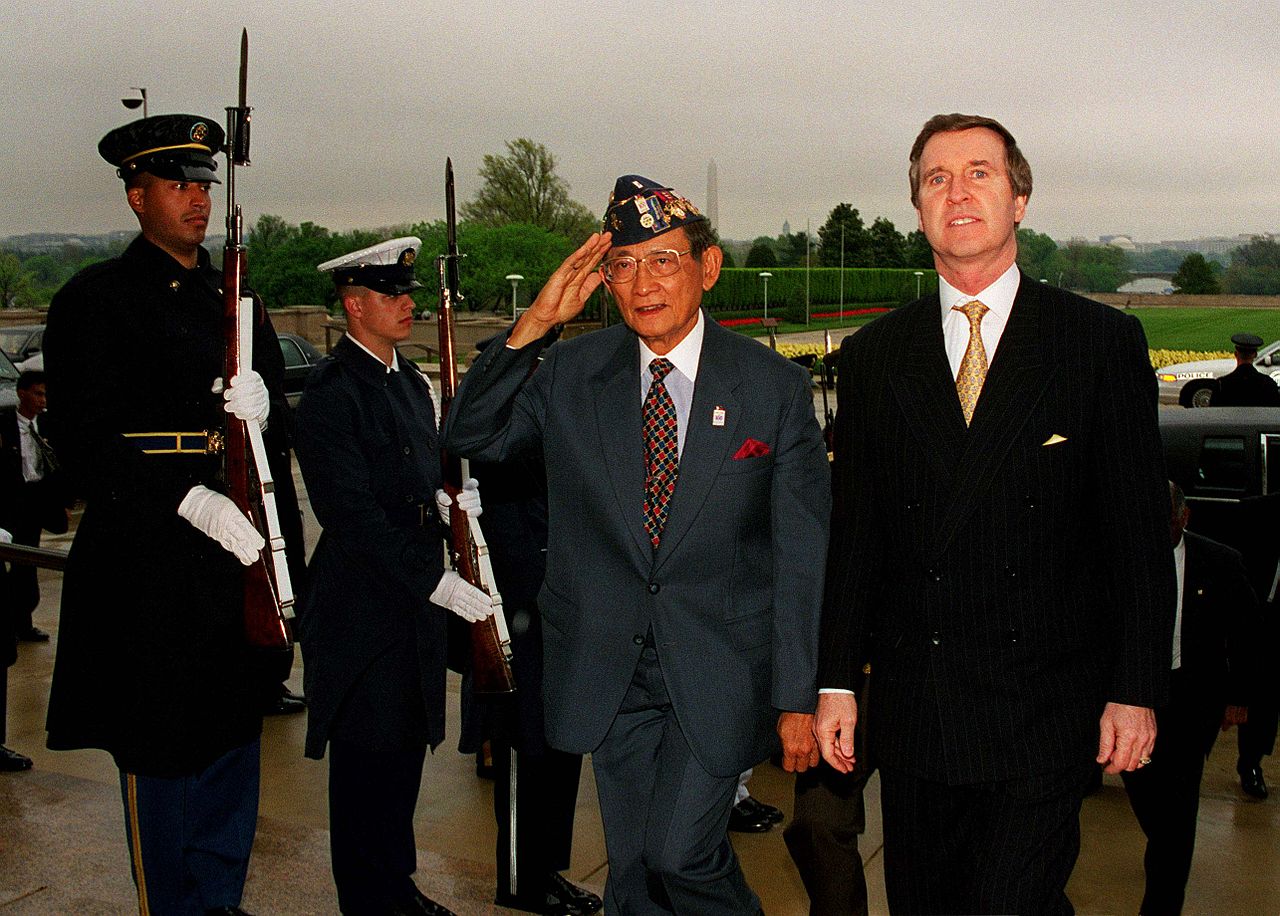


Early career and rise in the armed forces
Ramos built his public career as a professional soldier and military administrator. He rose to become chief of staff of the Armed Forces of the Philippines (AFP), and during the administration of President Corazon Aquino he served as Secretary of National Defense. In military service he was associated with reforms in special operations and police support, including contributions to the establishment of units such as the Philippine Army Special Forces and the Philippine National Police Special Action Force.
Role in 1986 and transition to politics
Ramos played a visible part in the People Power period that led to the departure of Ferdinand Marcos and the installation of a new democratic government. His leadership in the military and his subsequent civilian appointments positioned him as a consensus figure acceptable to a range of political groups. During the late 1980s and early 1990s he became an influential voice on national security and governance matters.
Presidency: policies and programs
As president (1992–1998), Ramos promoted economic liberalization, deregulation, and efforts to attract foreign investment. His administration launched a national development agenda often summarized as "Philippines 2000," aimed at modernizing infrastructure, expanding power generation, and improving telecommunications and transport. He pursued privatization of some state assets and regulatory reforms intended to stimulate growth and create jobs. Observers credit his policies with improving investor confidence, even as challenges such as periodic power shortages and the need for fiscal discipline remained.
Peace initiatives and governance
Ramos worked to resolve longstanding internal conflicts through negotiation as well as military means. A notable result was the 1996 final peace agreement between the government and the Moro National Liberation Front (MNLF), which sought to address autonomy and development in parts of Mindanao. His term also emphasized modernization of the AFP and closer coordination between defense and civilian authorities.
Controversies and criticisms
Like many administrations, Ramos's government faced criticism on several fronts: accusations of patronage in politics, disputes over privatization processes, and debates about the social distribution of economic gains. Some critics argued that the benefits of growth were uneven and that reforms could have done more to reduce poverty directly.
Death and legacy
Ramos died on July 31, 2022, in Makati from complications related to COVID-19 at the age of 94. He left a mixed but prominent legacy: a president credited with stabilizing investor confidence and making significant policy changes in a post-authoritarian era, and a former military leader associated with both institutional reforms and the contentious politics of transition. His life and career are discussed in biographies, historical studies, and retrospectives on Philippine democracy and development.
- Major positions held: AFP Chief of Staff; Secretary of National Defense; 12th President of the Philippines.
- Notable initiatives: "Philippines 2000" economic agenda; privatization and deregulation; peace agreement with MNLF; AFP and police special units.
- Further reading: biographical overview, military service, presidential policies, People Power era, Aquino administration context, reports on his passing, health and cause of death.
Ramos remains a significant figure in late 20th-century Philippine history for his transition from military leadership to civilian rule, his role in restoring democratic institutions after authoritarianism, and his efforts to reposition the national economy in a changing global environment.
Author
AlegsaOnline.com Fidel V. Ramos (1928–2022) — Philippine president and military leader Leandro Alegsa
URL: https://en.alegsaonline.com/art/138359