
Branch line (rail transport)
A branch line is a secondary railway track that connects local areas, industries or suburbs to a principal route. It supports freight and passenger services and has distinct design, history, and operational roles.
Overview
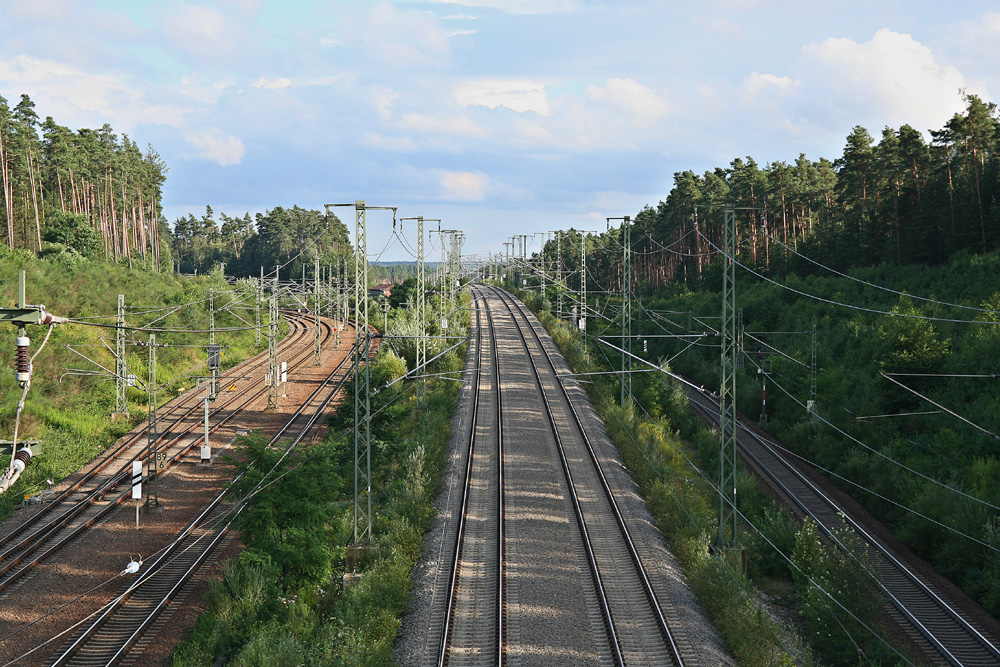
A branch line is a secondary railway route that links smaller towns, industrial sites or suburban areas to a principal route. In railway terminology it is distinct from a main line: a branch typically carries less traffic, is built to lighter standards and connects into a larger network at a junction. Branch lines are sometimes called feeder lines; a very short branch that terminates at a single customer is often called a spur.
Image gallery
3 Images

Characteristics
Branch lines frequently share these features:
- Lower permitted speeds and lighter track structure than main lines.
- Single-track operation with passing loops rather than continuous double track.
- Simpler signaling and fewer grade-separated junctions.
- Mixed use for freight and local passenger services; sidings and small yards to serve local industry.
History and development
During the 19th and early 20th centuries, branch lines multiplied as railways expanded into rural and industrial areas to open markets and carry raw materials. They were essential for economic development in many regions because they provided the "last mile" connection between producers and main routes. From the mid-20th century many branch lines declined as road transport grew; some were closed, others were modernized or preserved as heritage railways.
Uses and importance
Branch lines perform practical roles: they collect local freight for transfer to main lines, carry commuter or rural passenger services, and connect factories, mines or ports to the wider network. Even when a branch is not independently profitable, railway managers have often regarded it as necessary to sustain traffic on more important routes. For example, early executives observed that many small branches subsidize the economics of major lines by feeding traffic onto them; their continued existence may therefore be strategic rather than purely commercial.
Distinctions and notable points
It helps to distinguish a branch from related track types: a main line carries the core high-capacity services; a spur is a short, usually dead-end branch; and a siding is a short track for loading, passing or stabling trains. Modern rail policy debates often center on whether to retain, upgrade or abandon branch lines; some survive as community or tourist railways, while others are re-used as trails. For general definitions see secondary railway line, or contrast with a main line. Historical and corporate context can be found in accounts of national systems such as the Canadian National Railway.
Related articles
Author
AlegsaOnline.com Branch line (rail transport) Leandro Alegsa
URL: https://en.alegsaonline.com/art/13690