
Yun Poson (Yun Bo-seon): South Korean statesman and opposition leader (1897–1990)
Yun Poson (Yun Bo-seon) was a South Korean politician who served as president from 1960–1962 and spent decades as an opposition leader advocating democratic governance.
Overview
Yun Poson (also romanized Yun Bo-seon; Korean: 윤보선; August 26, 1897 – July 18, 1990) was a South Korean political figure best known for serving as president in the transitional period after the fall of Korea's First Republic. Born in Asan, South Chungcheong, he combined a background in higher education and public administration with a long career in public service and opposition politics. His presidency (1960–1962) occurred during a brief parliamentary experiment and ended after a military coup. Throughout his life he was associated with pro-democracy positions and resisted successive authoritarian regimes.
Image gallery
2 Images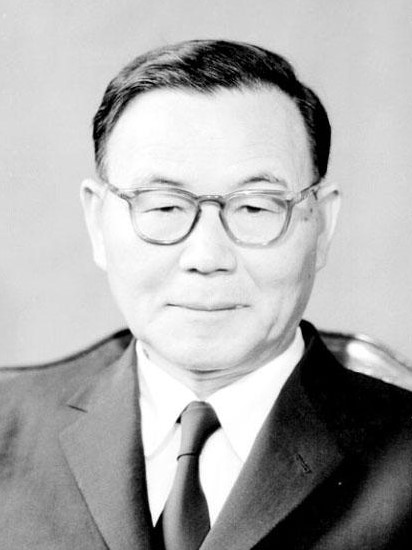

Early life and education
Yun was born into a prominent family in Asan and received part of his formal education abroad. He graduated from the University of Edinburgh in 1930, an experience that exposed him to Western liberal ideas and public administration practices. After Japanese colonial rule ended in 1945, Yun entered the public sphere and began participating in the reconstruction of Korean civic institutions. His early career was shaped by the turbulent transition from colonial rule to an independent state and the factional politics that followed.
Political rise and public offices
In the years following independence, Yun allied initially with Syngman Rhee and accepted several government positions. In 1948 he was appointed mayor of Seoul and subsequently served as Minister of Commerce and Industry. Over time he grew critical of authoritarian policies practiced by the Rhee administration and moved into roles that reflected a more independent posture, including serving as president of the national Red Cross society. After election to the National Assembly in 1954, Yun helped found the Democratic Party in 1955 and emerged as a leading voice for parliamentary reform and civil liberties.
Presidency, parliamentary government, and the 1961 coup
Following the student-led April Revolution that led to the resignation of Syngman Rhee, Yun was chosen president on August 13, 1960. That election came amid constitutional changes that shifted South Korea from a presidential to a parliamentary system, making the president largely a ceremonial head of state while executive power rested with the prime minister and the legislature. As a result, Yun's role was mainly symbolic, intended to lend moral legitimacy to the new order. The fragile civilian government was short-lived: it was displaced by a military takeover in 1961. Yun initially remained in office for a time to provide a constitutional veneer to the new rulers but resigned on March 22, 1962, when it became clear the military regime would consolidate power.
Opposition activities, later candidacies, and retirement
After his presidency Yun continued to oppose authoritarian rule. He ran for president in subsequent democratic contests (1963 and 1967) but was defeated as the political environment favored candidates aligned with the ruling military and later civilian regimes. His prominence in opposition politics resulted in intermittent legal pressure, including suspended sentences for activities deemed antagonistic by the government. Despite these setbacks, Yun maintained a public profile as an advocate for democratic norms and civil society. In 1980 he withdrew from active politics and devoted himself to cultural and civic causes until his death.
Legacy and notable facts
- Yun's presidency is often remembered as a transitional, largely ceremonial period produced by the reaction against the excesses of the First Republic.
- He bridged the eras of early postwar state-building and later democratic movements, consistently criticizing concentrated executive power.
- Yun's experience included roles at municipal and national levels: mayor of Seoul, national ministerial office, Red Cross leadership, and National Assembly membership.
For context on the institutions and events that shaped Yun's career, see entries on Korea, South Korea, the transition into party politics after World War II and the end of Japanese occupation. Further information about his entry into public life and political affiliations can be found through historical summaries of postwar politics and studies of early South Korean governments. Additional background on his overseas education is available at sources describing the University of Edinburgh and its alumni in East Asia.
Yun Poson died in 1990 after a long illness that included complications from diabetes and high blood pressure. His life remains part of South Korea's twentieth-century narrative of struggle between authoritarian control and the pursuit of democratic governance.
Author
AlegsaOnline.com Yun Poson (Yun Bo-seon): South Korean statesman and opposition leader (1897–1990) Leandro Alegsa
URL: https://en.alegsaonline.com/art/133233