
William Lyon Mackenzie King
Canadian Liberal statesman who served three terms as prime minister (1921–26, 1926–30, 1935–48); longest-serving PM, noted for the King–Byng affair, wartime leadership, social reform and interest in spiritualism.
William Lyon Mackenzie King (December 17, 1874 – July 22, 1950), commonly known as Mackenzie King, was a dominant figure in Canadian politics from the 1920s through the 1940s. A leader of the Liberal Party, he served three non-consecutive terms as prime minister (1921–1926; 1926–1930; 1935–1948) and remains the longest-serving holder of that office. His governments guided Canada through periods of institutional development, social reform, economic crisis and a major world war. Further biography
Image gallery
10 Images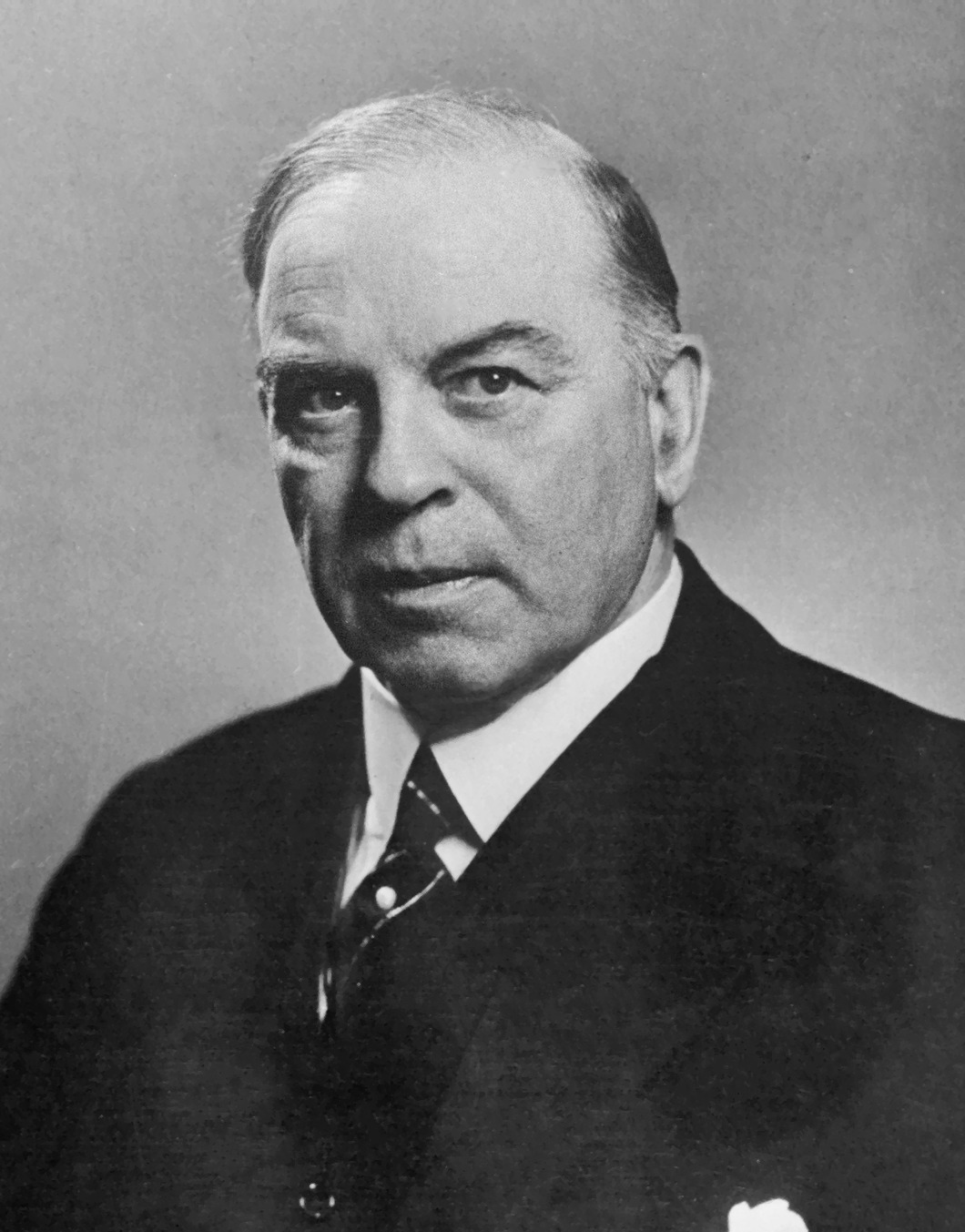


Early life and education
King was born in Ontario into a family with reformist roots and followed an academic path before entering public life. He undertook advanced study in economics and social policy and developed a reputation for meticulous record-keeping. His private diaries and papers later became an important source for historians, shedding light on both his public decisions and personal habits. Honours and distinctions
Political rise and constitutional issues
King first became prime minister in 1921 and, after interruptions, returned to lead Canada through much of the 1920s and 1930s and into the postwar era. A defining constitutional episode of his career was the King–Byng affair of 1926, in which disagreements between the prime minister and the governor general clarified the limits of vice-regal discretion and strengthened Canadian parliamentary autonomy. Historians view this crisis as influential in the gradual assertion of Canadian self-government within the British Commonwealth. Context and analysis
Domestic policy and social developments
King governed with a pragmatic, incremental approach. During his administrations the federal government expanded its role in social and economic life, especially in response to the Great Depression. His governments introduced measures for relief, public works and support for veterans; they also laid groundwork for later social programs such as pensions and unemployment assistance. King generally favored compromise among regional and linguistic groups, seeking to manage tensions between English and French Canada while preserving national unity.
- Economic management and limited public works during the 1930s.
- Gradual development of federal social policy and veteran benefits.
- Institutional strengthening of federal departments and civil service practices.
War leadership and foreign relations
King led Canada through the Second World War, overseeing mobilization, military expansion and coordination with Allies. His government balanced domestic politics—especially regional and linguistic sensitivities—with the demands of alliance management. The conscription issue remained politically sensitive; King delayed full conscription and attempted political compromise during the conflict. His wartime leadership contributed to Canada's emergence as a more autonomous and internationally engaged nation. Parliamentary record
Personal life, controversies and legacy
King was a lifelong bachelor. His private life, particularly a long-standing interest in spiritualism and séance attendance, has attracted popular attention and scholarly study alike. He kept voluminous diaries that reveal both his administrative methods and personal preoccupations. Debates persist about aspects of his record, including choices on conscription, Indigenous and minority policies, and the pace of social reform, but he is widely remembered for his lengthy service, institutional steadiness and shaping of modern Canadian governance.
King died on July 22, 1950, at his family estate, aged 75, and was buried in Toronto. His papers and official records remain important resources for researchers and are available in national archives and collections. Archival materials
Author
AlegsaOnline.com William Lyon Mackenzie King Leandro Alegsa
URL: https://en.alegsaonline.com/art/132955