
William Lassell: British astronomer and reflecting-telescope innovator
William Lassell (1799–1880), English astronomer known for discovering Triton and moons of Uranus and for advancing large reflecting telescopes with improved mirrors and mountings.
William Lassell (18 June 1799 – 5 October 1880) was an English astronomer who made lasting contributions to observational astronomy through both discoveries and instrument design. Born in Bolton, Lancashire, England, he combined an independent wealth and mechanical skill to build and operate large reflecting telescopes at his private observatory. His career illustrates the 19th-century tradition of amateur or semi-professional scientists advancing practical astronomy.
Image gallery
3 Images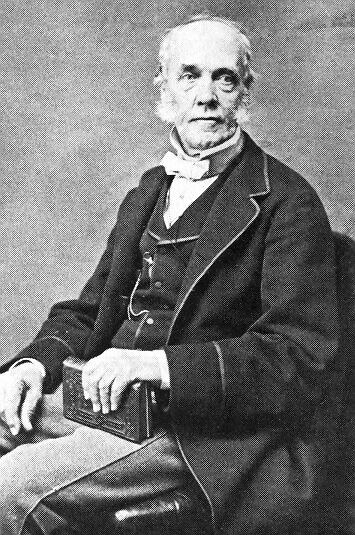


Observing practice and instrument improvements
Lassell is remembered not only for what he saw but for how he improved the tools of observation. Working before the widespread use of silvered glass mirrors, he used polished speculum-metal mirrors and developed careful methods for grinding and polishing reflective surfaces. He also adapted clock-driven equatorial mountings and other mechanical aids that stabilized and tracked celestial targets, allowing longer, steadier views and more confident detection of faint companions and nebulae. These practical innovations influenced contemporaries and successors who sought larger, better-mounted reflectors.
Major discoveries
Using his telescopes he discovered several natural satellites and observed faint objects that were difficult to detect with smaller instruments. Most notably, he discovered Triton, the largest moon of Neptune, shortly after Neptune itself had been identified. He also identified previously unknown moons of Uranus and made detailed observations of planets, satellites and comets. His discoveries helped refine planetary system inventories and stimulated further study of outer-planet dynamics.
Legacy and historical significance
Lassell's work sits at the intersection of skilled craftsmanship and scientific observation. By improving mirror quality and mounting techniques he expanded what amateur observatories could accomplish and provided practical lessons for professional instrument makers. His results—new moons and careful planetary observations—contributed to a richer mapping of the Solar System in the mid-19th century.
- Role: independent observer and instrument builder who bridged amateur and professional practice.
- Instruments: large reflectors with polished speculum-metal mirrors and clock-driven equatorial mounts.
- Discoveries: Triton and moons of Uranus, plus detailed planetary observations.
Although later developments in mirror materials and photographic and electronic detectors superseded many of his techniques, Lassell's combination of mechanical ingenuity and careful observing remains an example of how dedicated individuals advanced astronomy in an era before large institutional observatories dominated the field. Contemporary accounts and later historical treatments note both his discoveries and his practical improvements to reflecting telescopes as lasting contributions to 19th-century astronomy.
For more on his life, instruments and discoveries see modern histories of Victorian astronomy and specialized biographical entries that place his work in the broader development of telescope technology and planetary science.
Further references and archival material can be located through institutional catalogs and specialist histories of British astronomy.
Author
AlegsaOnline.com William Lassell: British astronomer and reflecting-telescope innovator Leandro Alegsa
URL: https://en.alegsaonline.com/art/132950