
Bosporan Kingdom (Kingdom of the Cimmerian Bosporus)
A Hellenistic-era state on the Black Sea coasts centred on Panticapaeum (modern Kerch). Known for Greek culture blended with local peoples, grain exports, coinage, and long survival as a client kingdom.
Overview
The Bosporan Kingdom, often called the Kingdom of the Cimmerian Bosporus, was a political entity on the northern Black Sea coast centered on the city of Panticapaeum (modern Kerch). Its territory included parts of the Crimean peninsula and the adjacent mainland, linking Greek colonial settlements with inland peoples. The kingdom is notable as one of the earliest Hellenistic polities outside the traditional Greek heartlands and as a long-lived state in the Black Sea region.
Image gallery
9 Images


Territory and urban centers
At its height the realm encompassed coastal settlements, agricultural hinterlands and trading outposts. The core area lay around the strait linking the Sea of Azov and the Black Sea, with the capital Panticapaeum acting as a maritime and administrative hub. Other coastal emporia and fortresses supported trade in grain, fish and slaves with Greek cities and later Rome. Its lands included what is today the Crimean peninsula and stretches of the north Black Sea shore: Crimea, and the wider north Black Sea coast.
History and governance
The kingdom emerged from Greek colonial foundations mixed with local Scythian and other steppe cultures. From the classical period into late antiquity it was ruled by dynasties that adapted Hellenistic institutions to local conditions. Over time the Bosporan rulers maintained autonomy while negotiating influence from neighboring powers, including Pontus and Rome. Greek was the language of public inscriptions and coinage, which led some scholars to describe it as an early Hellenistic state speaking Greek: Greek language and culture.
Economy, society and culture
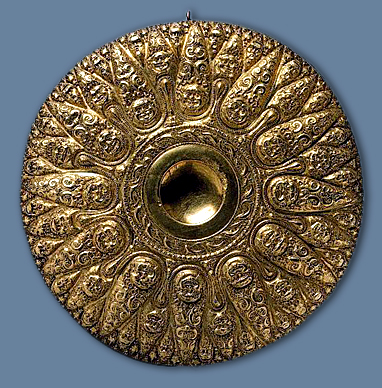
The economy combined intensive agriculture—particularly grain intended for export—with fishing, metallurgy and trade. Its coinage circulated widely and bears artistic testimony to the blending of Greek and steppe motifs. Archaeology has revealed rich burial mounds, urban architecture and inscriptions that show cultural synthesis: Greek institutions and Hellenistic art alongside local customs.
Legacy and significance
The Bosporan Kingdom is important for understanding the spread of Hellenistic civilization beyond the Mediterranean and for illustrating contacts between Greeks and nomadic cultures. It survived as a regional power for many centuries, later functioning as a client state under Roman sway before political transformations in late antiquity reduced its independence. Excavations in the region continue to refine knowledge of its economy, rulers and everyday life.
Notable features
- Center of Greek trade and grain export in the Black Sea.
- Cultural fusion of Greek, Scythian and other steppe elements.
- Extensive coinage and epigraphic record in Greek.
- Capital at Panticapaeum (modern Kerch) with substantial archaeological remains.
Related articles
Author
AlegsaOnline.com Bosporan Kingdom (Kingdom of the Cimmerian Bosporus) Leandro Alegsa
URL: https://en.alegsaonline.com/art/13199