
British occupation zone in Germany (1945–1955)
One of four Allied occupation zones after 1945, the British zone covered northern and north‑west Germany. It administered reconstruction, denazification, and economic recovery and helped shape the Federal Republic.
Overview
After the defeat of Nazi Germany in World War II, the victorious Allied powers divided Germany into four occupation zones. The British occupation zone, administered by a military government reporting to London, covered a large northern and north‑western portion of the country. The zone played a central role in immediate postwar administration, relief and the transition toward the institutions that became the Federal Republic of Germany.
Image gallery
10 Images





Territory and borders
The British zone included the province of Schleswig‑Holstein, the city of Hamburg, the region that became Lower Saxony, and the industrial area that formed part of North Rhine‑Westphalia. The port cities of Bremen and Bremerhaven were geographically surrounded by the British zone but were administered for Allied purposes in a manner that secured American access to an Atlantic port. An area that later became much of Rhineland‑Palatinate was initially considered for British control but was allocated to the French occupation zone during territorial adjustments.
Administration and key sites
The British military government established its principal headquarters at Bad Oeynhausen. British authorities exercised executive responsibility for policing, public order, local government re‑establishment and licensing, as well as oversight of denazification procedures. Over time military rule gave way to increasing civil administration and cooperation with the other western allies.
Economic policy and reconstruction
Economic policy in the British zone evolved during the occupation. Initially, restrictions were placed on heavy industry to prevent rearmament. As European recovery and political stabilization became priorities, British policy shifted toward rehabilitation of coal, steel and manufacturing sectors, especially in the Ruhr and along the Rhine. Reconstruction efforts included repairing transport infrastructure, reopening ports and supporting agricultural production to relieve food shortages.
Denazification, justice and public order
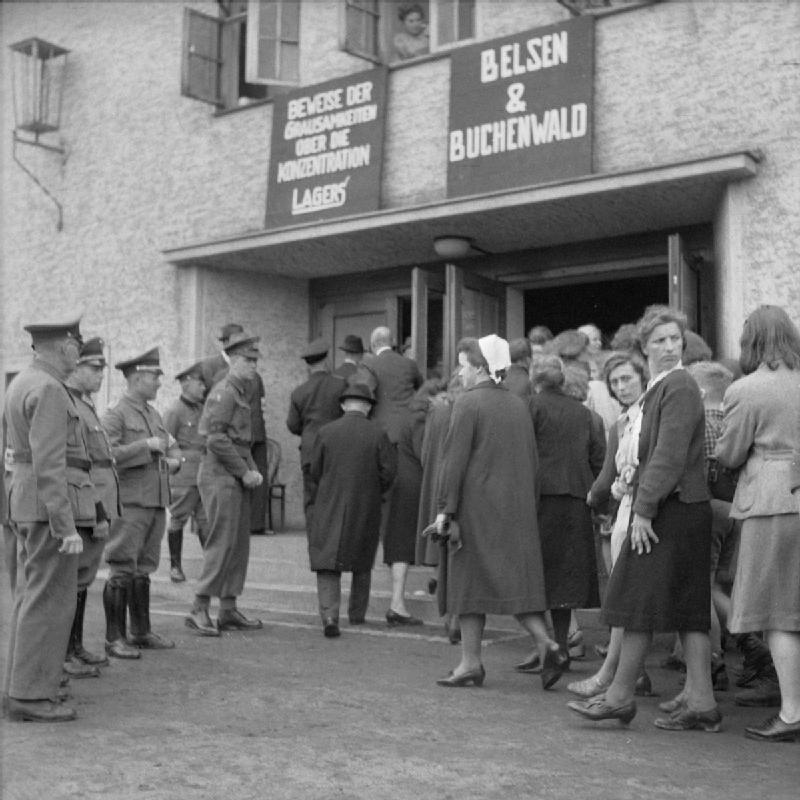
British authorities implemented denazification programs, trials for war criminals, and removal of officials linked to the Nazi regime. Processes combined legal tribunals, administrative vetting and educational measures. The effectiveness and methods of denazification varied by locality and over time, and were subject to public debate and adjustment in the face of administrative needs and Cold War considerations.
Population, refugees and social challenges
The zone received large numbers of refugees and displaced persons from eastern territories and former German communities. The British administration coordinated housing, food distribution and labour allocation while working with international relief organizations. Social challenges included rebuilding local services, integrating newcomers and dealing with wartime destruction.
Political evolution and the path to sovereignty
The British zone collaborated with the American and French zones in policy coordination that culminated in the Bizone (British–American) and later the Trizone. In May 1949 the western zones joined to form the Federal Republic of Germany; military governors were replaced by civilian high commissioners. Formal occupation of the western zones ended with the return of sovereignty in 1955 (1955), though the Western Allies retained certain rights until the final settlement in 1990 (Final Settlement).
Relations with other occupying powers and Berlin
Cooperation and occasional tension among the British, American and French authorities shaped policy in the west. The city of Berlin remained under four‑power occupation and was treated as a separate entity throughout the Cold War period; its special status produced crises and negotiations distinct from the western zones.
Legacy
The British occupation zone left a legacy in regional boundaries, administrative practices and political institutions of postwar West Germany. It contributed a significant share of population and industrial capacity to the new state, influenced early economic and educational policy, and helped integrate western Germany into emerging European and transatlantic structures.
Further reading
Questions and answers
Q: What countries made up the British occupation zone?
A: The British occupation zone consisted of Schleswig-Holstein, Hamburg, Lower Saxony and the present-day state of North Rhine-Westphalia.
Q: Where was the British military government based?
A: The British military government was based in Bad Oeynhausen.
Q: How were Bremen and Bremerhaven treated?
A: Bremen and Bremerhaven were surrounded by the British Zone, but were given to the United States so that they had a port.
Q: What happened to Rhineland-Palatinate?
A: Rhineland-Palatinate was originally part of the British Zone, but it was given up to form part of the French occupation zone.
Q: When did Allied powers stop having special rights and responsibilities in Germany?
A: The Allied powers stopped having special rights and responsibilities in Germany with the Final Settlement of 1990.
Q: When did Allied occupation end in Berlin?
A: Allied occupation ended in Berlin in 1990 when it became part of a unified German state.
Related articles
Author
AlegsaOnline.com British occupation zone in Germany (1945–1955) Leandro Alegsa
URL: https://en.alegsaonline.com/art/14283
Sources
- worldstatesmen.org : Post-WWII commanders/governors of Germany