
Bothriolepis
Bothriolepis, a diverse genus of antiarch placoderms from the middle–late Devonian, was a widespread, armored, bottom-dwelling fish known for its jointed pectoral appendages and benthic detritivorous lifestyle.
Overview
Bothriolepis is a genus of small to medium-sized armored fishes that belonged to the antiarch placoderms, a group of early jawed vertebrates. Bothriolepis is primarily known from middle to late Devonian rocks (Devonian period) and is among the best-documented fossil vertebrates of that era. Its remains are found on multiple continents, reflecting a broad geographic distribution during a time when continental arrangements and sea levels were different from today.
Image gallery
10 Images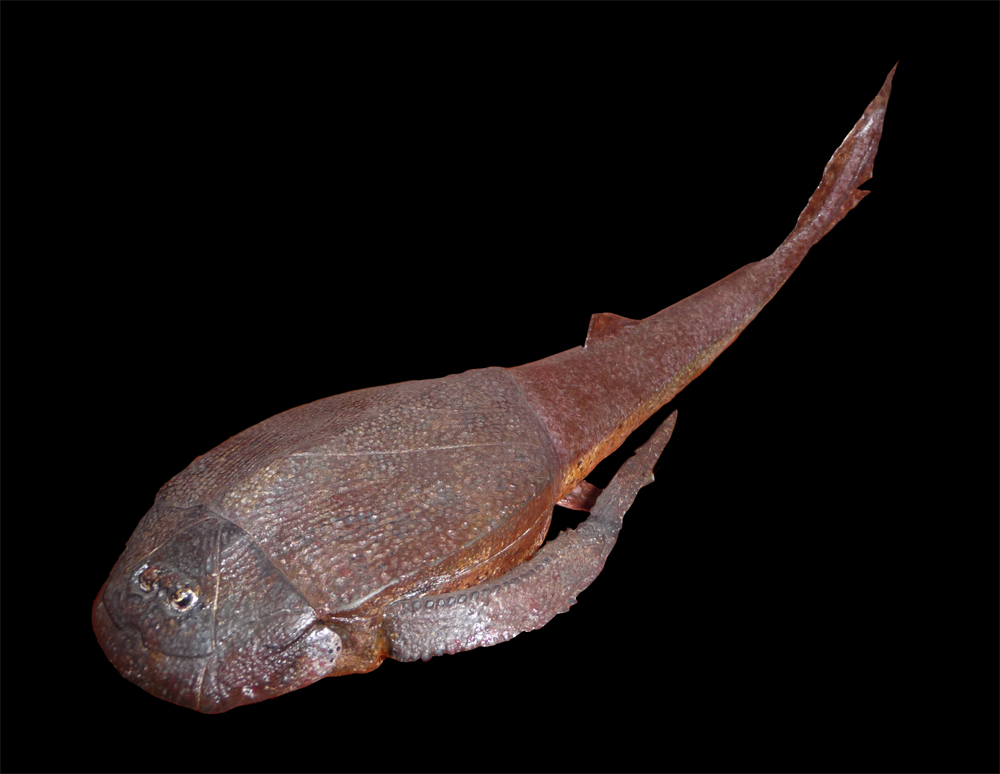


Key characteristics
Bothriolepis had a distinctive heavy armored carapace formed of bony plates that enclosed the head and thorax. The front body was rigidly armored, while the rear portion was more flexible. A pair of enameled, jointed pectoral appendages projected from beneath the armor and are a hallmark of antiarch anatomy. Eyes were relatively small and placed dorsally, and the mouth was ventrally located, consistent with a bottom-feeding habit. The armor of some species could reach substantial sizes; for example, specimens attributed to B. maxima show carapace lengths approaching about one metre (carapace reference).
Habitat and ecology
Fossils indicate that Bothriolepis occupied a range of nearshore and inland waters. Many species are associated with freshwater deposits, although specimens have also been recovered from brackish and near-shore marine sediments. As a largely benthic organism, Bothriolepis fed on soft organic material and detritus on or within sediment beds. Its mouth shape and body plan support a lifestyle as a bottom-dwelling detritivore rather than an active predator (detritivores).
Distribution, diversity and size
Over seventy species of Bothriolepis have been described from fossil localities worldwide. This high species count reflects both geographical spread and ecological variety; many modern bottom-dwelling animal groups also show similar regional diversification. Typical individuals were relatively small—often around 30 centimetres (12 inches) in total length—while the largest described species approached a metre in carapace length. Variation in armor ornamentation, plate proportions, and pectoral appendage form distinguish species within the genus.
Fossil record and scientific importance
Bothriolepis fossils are common in many Devonian strata and have been recovered from sites on every modern continent, indicating their success in a variety of aquatic environments. Their often well-preserved bony plates make them useful for taxonomic studies and for reconstructing aspects of Devonian ecosystems. Studies of Bothriolepis and related antiarchs help paleontologists understand early jawed vertebrate anatomy and the evolution of specialized appendages.
Distinctive facts and context
- Bothriolepis is a classic example of an armored, bottom-dwelling Devonian vertebrate and is frequently cited in surveys of early gnathostome diversity.
- Its paired, jointed pectoral limbs are among the more unusual locomotory and protective adaptations in placoderms.
- Both freshwater and marginal marine occurrences underline the genus's ecological flexibility (near-shore marine records).
For readers seeking more technical descriptions or locality records, specialist literature and museum collections provide detailed species accounts and measurements. Additional resources and databases offer specimen catalogues and taxonomic revisions for those researching Bothriolepis and related antiarchs; introductory summaries and broader context can be found via paleontological overview pages (antiarch, Devonian). Field guides and fossil atlases also discuss the life habits of these benthic detritivores and display images of distinctive carapaces.
Researchers continue to refine species boundaries and paleobiological interpretations as new specimens are found and analytical techniques improve, keeping Bothriolepis an active subject in studies of Devonian vertebrates and their environments.
Questions and answers
Q: What is Bothriolepis?
A: Bothriolepis is a genus of antiarch placoderms.
Q: When did Bothriolepis exist?
A: Bothriolepis existed in the middle to late Devonian period.
Q: What kind of environments did Bothriolepis inhabit?
A: Bothriolepis lived in environments across every continent, including near-shore marine and freshwater settings.
Q: What was the diet of Most species of Bothriolepis?
A: Most species of Bothriolepis were small, benthic, freshwater detritivores that got nutrients by eating decomposing plant/animal material.
Q: What was the typical length of Bothriolepis?
A: The typical length of Bothriolepis was about 30 centimetres (12 in).
Q: How large was the largest species of Bothriolepis?
A: The largest species of Bothriolepis was B. maxima, and had a carapace about 100 centimetres (39 in) in length.
Q: How many species of Bothriolepis are found across the world?
A: Over 70 species of Bothriolepis are found across the world.
Related articles
Author
AlegsaOnline.com Bothriolepis Leandro Alegsa
URL: https://en.alegsaonline.com/art/13251