
Rowan Williams, Baron Williams of Oystermouth
British theologian, poet and church leader; Archbishop of Canterbury 2002–2012, academic and life peer noted for scholarship, interfaith engagement and leadership during debates within the Anglican Communion.

Rowan Douglas Williams (born 14 June 1950) is a British theologian, poet and church leader who served as the 104th Archbishop of Canterbury from 2002 to 2012. As archbishop he was the senior bishop of the Church of England and a principal symbolic figure for the global Anglican Communion. Williams combines academic scholarship with pastoral responsibility and literary interests; he is widely recognised as a leading contemporary theologian and a published poet.
Image gallery
8 Images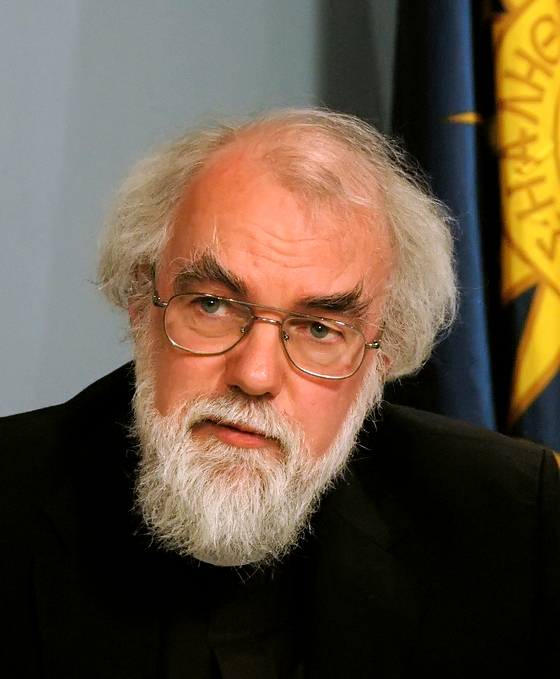


Overview and roles
Williams trained for ordained ministry and was ordained a priest in 1978; he was consecrated a bishop in 1992. Before his election as Archbishop of Canterbury he served as Bishop of Monmouth and then as Archbishop of Wales. After stepping down from Canterbury he was created a life peer, taking the title Baron Williams of Oystermouth, and later held senior academic and collegiate posts, including at Magdalene College, Cambridge. He has also been a member of national advisory bodies and held honours such as Fellowship of the British Academy (FBA) and membership of the Privy Council.
Academic and literary contributions
Williams is notable for bridging academic theology and public discourse. He has held university appointments and lectured widely on topics such as doctrine, ethics, spirituality and the relationship between religion and modern culture. His writing and public lectures reflect a careful, often philosophical style that draws on patristic sources, contemporary thought and poetic imagination. He has used poetry and literary reference to illuminate theological themes and to communicate with broader audiences.
Archiepiscopal tenure and influence
During his decade as Archbishop of Canterbury Williams faced a period of intense debate within Anglicanism over issues including authority, sexuality and the unity of the Communion. His leadership was marked by attempts to mediate between differing provinces, defend the Church of England’s traditions, and promote dialogue across theological and cultural divides. He emphasised pastoral sensitivity, theological reflection and the importance of common prayer and sacramental life.
Later work, public engagement and honours
After leaving the archbishopric, Williams continued to contribute to public life through teaching, writing and public speaking. He served in collegiate office and engaged in interfaith conversation, ethical debate and cultural commentary. His formal distinctions include a doctoral degree in divinity and recognition as a public intellectual; institutions and organisations have invited him to speak on religion and society, and he has sat in the House of Lords as a life peer.
Notable facts and context
- Key ecclesiastical offices: Bishop of Monmouth; Archbishop of Wales; Archbishop of Canterbury (see).
- Academic presence: university teaching and theological publications; engagement with contemporary social and ethical questions.
- Public roles and honours: Fellow of the British Academy (FBA), Privy Counsellor, life peer (Baron).
- Balance of interests: combines scholarship (theology) with literary work (poetry) and institutional leadership.
For further general information and institutional profiles see official biographies and college pages linked here: official biography, academic fellowship details (FBA), Church contexts (Church of England, Anglican Communion), and his college association at Magdalene. For an outline of his peerage and public role after retirement, consult the life peer reference (Baron Williams).
Author
AlegsaOnline.com Rowan Williams, Baron Williams of Oystermouth Leandro Alegsa
URL: https://en.alegsaonline.com/art/130116