
Ronnie James Dio: singer, bandleader, and influence on heavy metal
Overview of Ronnie James Dio’s life, career, signature voice and stagecraft, bands (Elf, Rainbow, Black Sabbath, Dio, Heaven and Hell), later years, and cultural legacy.
Overview
Ronnie James Dio (born Ronaldo Giovanni Padovan; July 10, 1942 – May 16, 2010) was an American singer and songwriter whose powerful voice, dramatic delivery and strong sense of melody made him a defining figure in modern heavy music. Over a career that spanned five decades he fronted several influential bands, wrote enduring songs, and helped shape the visual and vocal vocabulary of hard rock and heavy metal performance.
Image gallery
6 Images



Early life and background
Dio was born in Portsmouth and grew up in Cortland, New York in an Italian-American family. He began singing at a young age, performing in local groups before moving into professional work. His birth name was Ronaldo Giovanni Padovan; he shortened it for the stage, adopting the surname Dio early in his career. These formative years helped him develop the range and control that later became his trademark.
Musical career and major bands
Dio’s recorded legacy is tied to several key groups and collaborations. He first gained attention with Elf, a band that combined bluesy rock with melodic songwriting. His reputation grew further when he joined guitarist Ritchie Blackmore to form Rainbow, a project that brought a more ambitious, melodic hard-rock sound to a wider audience. In the early 1980s he joined Black Sabbath, replacing the band’s original singer and contributing to a creative phase often associated with a heavier, more dramatic vocal approach. After leaving, he formed his own band, Dio, which produced many of the songs most commonly associated with his name.
Later in his career he reunited with members of Black Sabbath under the name Heaven and Hell to perform and record material from the period they had originally created together. Across all these projects he toured widely and maintained a reputation as a commanding live performer.
Singing style, image and signature gestures
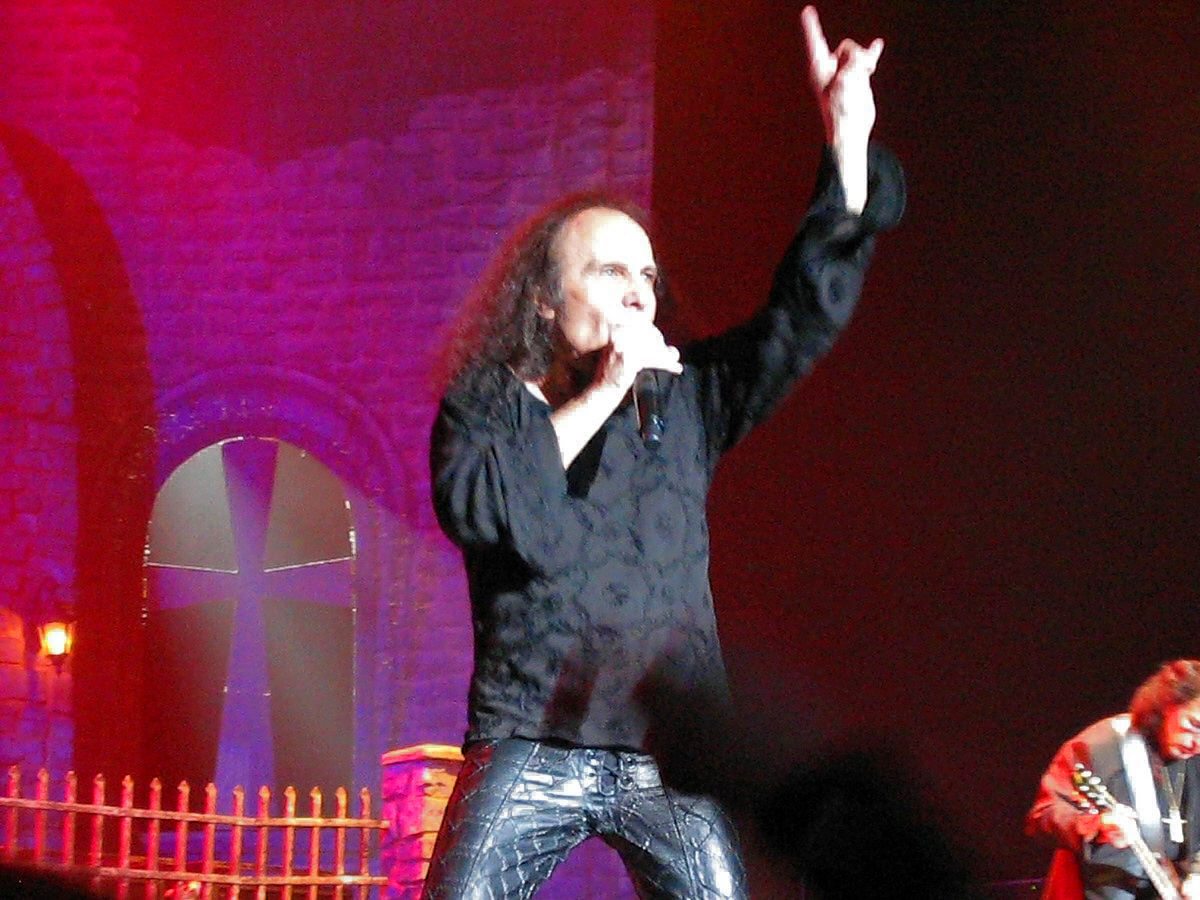
Dio’s voice combined power, clarity and expressive phrasing. He could deliver blues-rooted grit and also sustain high, operatic tones, making his performance versatile across hard rock and genre boundaries. His lyrics often drew on fantasy and mythic themes, creating a theatrical context for his vocal performances.
He is widely credited with popularizing the metal hand gesture commonly called the “devil horns.” Dio explained that he had seen the gesture used in his family and community, and he used it onstage where it quickly became a widely recognized symbol within the metal scene.
Cultural appearances and influence
Beyond albums and concerts, Dio made cameo appearances in popular media, reaching audiences outside the metal world; one notable film cameo was in The Pick of Destiny. His vocal style and dramatic approach influenced generations of singers, and many later performers cite his phrasing, tone and stagecraft as inspirations.
Later years, illness and death
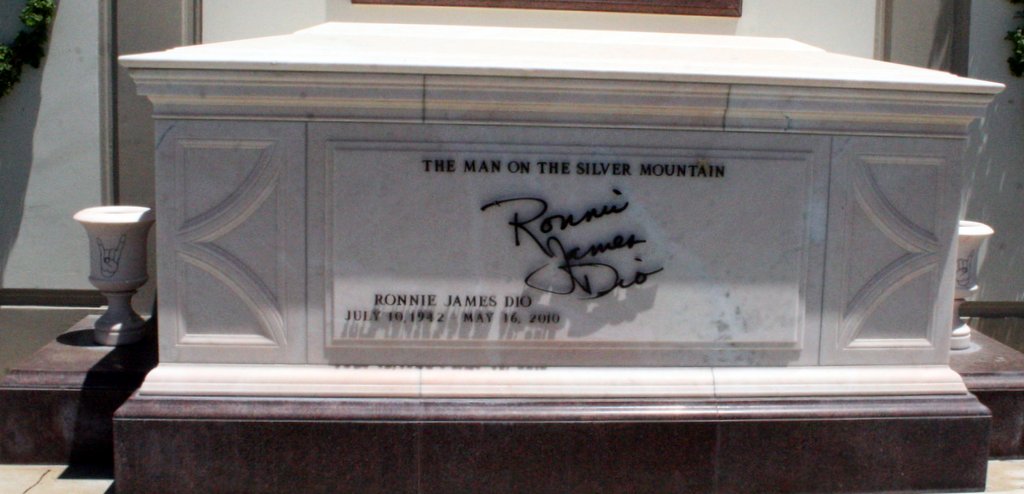
In November 2009 Dio announced a diagnosis of stomach cancer and curtailed touring and recording to seek treatment. He continued to be active in interviews and planning projects while receiving care. The illness progressed and he died on May 16, 2010, in Houston, Texas. His death at age 68 prompted widespread tributes from fellow musicians, industry figures and fans.
Legacy and further reading
Ronnie James Dio remains a touchstone for vocalists in hard rock and heavy metal. His work as a singer, bandleader and songwriter produced songs and albums still played on radio and streaming services. For readers seeking additional context, discographies, collected interviews and authorized biographies provide further detail, and many fan sites and archives maintain timelines and concert histories. General reference and archival resources can be consulted via the anchor links above for exploration of recordings, lineups and retrospectives.
Notable points
- Fronted multiple influential acts: Elf, Rainbow, Black Sabbath, and Dio.
- Reunited with former bandmates as Heaven and Hell to revisit earlier material.
- Attributed the popular metal hand gesture to a family tradition and helped popularize it onstage.
- Publicly announced a diagnosis of stomach cancer in 2009 and died in Houston, Texas, in 2010.
Author
AlegsaOnline.com Ronnie James Dio: singer, bandleader, and influence on heavy metal Leandro Alegsa
URL: https://en.alegsaonline.com/art/130033