
Robert O'Hara Burke (1821–1861): leader of the Burke and Wills expedition
Irish-born police officer who led the 1860–61 Burke and Wills crossing of Australia. The party reached the Gulf region but Burke and Wills died during the return; the journey left a complex legacy.
Robert O'Hara Burke (1821–1861) was an Irish-born officer in colonial Victoria best known for leading the ill-fated 1860–61 crossing of the Australian continent. As commander he organized and guided what contemporaries called the Burke and Wills expedition, a large, well-equipped venture that aimed to traverse the interior from south to north. The undertaking captured public attention across the colony and remains one of the most famous episodes in Australian exploration history.
Image gallery
6 Images
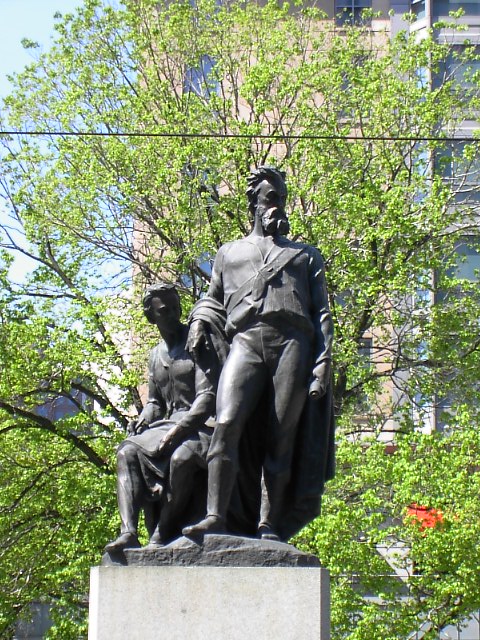


Background and appointment
Born in Ireland, Burke migrated to Australia and served in the colonial police force before his appointment to lead the expedition; he is often described as an Irish policeman by later accounts. Sponsorship came from scientific and governmental bodies eager to map and open inland routes. The party left Melbourne with large stores and equipment bound for the northern shores around the Gulf of Carpentaria, part of a broader effort to improve geographic knowledge of Australia.
The journey and its outcome
Burke led a contingent that achieved the central objective: an overland crossing from the settled south to the coastal north. His second-in-command, William John Wills, accompanied him on the push to the Gulf. On the return leg the expedition suffered catastrophic hardship. Burke and Wills perished at Cooper Creek; contemporary reports attributed their deaths to a combination of exhaustion, exposure and scarcity of food, often summarized as starvation.
Key participants and survival
- Robert O'Hara Burke – expedition leader.
- William John Wills – surveyor and second-in-command.
- Other party members included depot officers and drovers who remained at Cooper Creek; one man, John King, survived with assistance from local Aboriginal people and later provided testimony to rescuers.
Legacy and assessment
The expedition expanded knowledge of Australia's interior and produced maps, meteorological notes and botanical specimens, but its story is dominated by controversy. Critics have pointed to poor leadership, planning errors and an inadequate understanding of local conditions. Supporters argue the scale of the enterprise and the information returned advanced colonial science and transport planning. Public reaction at the time ranged from heroic commemoration—funerals and monuments—to sustained debate over responsibility.
Today Burke's name is associated both with daring exploration and with the harsh lessons of expanding into unfamiliar environments. The episode is widely discussed in histories of exploration, colonial contact, and encounters between European parties and Indigenous Australians. For contemporary overviews and archival material see further resources and collections linked through institutional sites and historical summaries (biographical notes, expedition accounts, Australian exploration, departure from Melbourne, Gulf region, Wills' role, causes of death, Cooper Creek location).
Author
AlegsaOnline.com Robert O'Hara Burke (1821–1861): leader of the Burke and Wills expedition Leandro Alegsa
URL: https://en.alegsaonline.com/art/129802