
Gulf of Carpentaria: geography, ecology and human use
A large, shallow sea on northern Australia bordered by the Arafura Sea; notable for its extensive continental shelf, monsoonal climate, rich fisheries and distinct ecological and geological history.
The Gulf of Carpentaria is a broad, shallow inlet of the western Pacific Ocean that indents the northern coastline of northern Australia. It lies south of the Arafura Sea and is framed by low-lying coastal plains and islands. The gulf opens northward into the Arafura Sea and forms a natural division between the Australian mainland and the waters that lie between Australia and New Guinea.
Image gallery
9 Images





Geography and dimensions
Measured across its mouth the gulf is several hundred kilometres wide and extends more than 700 km from north to south. Its surface area is on the order of a few hundred thousand square kilometres. Depths are generally shallow, typically between about 55 and 66 metres, with isolated depressions reaching greater depths. The basin sits on a broad continental shelf, and much of its floor would have been exposed land during lower sea levels in the last ice age.
Climate, tides and ecology
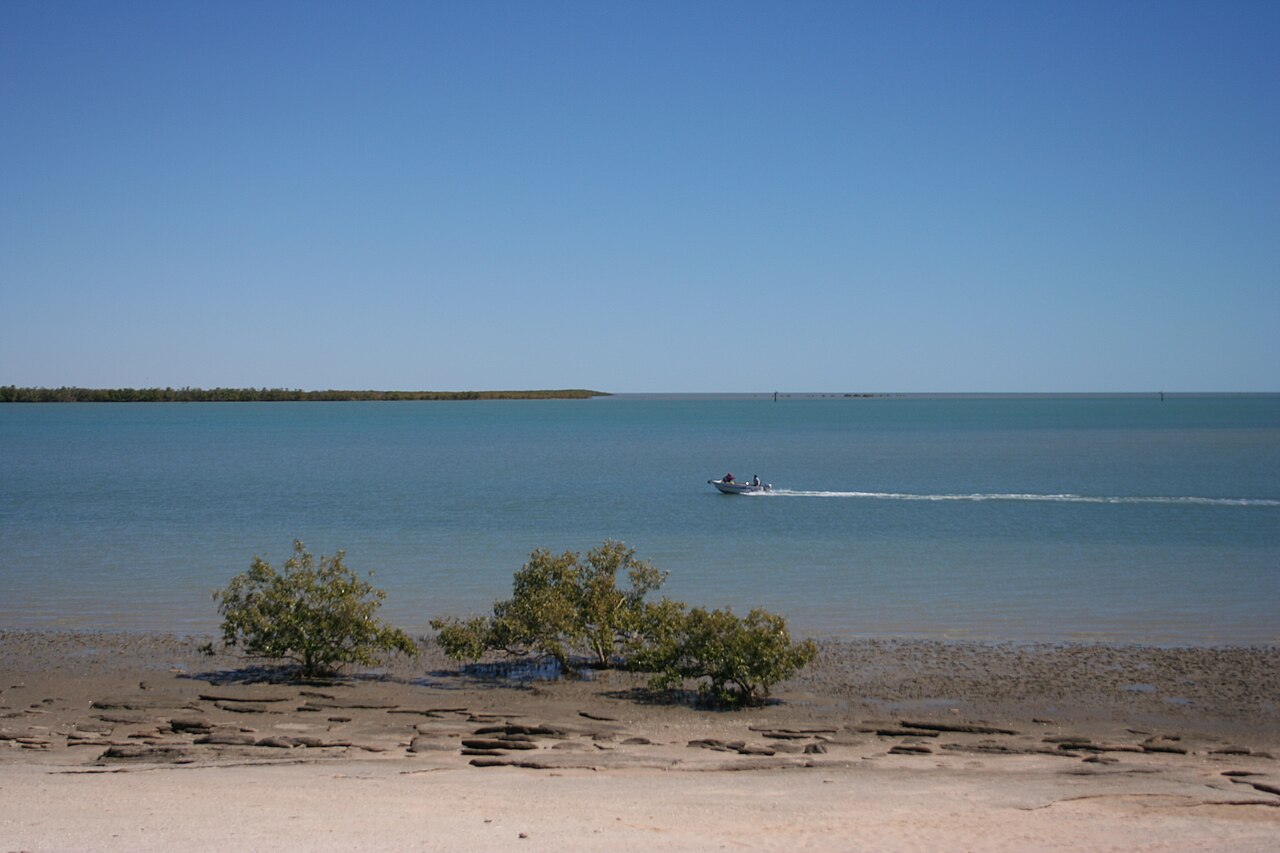
The region experiences a tropical monsoonal climate with distinct wet and dry seasons. Heavy seasonal rains, river runoff and periodic tropical cyclones influence salinity, turbidity and nutrient flows. Because the water is shallow and warm, the gulf supports extensive mangrove forests, tidal flats and productive fisheries, including important prawn and fish stocks. Its coastal wetlands are also significant for migratory birds and other wildlife.
Human presence and uses
Indigenous peoples have occupied the surrounding coasts and islands for millennia and continue to rely on its resources. In modern times the gulf supports commercial fisheries, coastal communities, and shipping related to mineral and agricultural exports. Seasonal weather and shallow shoals can present hazards to navigation, and the ecological productivity of the area is balanced against development and conservation concerns.
Context and notable facts
- The gulf connects northward to the Arafura Sea, which lies between Australia and New Guinea; it is part of the wider marine region sometimes referred to as the sea between Australia and New Guinea.
- Its shallow depths and wide tidal ranges create extensive intertidal zones important for coastal ecology and fisheries.
- Geologically and archaeologically, the area is notable because lower sea levels exposed the seabed during glacial periods, allowing migration pathways across what is now water.
Questions and answers
Q: What is the Gulf of Carpentaria?
A: The Gulf of Carpentaria is a large, shallow sea surrounded on three sides by northern Australia.
Q: What is the north edge of the Gulf of Carpentaria?
A: The north edge of the Gulf of Carpentaria is the Arafura Sea, which is the sea between Australia and New Guinea.
Q: How wide is the Gulf of Carpentaria at its mouth?
A: The Gulf of Carpentaria is 590 km wide at its mouth.
Q: How wide is the Gulf of Carpentaria further south?
A: The Gulf of Carpentaria is 675 km wide further south.
Q: What is the water area covered by the Gulf of Carpentaria?
A: The water area covered by the Gulf of Carpentaria is about 300,000 km².
Q: What is the depth of the Gulf of Carpentaria?
A: The Gulf of Carpentaria is between 55 and 66 meters deep, although there are spots as deep as 82 meters.
Q: Was the Gulf of Carpentaria dry land in the last ice age?
A: Yes, in the last ice age the Gulf of Carpentaria would have been dry land.
Related articles
Author
AlegsaOnline.com Gulf of Carpentaria: geography, ecology and human use Leandro Alegsa
URL: https://en.alegsaonline.com/art/41369
Sources
- permanent.access.gpo.gov : permanent.access.gpo.gov/websites/pollux/pollux.nss.nima.mil/NAV_PUBS/SD/pub175/175sec01.…