
Robert Merrihew Adams
American analytic philosopher known for work in metaphysics, philosophy of religion and moral theory; scholar of Kierkegaard and Leibniz and author of influential essays on theism and the problem of evil.
Robert Merrihew Adams (born September 8, 1937) is an American analytic philosopher whose work has shaped contemporary discussion in metaphysics, the philosophy of religion and moral theory. Over a long academic career he published widely on the nature of value, the relation between divine attributes and moral requirements, and on classical figures whose thought intersects with his own concerns.
Image gallery
1 Image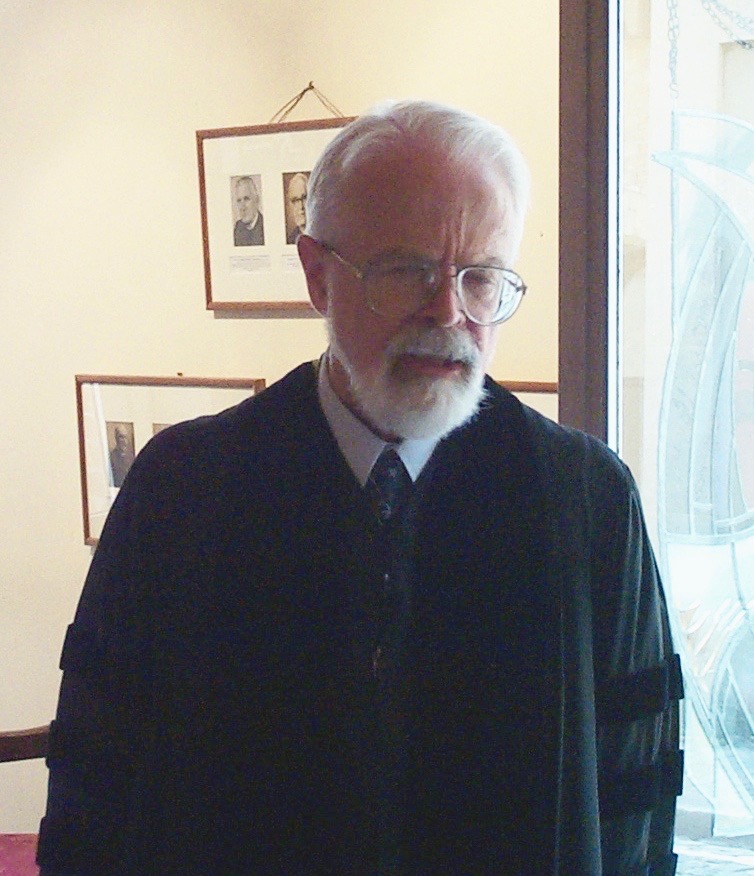
Major themes and contributions
Adams has written influential essays exploring the tension between theism and ethics, in particular addressing how moral obligations might depend on, or be reconciled with, the existence and character of a deity. He engaged the classic problem of evil, evaluating how the presence of suffering bears on religious belief and divine goodness. In moral philosophy he is associated with a theistic approach that examines whether divine commands or divine character can ground objective moral requirements without making them arbitrary.
Historical scholarship and interpretation
In addition to systematic work, Adams produced careful historical studies of major thinkers. He published interpretive essays on Søren Kierkegaard and on Gottfried Wilhelm Leibniz, tracing connections between nineteenth‑ and early modern perspectives and contemporary analytic debates. These studies illustrate his dual commitment to historical sensitivity and conceptual clarity.
Influence, style, and approach
Adams's writing is often characterized by precise argumentation and cautious, even-handed treatment of difficult topics. Colleagues and students have noted his role in bringing theological questions into sustained analytic conversation and in clarifying how metaphysical commitments bear on ethical and religious issues. His work has been discussed across philosophy of religion, ethics, and metaphysics.
Topics often associated with his work
- Divine command and theism — investigation of whether and how God can ground moral obligation.
- The problem of evil — examinations of suffering, justification, and theism.
- Value and moral ontology — questions about moral facts, goodness, and persons.
On the personal side, Adams was married to philosopher Marilyn McCord Adams from 1966 until her death in 2017; their partnership is frequently noted as an intellectual and personal collaboration between two prominent philosophers. Overall, Robert Merrihew Adams remains an important figure for readers interested in how metaphysics, ethics, and religious thought intersect and how historical scholarship can inform present debates.
Author
AlegsaOnline.com Robert Merrihew Adams Leandro Alegsa
URL: https://en.alegsaonline.com/art/129790