
Gottfried Wilhelm Leibniz: philosopher, mathematician and early computing pioneer
German polymath (1646–1716) whose work bridged metaphysics, mathematics, logic and early computation; known for developing calculus notation, proposing binary arithmetic, and monadology.
Overview
Gottfried Wilhelm Leibniz (1646–1716) was a German philosopher, mathematician and polymath whose writings and inventions influenced a wide range of fields. He wrote in Latin and French as well as German, and combined theoretical inquiry with practical projects. He served courts, compiled and organised libraries, advised rulers and maintained extensive correspondence that spread ideas across Europe. Scholars often describe him as a German polymath and public intellectual.
Image gallery
10 Images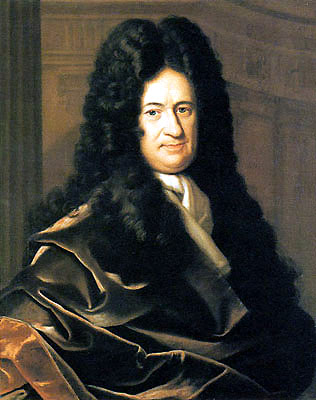


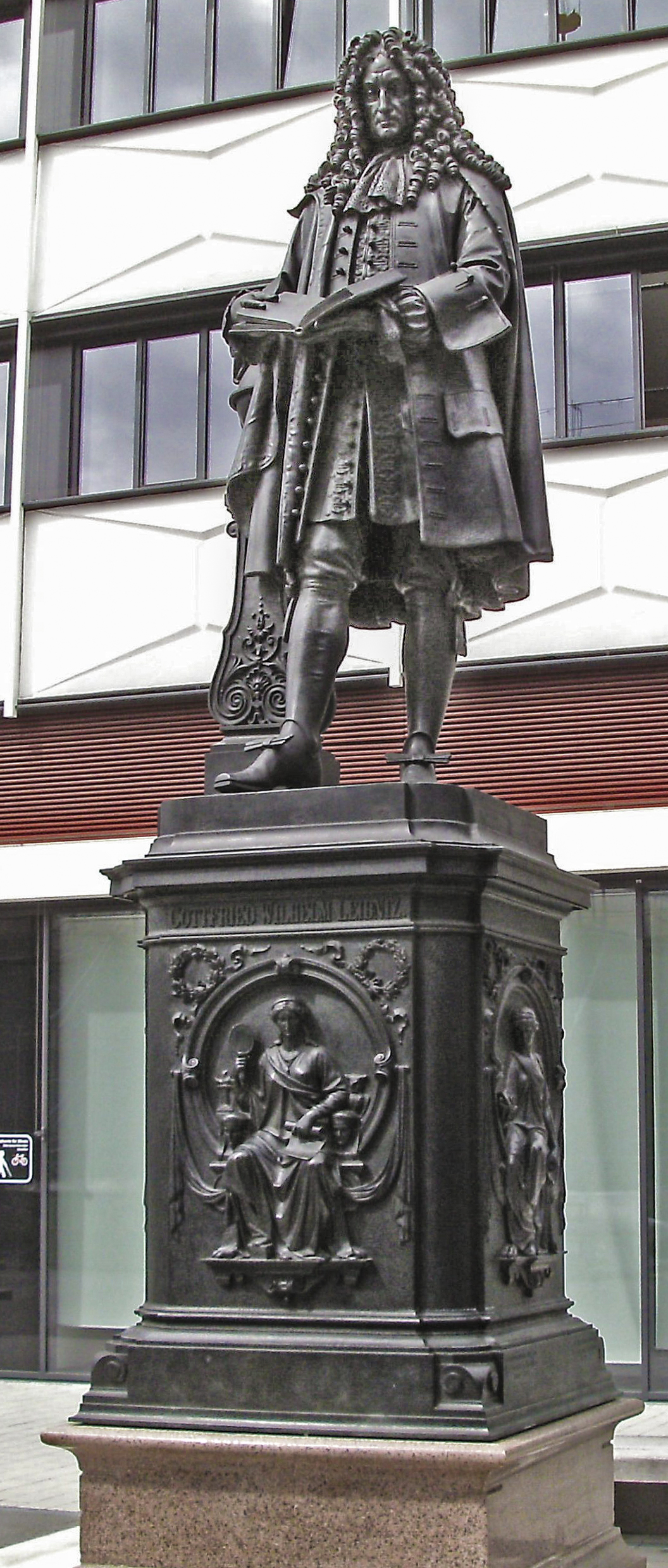


Life and career
Leibniz trained in law, mathematics and philosophy and moved between roles as a lawyer, librarian and diplomatic adviser. His positions at courts gave him access to manuscripts and patronage, while his habit of long, careful correspondence helped form international networks of scholars. He pursued both scholarly publication and technical work, designing mechanical calculating devices and proposing projects for communication and knowledge organisation.
Mathematics, logic and computation
Leibniz is celebrated for developing the differential and integral calculus independently of Isaac Newton. His notation—most notably the differential "d" and the integral sign—proved practical and enduring in mathematical practice. He also worked on series, combinatorics and algebraic methods, and advanced early ideas about symbolic formalisation of reasoning. His design of calculating machines and his advocacy of a binary numeral system anticipated components of modern computing; the binary idea later became significant for information technology and digital logic (binary).
Philosophy and metaphysics
In philosophy Leibniz contributed to metaphysics, epistemology and the philosophy of religion within the rationalist tradition. He proposed that reality is composed of simple, immaterial substances he called "monads," each reflecting the universe from its own perspective. To explain apparent interaction among monads he developed the doctrine of a pre-established harmony. He also discussed the nature of possibility, contingency and necessity, and argued in a theodical context for what has been summarised as the claim that this world is the best among possible worlds.
Major works and themes
- Key writings: essays and treatises on metaphysics and theodicy, including concise expositions later collected as Monadology and extended writings in correspondence and essays (philosophy).
- Scientific papers: works on calculus, series and mathematical methods that shaped later mathematics and applied calculation.
- Computational ideas: proposals for calculating machines, symbolic methods and binary arithmetic; these anticipations of algorithmic and digital thinking are discussed in histories of computing.
Reception and legacy
Leibniz's reputation was shaped by his technical achievements and by controversies, most famously the priority dispute over calculus with Newton. His metaphysical system received mixed responses in his own time and later, but his influence persisted: his logical aspirations foreshadowed work in symbolic logic and his notation and methods influenced scientific practice. Modern scholarship continues to examine his manuscripts and correspondence to better understand the range and development of his ideas; for accessible introductions and archival materials consult biographical and textual resources (biographical resources, intellectual histories, translated works, philosophical studies, mathematical commentaries, technical analyses, comparative histories, computing histories).
Questions and answers
Q: Who was Gottfried Wilhelm Leibniz?
A: Gottfried Wilhelm Leibniz was a German intellectual who wrote mostly in French and Latin. He played an important role in both philosophy and mathematics.
Q: When did he live?
A: Gottfried Wilhelm Leibniz lived from 1 July 1646 to 14 November 1716.
Q: What did he invent?
A: Gottfried Wilhelm Leibniz invented calculus independently of Newton, the binary system which is the foundation of modern computers, and his notation for derivatives which has been in general use since then.
Q: What language did he write in?
A: Gottfried Wilhelm Leibniz wrote mostly in French and Latin.
Q: How did his inventions influence modern technology?
A: His invention of the binary system is the foundation of modern computers, while his notation for derivatives is still used today.
Q: What impact did he have on philosophy?
A: He had an important role in philosophy as well as mathematics.
Related articles
Author
AlegsaOnline.com Gottfried Wilhelm Leibniz: philosopher, mathematician and early computing pioneer Leandro Alegsa
URL: https://en.alegsaonline.com/art/119986
Sources
- mathvault.ca : "List of Calculus and Analysis Symbols"
- plato.stanford.edu : The Stanford Encyclopedia of Philosophy
- wikidata.orgQ9047.html : wikidata.orgq9047.html
- authority.bibsys.no : 90071719
- bncatalogo.cl : 000066963
- catalogo.bne.es : XX967786
- catalogue.bnf.fr : cb11912259r
- data.bnf.fr : (data)
- cantic.bnc.cat : a10445213
- ci.nii.ac.jp : DA00228483
- d-nb.info : 118571249
- isni.org : 0000 0001 2099 0070
- id.loc.gov : n79081493
- kopkatalogs.lv : 000036029
- musicbrainz.org : df6939f9-b49b-45b8-9983-728fe32725c9