
Søren Kierkegaard: Life, Thought, and Influence
Danish 19th-century thinker whose writings on individuality, faith, anxiety, and subjectivity helped shape existentialism and modern theology.
Overview
Søren Aabye Kierkegaard (1813–1855) was a Danish writer, philosopher and theologian whose work emphasized the individual's subjective relationship to existence and to faith. He is widely regarded as an important precursor to twentieth-century existentialist thought and remains influential in philosophy, theology and literary studies. Rather than building systematic doctrine, Kierkegaard explored personal truth, inwardness and the tensions that accompany moral and religious choice.
Image gallery
10 Images

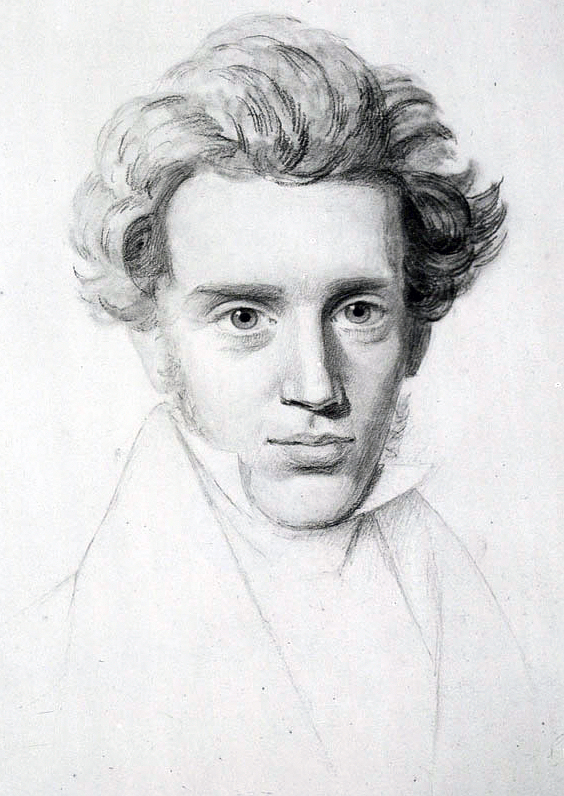


Key themes and concepts
Kierkegaard focused on several recurring ideas: the primacy of the individual, the inevitability of existential anxiety and despair, the stages of life (often described as aesthetic, ethical and religious), and the notion that belief involves a personal "leap of faith" beyond rational demonstration. He argued that subjective commitment can be a legitimate form of truth, summarized in his aphoristic formula that "subjectivity is truth." His style often used irony, parable and pseudonymous voices to engage readers indirectly and resist philosophic systematization.
Life and intellectual development
Born and raised in Copenhagen, Kierkegaard trained in theology but turned to writing as his primary vocation. His personal history — including an intense but broken engagement and a long conflict with aspects of the established church — shaped many of his critiques of what he called the complacency of organized religion. He opposed attempts to reduce Christianity to social or political programs, insisting that genuine faith is inward and existential rather than merely institutional or cultural (Danish philosopher, Christianity).
Major works
Rather than a single systematic treatise, Kierkegaard wrote a number of significant books that approach related problems from different angles. Notable titles include:
- Either/Or — reflections on aesthetic and ethical life choices;
- Fear and Trembling — a study of faith and the Abraham narrative;
- The Concept of Anxiety — an analysis of existential anxiety and original sin;
- Philosophical Fragments and Concluding Unscientific Postscript — examinations of faith, truth and subjectivity;
- Works of Love — reflections on Christian ethics and neighborly love.
Influence, reception and notable remarks
Kierkegaard's critique of abstract systems and his insistence on personal responsibility influenced later figures in philosophy and theology, including existentialists and phenomenologists. His writings have resonated in literary circles and in pastoral and clinical contexts where individual experience and despair are central concerns. Prominent twentieth-century thinkers have acknowledged his depth; for example, the philosopher Ludwig Wittgenstein is often reported to have regarded Kierkegaard as a singularly important nineteenth-century thinker (Wittgenstein, existentialism).
Distinctions and lasting importance
Kierkegaard is distinctive for his method as much as his content: he frequently wrote under pseudonyms to dramatize conflicting viewpoints and to force readers into active interpretation. This indirect communication aimed to awaken the reader's reflective responsibility rather than to offer calm answers. His emphasis on personal decision, faith as a paradox, and the lived reality of anxiety and despair continues to make his work central to discussions about meaning, ethics and religion (existence, emotion, feeling).
For introductions and translations, readers can consult standard collections and scholarly guides that situate his writings in their historical and theological context (Danish philosopher, existentialism).
Questions and answers
Q: Who was Søren Aabye Kierkegaard?
A: Søren Aabye Kierkegaard was a 19th-century Danish philosopher and theologian, who is usually thought of as the first existentialist philosopher.
Q: What did Søren Aabye Kierkegaard write about in his philosophical books?
A: Søren Aabye Kierkegaard wrote about faith, existence, emotions, and feeling in his philosophical books.
Q: What did Søren Aabye Kierkegaard dislike?
A: Søren Aabye Kierkegaard disliked people who tried to make Christianity political and people who tried to limit the single individual in favour of groups of many people.
Q: How have people found Søren Aabye Kierkegaard's works?
A: Many people have found Søren Aabye Kierkegaard's works interesting and have said that they were great works of philosophy.
Q: Who thought that Søren Aabye Kierkegaard was the most profound thinker of the nineteenth century?
A: Ludwig Wittgenstein, a 20th-century philosopher, thought that Søren Aabye Kierkegaard was "by far, the most profound thinker of the nineteenth century".
Q: What did Søren Aabye Kierkegaard write about that made him the first existentialist philosopher?
A: Søren Aabye Kierkegaard wrote about existence and the individual's experience of it, which is why he is considered to be the first existentialist philosopher.
Q: What other fields was Søren Aabye Kierkegaard interested in besides philosophy and theology?
A: It is not specified in the text what other fields Søren Aabye Kierkegaard was interested in.
Related articles
Author
AlegsaOnline.com Søren Kierkegaard: Life, Thought, and Influence Leandro Alegsa
URL: https://en.alegsaonline.com/art/92972
Sources
- home.clear.net.nz : home.clear.net.nz/pages/ccreegan/wk/chapter1.html