
Afridi (Pashtun tribe of the Khyber region)
The Afridi are a prominent Pashtun tribe centered in the Khyber Pass and Tirah areas of northwest Pakistan and eastern Afghanistan, known for clan organization, Pashtunwali customs, and a long frontier history.
Overview
The Afridi are a large Pashtun tribal grouping traditionally associated with the mountain areas around the Khyber Pass and the Tirah valley. They speak Pashto and observe Pashtunwali, the customary code that emphasizes hospitality, honour and collective decision-making. Social life is organised around extended families and tribal councils (jirgas), and many Afridi communities retain strong local autonomy tied to clan leadership.
Image gallery
4 Images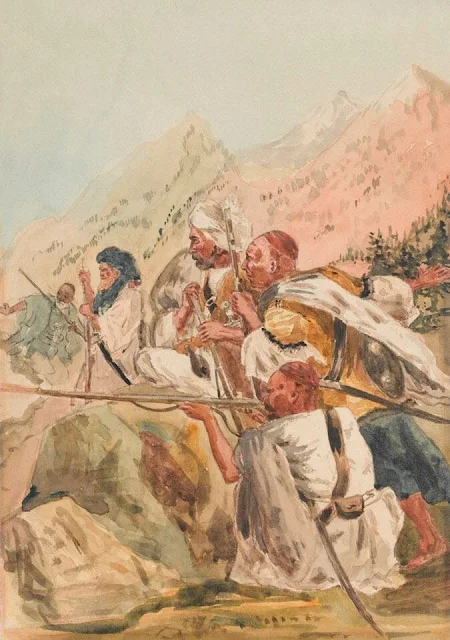


Location and subdivisions
Most Afridi communities live in the Khyber region of what is now Pakistan, particularly in and around Jamrud, the Tirah valley and the historic Khyber Pass. There are also Afridi populations across the nearby border in eastern Afghanistan and in the modern province of Khyber Pakhtunkhwa. The tribe is internally divided into several clans and subgroups; commonly cited names include Adam Khel, Kuki Khel, Malikdin Khel, Zakha Khel, Sepah and others, each with its own local leadership and customary territory.
Historical role
Occupying approaches to a major mountain corridor, Afridi groups have long influenced movement across the frontier. Their control of high ground and passes allowed them to affect trade and military routes and to resist outside authorities at various times. In the 19th and early 20th centuries Afridi communities were frequently involved in negotiations and armed contests with imperial and regional powers seeking to secure the Khyber approaches.
Culture and social institutions
Afridi society centres on kinship, collective honour and customary law. The jirga remains a primary institution for dispute resolution and communal decisions. Key Pashtunwali concepts—such as melmastia (hospitality), badal (retribution or justice) and nanawatai (asylum)—inform social behaviour. Religious life is predominantly Sunni Islam, and oral poetry, storytelling and local customs continue to feature in community ceremonies.
Economy and livelihoods
Traditional livelihoods include small-scale agriculture, pastoralism and trade linked to mountain routes. In modern times many Afridi people engage in wage labour, service in national institutions, cross-border trade and work in urban centres. Some communities have been affected by migration and displacement related to regional instability, with resulting changes in economic patterns.
Contemporary significance and issues
Today Afridi areas are strategically important because of transport corridors and border proximity. Local leaders often negotiate with provincial and national authorities over governance, land rights and development. Security operations, population movements and economic change have all shaped recent community experiences. Diaspora populations from the tribe live in Pakistani cities and abroad and maintain social ties with their home areas.
Notable points
- The Afridi name is widely recognised because of the tribe's historical position along one of South Asia's key mountain corridors.
- They exemplify core Pashtun institutions such as the jirga and adherence to Pashtunwali values.
- Clan-level organisation gives the tribe a decentralized structure that has shaped its relations with neighbouring groups and states.
For further reading on regional geography and modern administrative arrangements see local sources and provincial overviews: Jamrud, the Khyber Pass, administrative summaries of Khyber Pakhtunkhwa and country-level context in Pakistan.
Related articles
Author
AlegsaOnline.com Afridi (Pashtun tribe of the Khyber region) Leandro Alegsa
URL: https://en.alegsaonline.com/art/1283